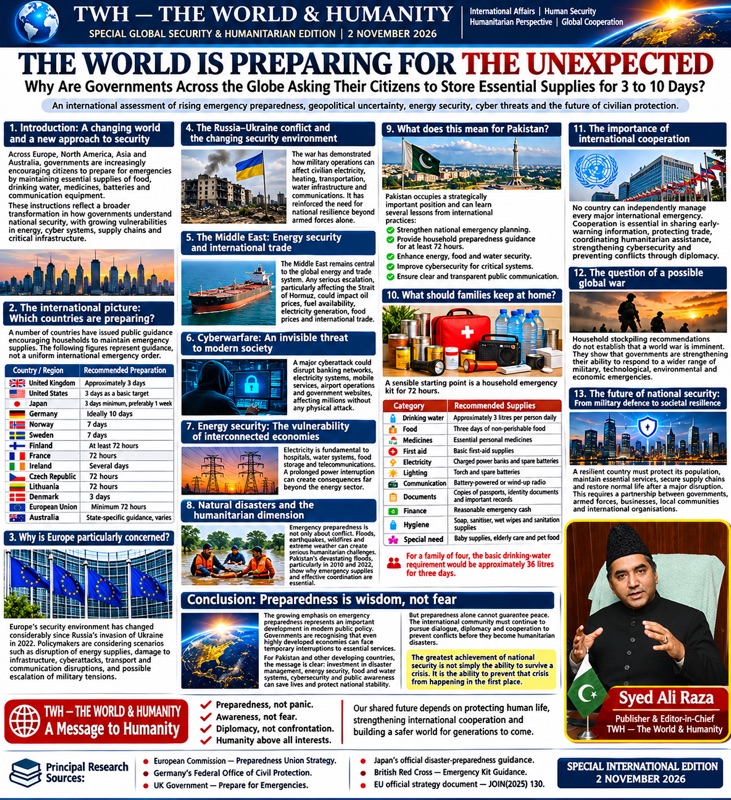
THE WORLD IS PREPARING FOR THE UNEXPECTED
THE WORLD IS PREPARING FOR THE UNEXPECTED
Why Are Governments Across the Globe Asking Their Citizens to Store Essential Supplies for 3 to 10 Days?
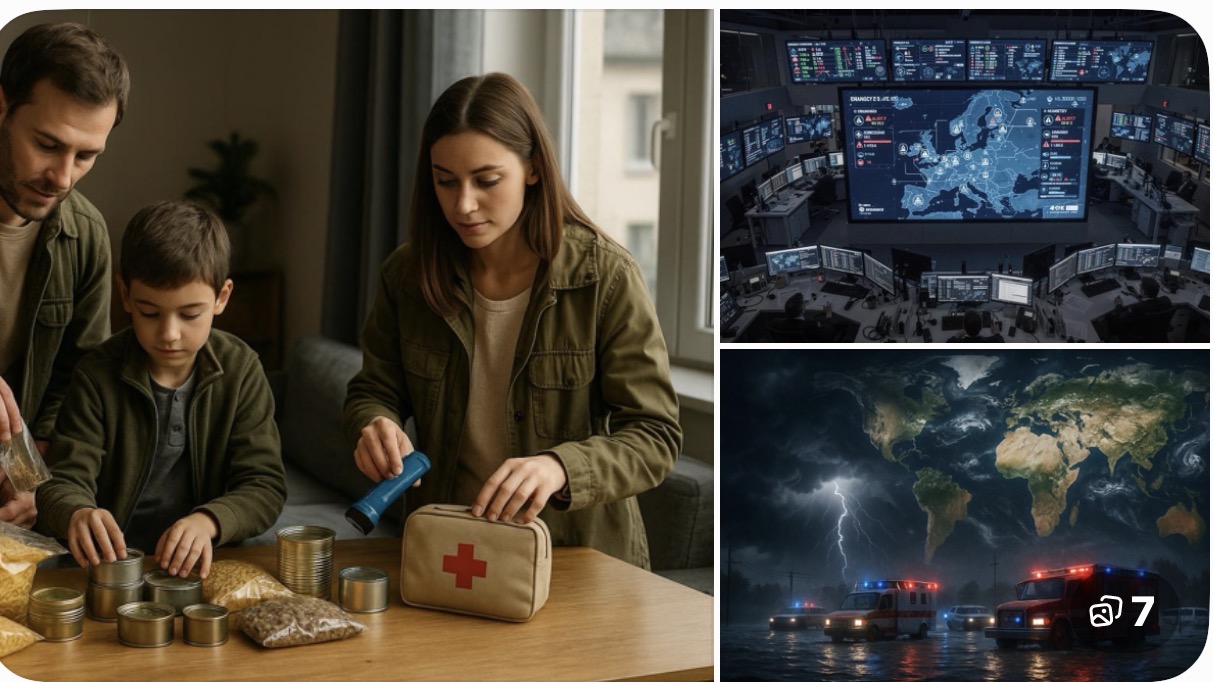
An international assessment of rising emergency preparedness, geopolitical uncertainty, energy security, cyber threats and the future of civilian protection.
Introduction: A changing world and a new approach to security
Across Europe, North America, Asia and Australia, governments are increasingly encouraging citizens to prepare for emergencies by maintaining essential supplies of food, drinking water, medicines, batteries, communication equipment and other necessities.
Recommendations vary from approximately 72 hours to seven or ten days, depending on the country and the nature of its guidance.
At first glance, these instructions may appear to be ordinary disaster-management advice. However, their growing prominence reflects a broader transformation in how governments understand national security.
The world is becoming increasingly interconnected, but that interconnection also creates vulnerabilities. Electricity networks, banking systems, international shipping, fuel supplies, telecommunications and food distribution systems depend on complex infrastructure that can be disrupted by military conflict, cyberattacks, natural disasters or unexpected economic shocks.
The central question is no longer simply whether a country can defend its borders. It is also whether its population can continue functioning if essential services are temporarily interrupted.
This is why civilian emergency preparedness has become an increasingly important part of national resilience.
2. The international picture: Which countries are preparing?
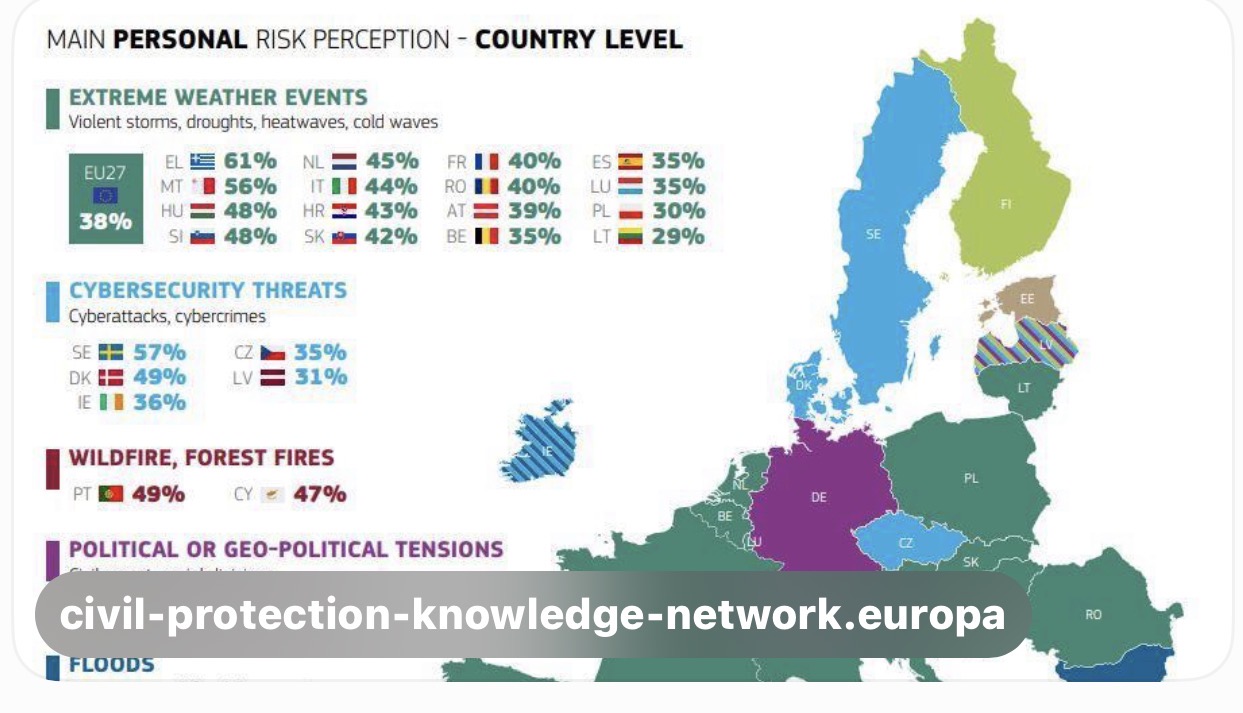
A number of countries have issued public guidance encouraging households to maintain emergency supplies.
The following figures represent guidance, not a uniform international emergency order.
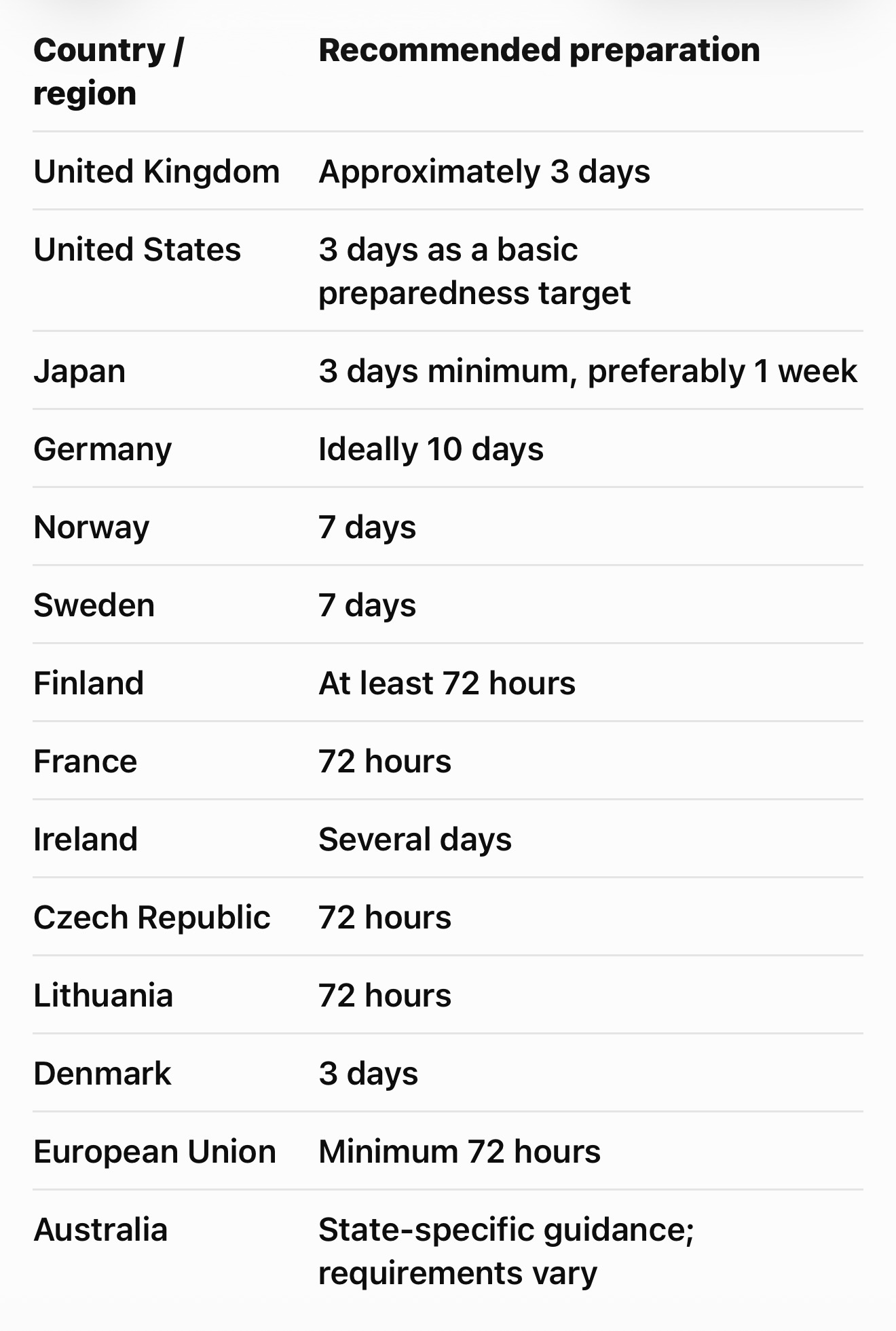
Germany's Federal Office of Civil Protection and Disaster Assistance recommends that households aim to be self-sufficient for ten days, while recognising that even three days of supplies provide a useful starting point. Japan's disaster-prevention guidance recommends at least three days and preferably one week.
The European Union's Preparedness Union Strategy, introduced on 26 March 2025, recommends developing the capacity for at least 72 hours of population self-sufficiency.
The pattern is significant because preparedness is increasingly being treated as a responsibility shared by governments, institutions, businesses and ordinary households.
3. Why is Europe particularly concerned?
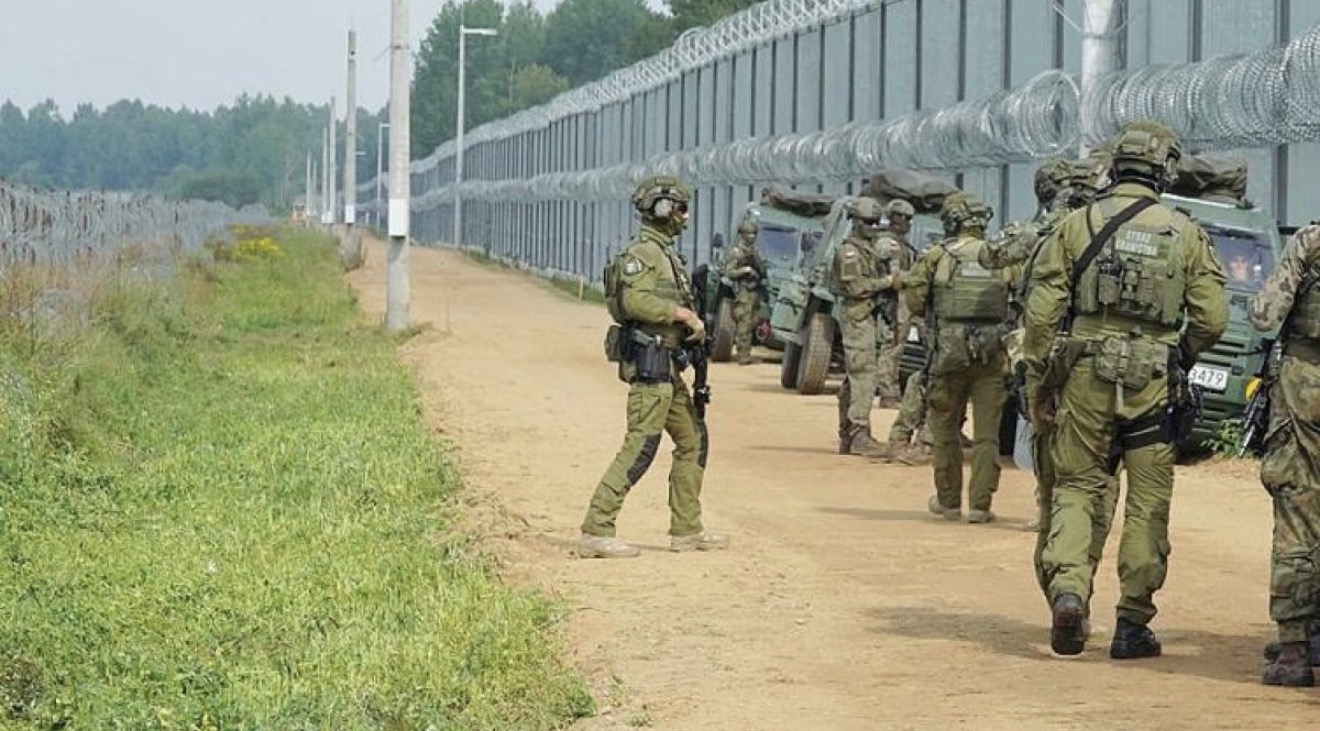
Europe's security environment has changed considerably since Russia launched its full-scale invasion of Ukraine in February 2022.
The conflict has exposed the vulnerability of energy supplies, transport networks, industrial infrastructure and civilian populations during prolonged geopolitical crises.
European policymakers are increasingly considering several scenarios:
Disruption of electricity and gas supplies.
Damage to critical infrastructure.
Cyberattacks against public institutions.
Disruption of transport and communication systems.
Possible escalation of military tensions.
Large-scale displacement of civilians.
The European Commission's 2025 strategy explicitly identifies geopolitical tensions, armed conflict, hybrid threats, cyberattacks, sabotage, disinformation and natural disasters as areas requiring stronger preparedness.
This does not establish that European governments expect an imminent military attack. It demonstrates that they are planning for a wider range of potential emergencies.
4. The Russia–Ukraine conflict and the changing security environment
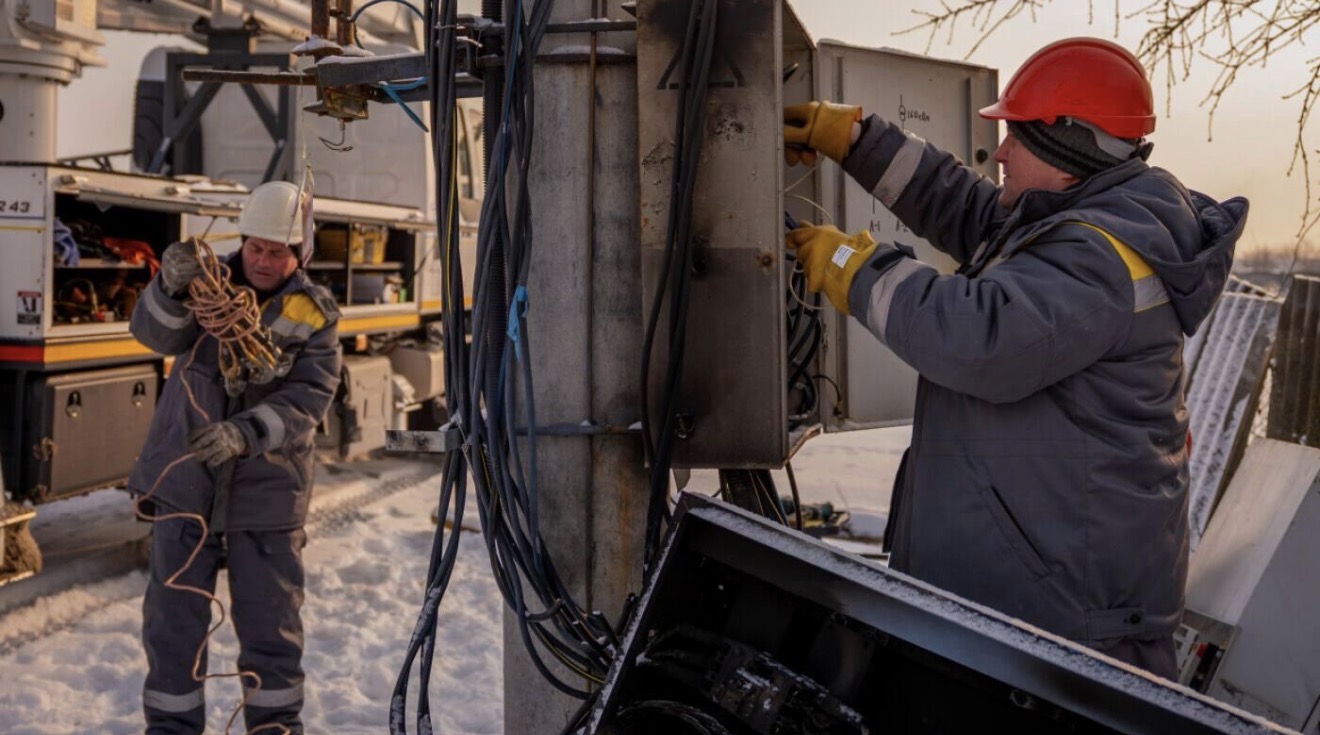
The Russia–Ukraine war has become an important reference point in European security planning.
Beyond the battlefield, the conflict has demonstrated how military operations can affect civilian electricity supplies, heating, transportation, water infrastructure and communications.
It has also reinforced concerns about the relationship between conventional military conflict and non-conventional methods of pressure, including cyber operations and disruption of critical infrastructure.
For European governments, the lesson is that national resilience cannot depend exclusively on armed forces or emergency services.
Hospitals, local authorities, private companies and households must also have plans for maintaining essential functions when normal services are interrupted.
This is a major reason civilian preparedness has become part of the wider European security debate.
5. The Middle East: Energy security and international trade
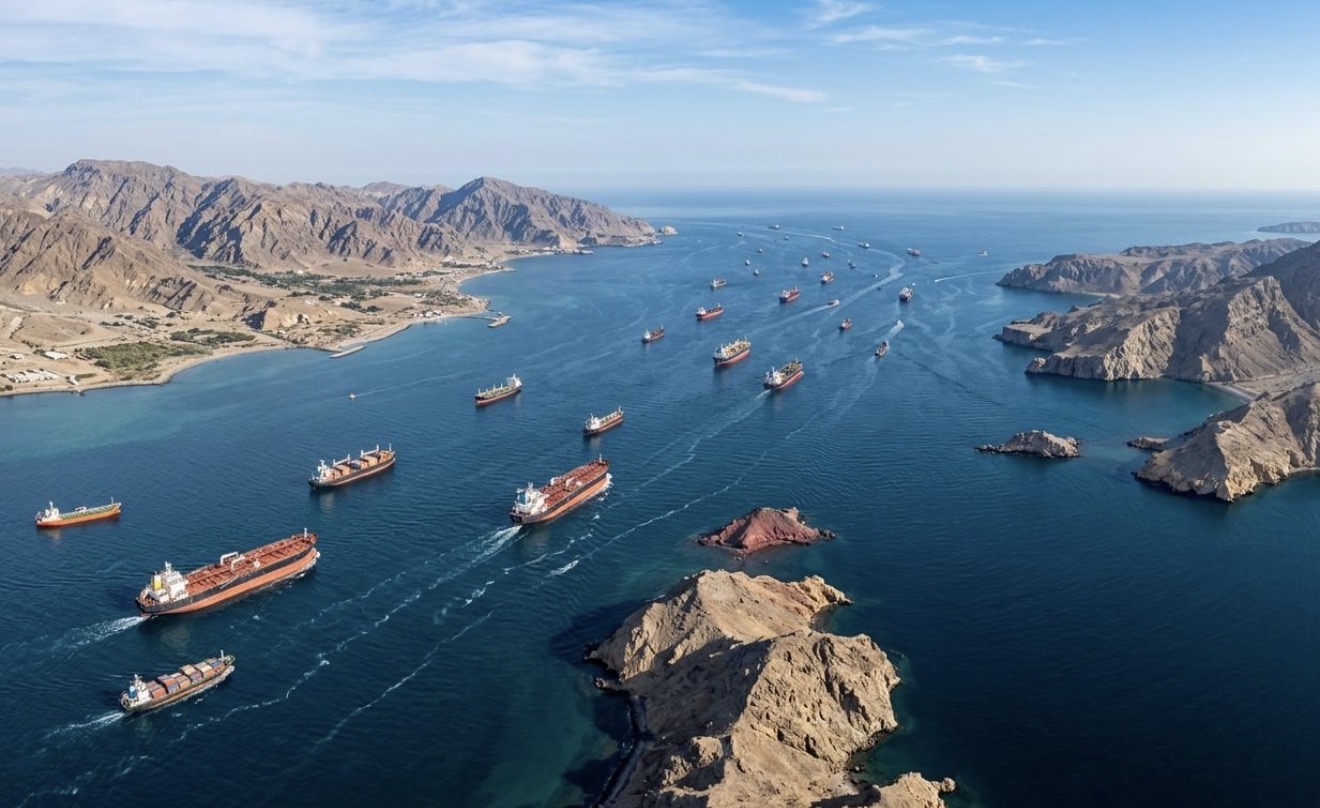
The Middle East remains central to the international energy and trade system.
Any serious escalation affecting major oil-producing regions or shipping routes could have consequences well beyond the immediate conflict zone.
Among the most important strategic waterways is the Strait of Hormuz, through which a substantial share of internationally traded oil and liquefied natural gas passes.
A major interruption could affect:
International oil prices.
Fuel availability and transportation costs.
Electricity generation and industrial production.
Food prices through transport and fertiliser costs.
International trade and insurance markets.
The impact would depend on the scale and duration of disruption, alternative supply routes and the responses of major producing countries.
For energy-importing economies, including Pakistan, these developments deserve particular attention.
6. Cyberwarfare: An invisible threat to modern society
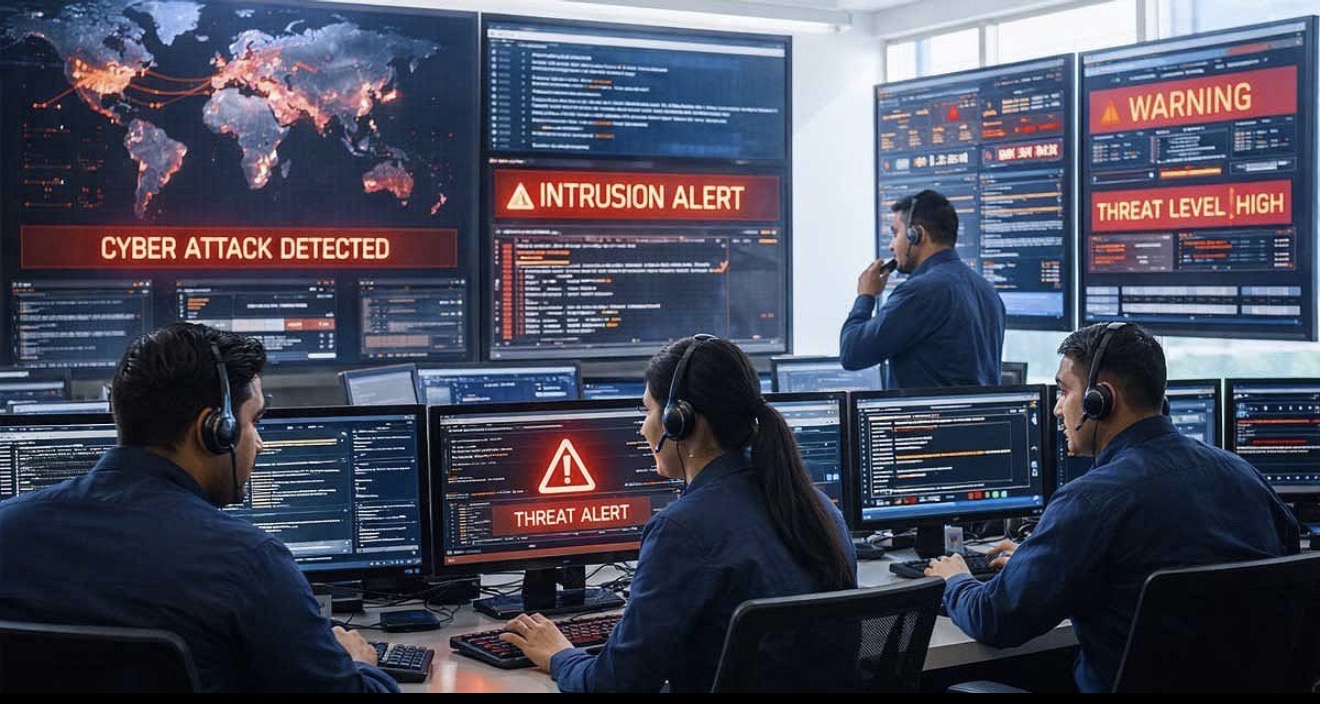
A modern emergency does not necessarily begin with an explosion, a military invasion or a natural disaster.
It could begin with a sophisticated cyberattack.
Imagine a situation in which:
Banking networks become temporarily unavailable.
Mobile payment systems stop working.
Electricity distribution systems experience disruption.
Airport operations are interrupted.
Government websites and communication networks become inaccessible.
Such events could affect millions of people without any physical attack on their homes.
This is why governments increasingly consider cybersecurity and civilian preparedness together.
A household that has drinking water, basic food, emergency cash, a power bank and access to reliable information is better positioned to manage a temporary disruption.
7. Energy security: The vulnerability of interconnected economies
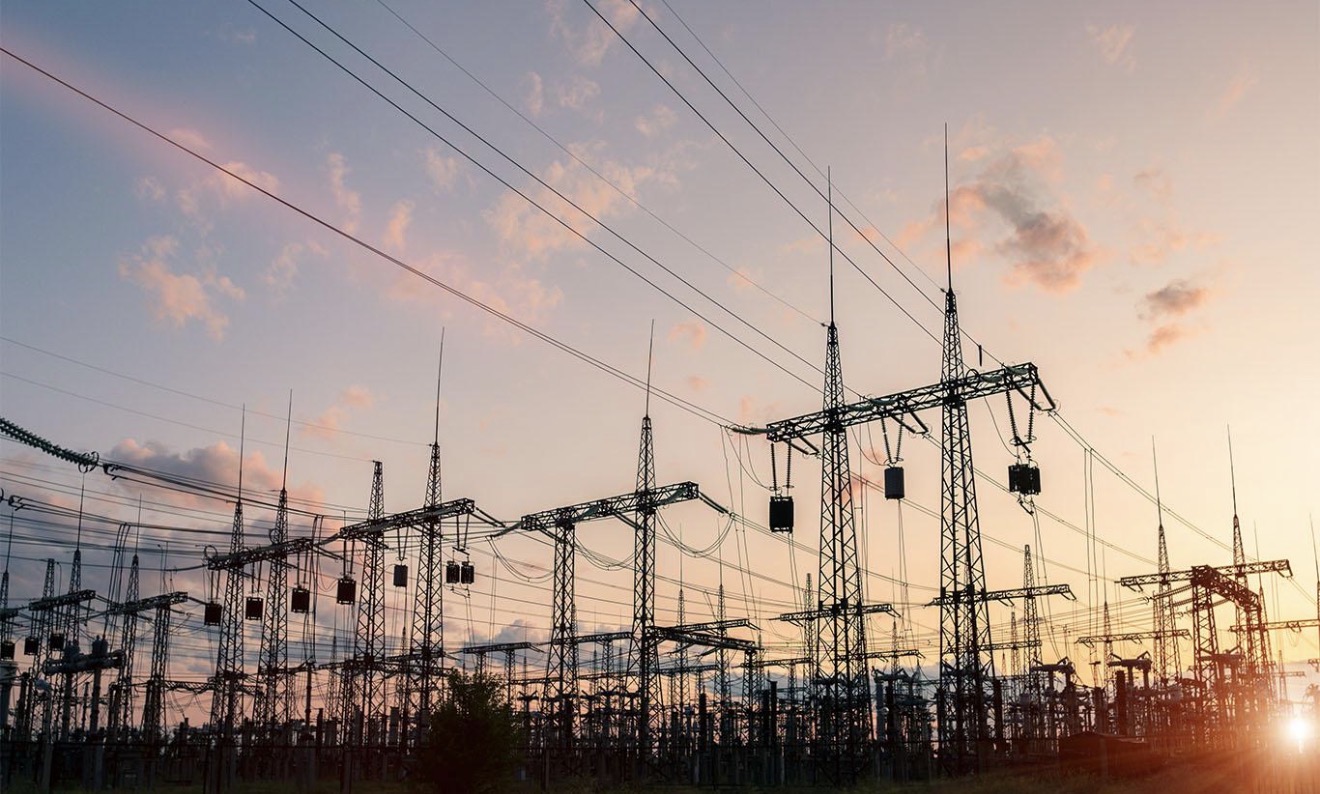
Electricity is fundamental to almost every aspect of modern life.
Hospitals require uninterrupted power. Water systems depend on electricity. Food storage relies on refrigeration. Telecommunications networks require energy to operate.
A prolonged power interruption can therefore produce consequences far beyond the electricity sector.
The international experience of energy-market disruption has encouraged governments to examine backup power, fuel reserves, supply-chain diversification and household-level preparedness.
The objective is to prevent one interruption from creating a much larger chain of failures.
8. Natural disasters and the humanitarian dimension
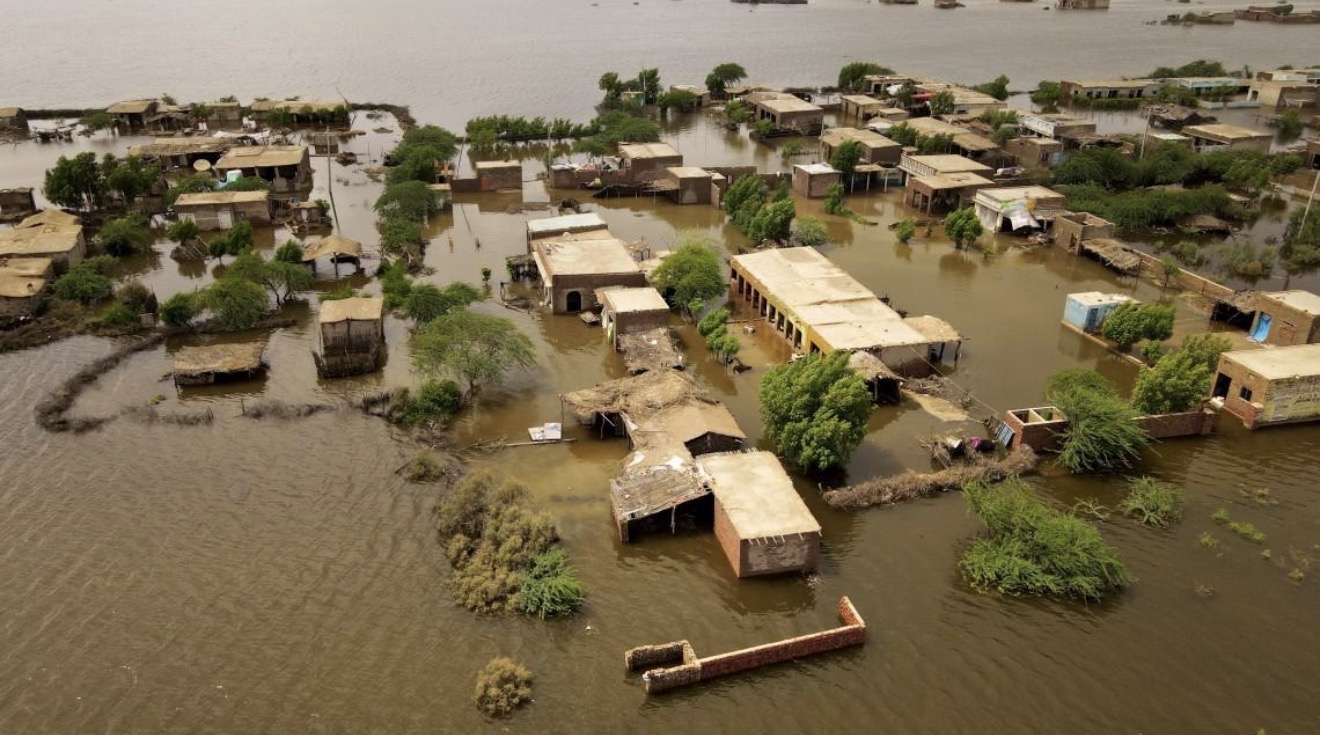
Emergency preparedness is not only about international conflict.
Climate-related disasters, floods, earthquakes, wildfires, storms and extreme weather can create equally serious humanitarian challenges.
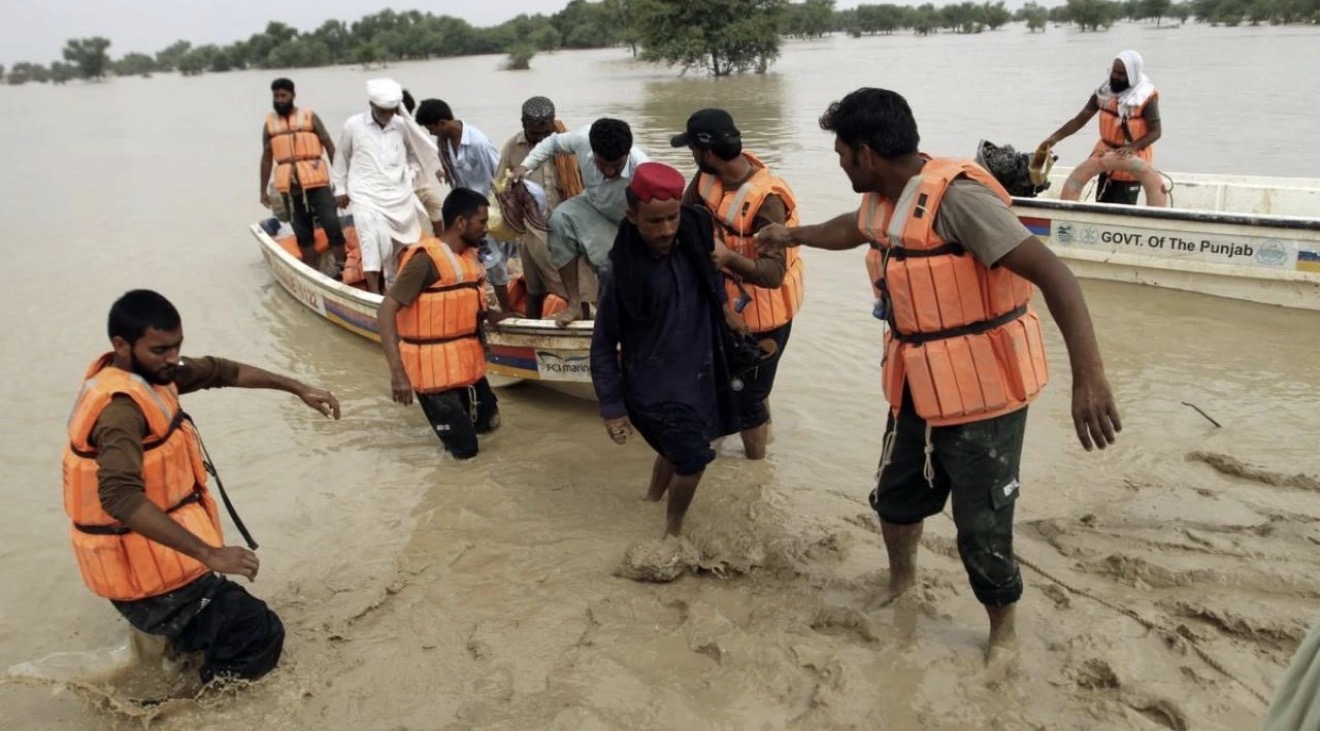
Pakistan has experienced the devastating consequences of major flooding, particularly in 2010 and 2022.
Such events demonstrate why emergency supplies, early-warning systems, evacuation planning, medical assistance and effective coordination are essential.
The humanitarian lesson is clear: the ability to protect civilians should not depend on whether a crisis originates from war, weather or infrastructure failure.
9. What does this mean for Pakistan?
Pakistan occupies a strategically important position in South Asia and is connected to major regional energy, trade and security developments.
Its preparedness requirements are different from those of European countries, but several international lessons are relevant.
First: National emergency planning
Pakistan should strengthen coordination between the National Disaster Management Authority, provincial disaster management authorities, local governments and emergency services.
Second: Household preparedness
Citizens should receive practical guidance on preparing for at least 72 hours of disruption.
Third: Energy resilience
Electricity distribution, fuel supply, hospitals and water infrastructure should have effective contingency arrangements.
Fourth: Food and water security
Strategic reserves, agricultural resilience and reliable distribution systems should remain national priorities.
Fifth: Cybersecurity
Financial networks, telecommunications, government systems and critical infrastructure require continuing protection.
Sixth: Public communication
Authorities should communicate risks transparently, distinguish confirmed information from rumours and provide clear instructions during emergencies.
Pakistan does not need to create public anxiety. It needs a practical, affordable and nationally coordinated culture of preparedness.
10. What should families keep at home?
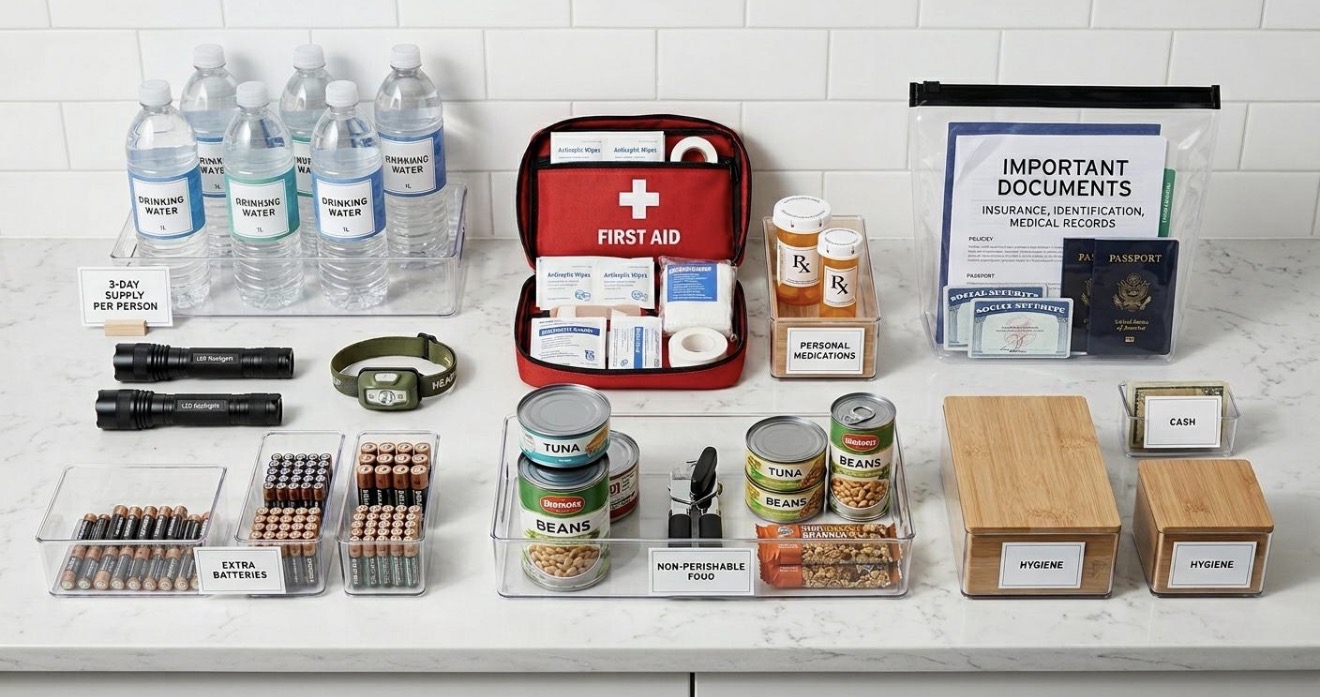
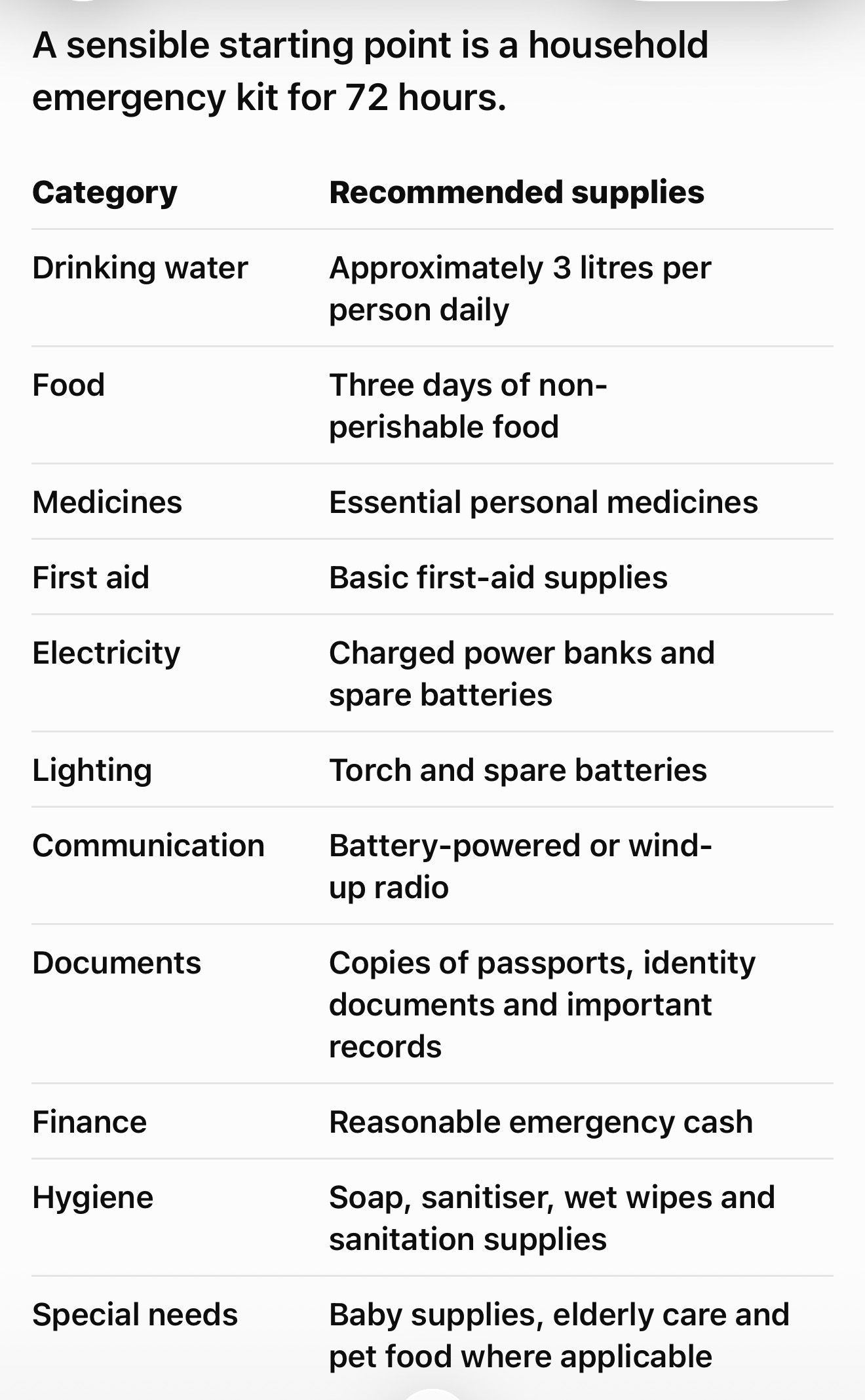
For a family of four, the basic drinking-water requirement would be approximately 36 litres for three days.
The UK emergency preparedness guidance recommends approximately 2.5–3 litres of drinking water per person daily, with additional water required for cooking and hygiene.
Families should build their supplies gradually, avoid unnecessary purchases and regularly check expiry dates.
11. The importance of international cooperation
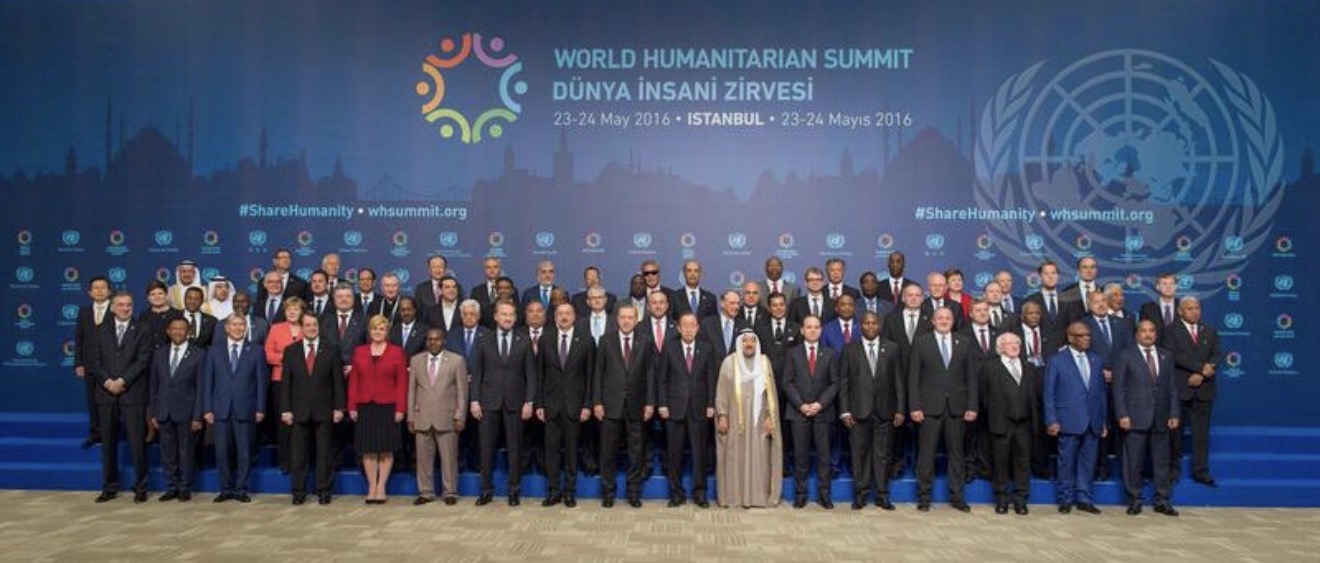
No country can independently manage every major international emergency.
Energy markets, financial networks, shipping routes, food supplies, public health and digital infrastructure cross national borders.
A crisis in one region can therefore affect societies thousands of kilometres away.
International cooperation is essential in several areas:
Sharing early-warning information.
Protecting international trade and shipping.
Coordinating humanitarian assistance.
Strengthening global cybersecurity.
Supporting disaster-affected populations.
Preventing conflicts through diplomacy.
Ensuring access to essential medicines, food and water.
Preparedness must not become a substitute for diplomacy. Its ultimate purpose should be to protect human life and reduce the consequences of crises.
12. The question of a possible global war
The widespread discussion of emergency supplies naturally raises a difficult question: Are governments preparing for a possible global conflict?
The responsible answer requires distinguishing between preparation and prediction.
There is clear evidence that governments are strengthening their ability to respond to military, technological, environmental and economic emergencies.
There is also clear evidence that European security planning has become more comprehensive in response to Russia's war against Ukraine and wider geopolitical tensions.
However, household stockpiling recommendations do not establish that a world war is imminent, nor do they demonstrate that governments possess secret information about a forthcoming global catastrophe.
A responsible international assessment must avoid turning precautionary government guidance into predictions that cannot be substantiated.
13. The future of national security: From military defence to societal resilience
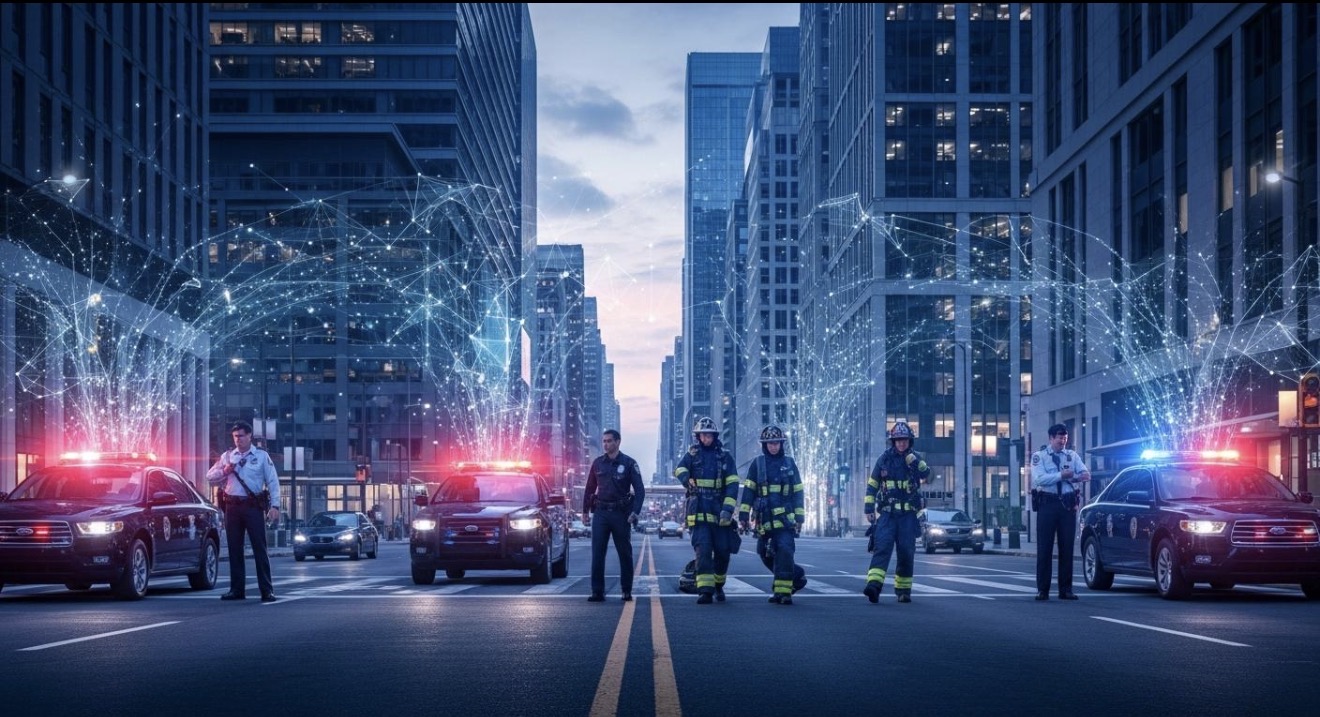
The traditional understanding of national security focused heavily on territorial defence, military strength and border protection.
Today, the concept is broader.
A resilient country must be able to protect its population, maintain essential services, secure supply chains and restore normal life following a major disruption.
This requires a partnership between:
Governments and public institutions.
Armed forces and civil protection agencies.
Hospitals and healthcare providers.
Private businesses and infrastructure operators.
Local communities and households.
International humanitarian organisations.
The European Preparedness Union Strategy reflects this broader understanding by promoting an integrated, all-hazards approach and cooperation across government and society.
Conclusion: Preparedness is wisdom, not fear
The growing emphasis on emergency preparedness across the world represents an important development in modern public policy.
Governments are recognising that even highly developed economies can face temporary interruptions to essential services. Military conflict, cyberattacks, energy disruptions, pandemics and natural disasters can all challenge the stability of modern societies.
The recommendations for three, seven or ten days of household supplies should therefore be understood within the wider context of civilian resilience.
For Pakistan and other developing countries, the message is equally relevant. Investment in disaster management, energy security, food and water systems, cybersecurity and public awareness can save lives and protect national stability.
But preparedness alone cannot guarantee peace.
The international community must continue to pursue dialogue, diplomacy, responsible leadership and cooperation to prevent conflicts before they become humanitarian disasters.
The world needs stronger emergency systems, but it also needs stronger commitments to peace.
The greatest achievement of national security is not simply the ability to survive a crisis. It is the ability to prevent that crisis from happening in the first place.
TWH — THE WORLD & HUMANITY
A Message to Humanity
Preparedness, not panic.
Awareness, not fear.
Diplomacy, not confrontation.
Humanity above all interests.
Our shared future depends on protecting human life, strengthening international cooperation and building a safer world for generations to come.
SPECIAL INTERNATIONAL EDITION · 2 NOVEMBER 2026
Editorial perspective | International security | Humanitarian affairs | Global resilience
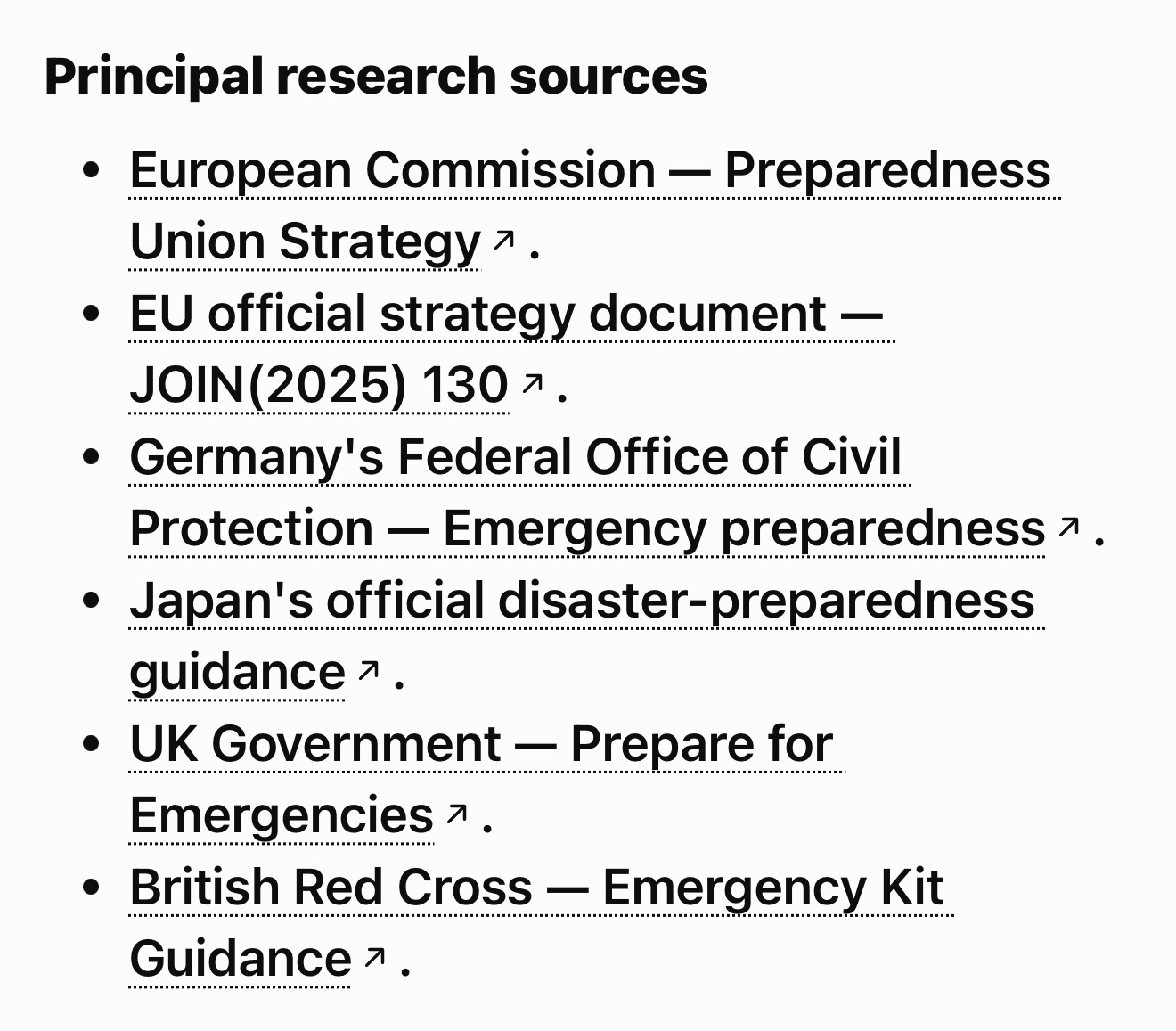
Principal research sources
Editorial note: Country recommendations are not identical, and some figures circulating on social media are not confirmed as nationwide government instructions. This article distinguishes official guidance from broader geopolitical analysis.


Comments
Post a Comment