The Changing Global Order and the Need for Responsible Leadership.
Picture just for reference
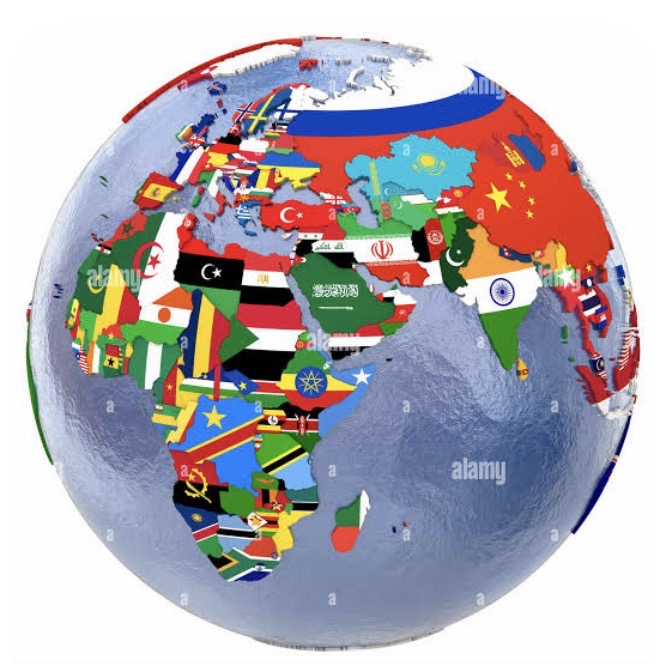
The Changing Global Order and the Need for Responsible Leadership
Introduction
The world is witnessing a significant shift in the balance of global power. For decades after the Cold War, the international system was largely dominated by a single superpower, the United States. However, recent geopolitical developments suggest that the global order is gradually moving toward a more complex and multipolar structure. Emerging strategic dynamics involving China and Russia are reshaping international relations and forcing countries around the world to reassess their foreign policies.
In this changing environment, the question is no longer whether global power is shifting, but how major powers will manage this transition and whether they will choose confrontation or cooperation.
The Hormuz Crisis and Shifting Alliances
The recent tensions surrounding the Strait of Hormuz have highlighted these evolving realities. This narrow waterway is one of the most critical energy corridors in the world, through which a substantial portion of global oil supplies passes. Any disruption in this region immediately affects international markets, economic stability, and global security.
What has been particularly notable in the current situation is the reluctance of several allied nations to participate in potential military escalation. Many countries have demonstrated caution, emphasizing diplomacy rather than confrontation. This response reflects a broader global trend: nations are increasingly prioritizing their own economic stability and regional peace over involvement in large-scale military conflicts.
A World Moving Toward Multipolarity
The emerging geopolitical landscape suggests that the world is transitioning toward a multipolar order. In such a system, power is distributed among several major actors rather than concentrated in a single dominant state.
Today, three major strategic centers of power are frequently discussed:
- United States
- China
- Russia
Each of these nations possesses significant military, political, and economic influence. While the United States remains the most powerful military and financial actor globally, China’s rapid economic expansion and Russia’s strategic military capabilities have created a more balanced and competitive international environment.
This shift does not necessarily mean the decline of one country alone; rather, it represents the natural evolution of the global system as new powers rise and others adjust to new realities.
The Cost of Unnecessary Wars
History has repeatedly demonstrated that prolonged military conflicts often carry severe consequences not only for the countries directly involved but also for the global community. Wars destabilize regions, weaken economies, displace populations, and create long-term geopolitical tensions.
For the United States, decades of involvement in conflicts across different regions have sparked significant debates within American society itself. Many citizens, policymakers, and analysts have questioned whether continued military interventions truly serve the long-term interests of the country.
Military strength may secure temporary strategic advantages, but sustainable global leadership ultimately depends on diplomacy, cooperation, and respect for international stability.
A Message for Responsible Global Leadership
At this critical moment in history, major powers must recognize that the future of the world cannot be shaped through dominance alone. Global challenges—economic instability, energy security, climate change, and regional conflicts—require cooperation rather than confrontation.
For the United States, one of the most influential nations in modern history, a policy of restraint and thoughtful leadership could strengthen its credibility and global standing. Avoiding unnecessary wars and respecting the sovereignty of other nations would not only reduce international tensions but also serve the long-term interests of the American people themselves.
The strength of a nation is not measured solely by its military capabilities, but by its wisdom in choosing when not to use them.
Conclusion
The world is entering a new phase of international relations where power is more widely distributed and national interests are increasingly diversified. In such a landscape, cooperation, diplomacy, and mutual respect will determine whether the coming decades are marked by conflict or stability.
Rather than attempting to dominate a changing world, major powers should strive to guide it toward peace, balance, and shared prosperity. This approach would benefit not only the global community but also the future stability and integrity of the nations that choose the path of responsible leadership.
Syed Ali Raza Naqvi Bukhari
Unity of Peace, Economic Reform, and Global Unity
Founder & Chairman of Tehreek Istehkam Pakistan, and the author of “Law of God” and “Social Democratic System.” advocates for truth, social justice, and reform in all sectors of society.


Comments
Post a Comment