From Mukesh Ambani to National Reserves: What Pakistan, India and Bangladesh Reveal About Economic Power.
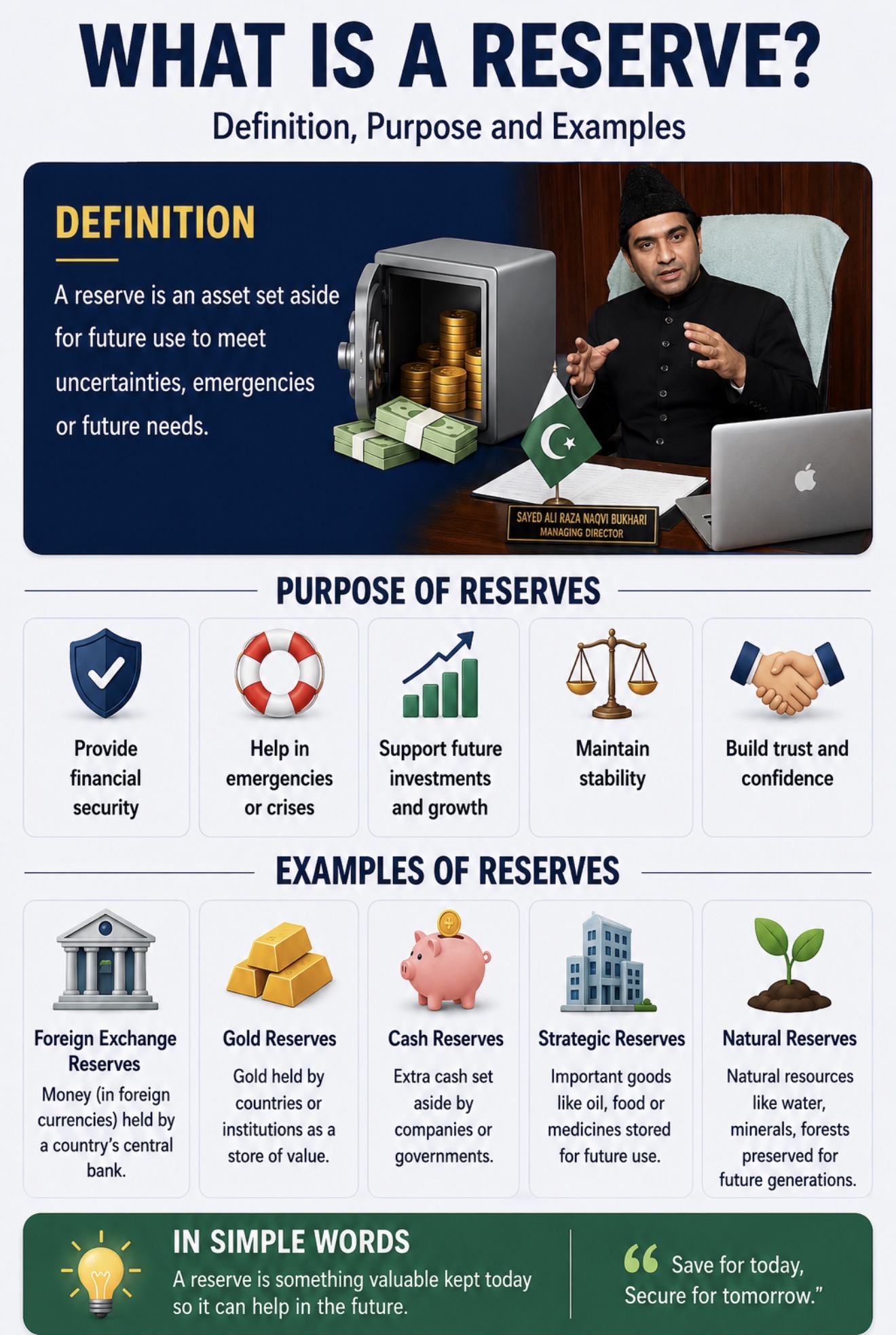
From Mukesh Ambani to National Reserves: What Pakistan, India and Bangladesh Reveal About Economic Power
The Real Meaning Behind the “Ambani Has More Money Than Pakistan” Debate
A striking comparison has recently attracted public attention: Mukesh Ambani’s estimated personal net worth can be several times larger than the foreign-exchange reserves held by the State Bank of Pakistan.
At first glance, this sounds astonishing—and it is certainly a powerful illustration of the difference between private wealth and national financial capacity. But the comparison must be understood correctly.
A billionaire’s net worth is not the same thing as a country’s foreign-exchange reserves. Ambani’s wealth is largely represented by ownership stakes in businesses and other assets whose market value changes over time. Pakistan’s reserves, by contrast, are liquid foreign assets held within the country’s monetary and banking system to meet external payment obligations, support financial stability and provide a buffer against external shocks.
Nevertheless, the comparison raises a much more important question:
Why does India have hundreds of billions of dollars in foreign-exchange reserves, while Pakistan has only a fraction of that amount—and why has Bangladesh also accumulated considerably more reserves than Pakistan despite having a smaller population?
The answer lies not simply in the amount of money a country possesses, but in its ability to continuously earn foreign currency through exports, services, investment, remittances and productive economic activity.
1. The Current Numbers: Pakistan, India and Bangladesh
As of 7 August 2026, the State Bank of Pakistan reported Pakistan’s total liquid foreign-exchange reserves at approximately $22.50 billion, consisting of about $17.06 billion held by the SBP and approximately $5.44 billion held by commercial banks. (State Bank of Pakistan)
India’s foreign-exchange reserves reached approximately $707 billion during the week ending 7 August 2026. The increase of roughly $14.1 billion in a single week took India’s reserves to a four-month high. (Reuters)
Bangladesh’s gross reserves stood at approximately $37.11 billion in the latest August 2026 data released by Bangladesh Bank. (BSS)
The headline comparison therefore looks like this:
|
Country |
Foreign-Exchange Reserves |
Approx. 2026 Population |
Approx. Reserves per Person |
|
India |
$707 billion |
1.48 billion |
~$478 |
|
Bangladesh |
$37.1 billion |
175.4 million |
~$212 |
|
Pakistan |
$22.5 billion |
245.1 million |
~$92 |
Population estimates are based on the IMF’s 2026 country data for Pakistan, India and Bangladesh. (IMF)
This produces a striking result.
On a per-person basis, India’s reserve cushion is roughly five times Pakistan’s, while Bangladesh’s is more than twice Pakistan’s.
That is arguably more meaningful than simply saying that India has $707 billion and Pakistan has $22.5 billion.
2. India Has Not Simply “Saved Dollars”—It Has Built a Foreign-Currency Earning Machine
India’s $707 billion reserve position cannot be explained by one source.
India has developed a highly diversified economy involving:
- Information technology and software services
- Pharmaceuticals
- Engineering products
- Automobiles and components
- Chemicals
- Electronics
- Petroleum products
- Business and financial services
- Manufacturing
- Foreign direct investment
- Portfolio investment
- Large-scale remittances
- A massive domestic market
India’s reserve position has also benefited from recent capital and foreign-currency inflows. Reuters reported that India’s reserves increased by about $40 billion over a six-week period, with policy-driven dollar inflows playing an important role. (Reuters)
This is an important lesson:
Large reserves are not created merely by holding money. They are created by repeatedly generating foreign-currency inflows faster than foreign-currency outflows over time.
India’s enormous domestic market also gives its economy an advantage. Companies can grow at home while simultaneously expanding into international markets.
3. Bangladesh: The More Relevant Comparison for Pakistan
India is a huge economy with a population approaching 1.5 billion. Comparing Pakistan directly with India can therefore sometimes hide the underlying structural problem.
Bangladesh is a more revealing comparison.
Bangladesh has a population of roughly 175 million, substantially smaller than Pakistan’s approximately 245 million, yet its gross foreign-exchange reserves have risen above $37 billion. (IMF)
This means Bangladesh has:
Fewer people + smaller geographic size + a smaller economy than India, but a stronger reserve position than Pakistan.
That should make Pakistan’s policymakers, business community and economic planners pay particular attention.
4. Bangladesh’s Export Strategy Offers an Important Lesson
One of Bangladesh’s greatest economic achievements has been its development of an export-oriented manufacturing industry, particularly ready-made garments.
The country built a global position by combining:
- Low-cost manufacturing
- Large-scale labour availability
- Textile and apparel supply chains
- Export-oriented factories
- Integration with international brands
- Industrial clusters
- Increasing participation of women in manufacturing
- Long-term specialization in a globally demanded product
Bangladesh did not attempt to become everything at once.
It developed a major export engine and then expanded around it.
This is an important distinction for Pakistan.
Pakistan has a significant textile industry as well, but it has not captured the same level of global value-chain integration and export scale that Bangladesh has achieved in garments.
The question is therefore not whether Pakistan has resources.
The question is:
Why has Pakistan not converted its resources, population, geography and entrepreneurial talent into a much larger and more diversified export machine?
5. Pakistan’s Structural Problem: Too Few Dollars Earned from Exports
Pakistan’s foreign-exchange problem is fundamentally connected to its external account.
The country has historically struggled to generate enough export earnings to comfortably finance its imports, external debt payments and other foreign-currency requirements.
Pakistan’s FY2025 goods exports were around $32 billion, while remittances reached approximately $38.3 billion. (Digital Pakistan)
This produces an important observation:
Pakistan’s overseas workers are currently generating more foreign exchange through remittances than the country generates through merchandise exports.
Remittances are extremely valuable. They support millions of families and provide a major source of foreign currency.
But remittances should ideally complement an export economy—not substitute for one.
A country cannot build long-term economic power simply by relying on its citizens working abroad.
It needs to create products and services that the rest of the world is willing to buy.
6. The Difference Between Remittances and Exports
Consider two hypothetical situations.
Model A: Remittance-dependent economy
Millions of citizens leave the country and send money home.
The country receives billions of dollars.
Families consume the money.
Some money enters banks.
But the domestic economy does not significantly increase its ability to produce internationally competitive goods and services.
Model B: Export-driven economy
A country develops:
- Software companies
- Pharmaceutical companies
- Engineering firms
- Automobile suppliers
- Food-processing companies
- Textile brands
- Electronics manufacturers
- Agricultural exporters
- Minerals-processing industries
These businesses sell to the world every year.
The country continuously earns foreign currency.
That creates a sustainable foreign-exchange base.
Model B creates national productive power.
7. The Per-Capita Reserve Comparison Is Particularly Revealing
The total figures can be misleading because the populations are dramatically different.
Using approximately:
- India: 1.48 billion people
- Pakistan: 245 million
- Bangladesh: 175 million
the reserve position per person is approximately:
India
$707 billion ÷ 1.48 billion ≈ $478 per person
Bangladesh
$37.1 billion ÷ 175.4 million ≈ $212 per person
Pakistan
$22.5 billion ÷ 245.1 million ≈ $92 per person
Therefore:
India ≈ 5.2× Pakistan
Bangladesh ≈ 2.3× Pakistan
in reserves per person.
This is a much more meaningful measure of external financial cushioning than the headline total alone.
8. GDP Tells Another Important Story
The IMF’s 2026 data put Pakistan’s population at approximately 245 million, with nominal GDP around the $400-billion range in its current-price data. (IMF)
Bangladesh’s population is around 175 million, while its GDP per capita is estimated at approximately $2,910 in the IMF’s 2026 data. (IMF)
Pakistan’s GDP per capita remains substantially lower, around $1,700 in the relevant IMF data. (IMF)
This means the issue is not merely foreign reserves.
It is a deeper question of economic productivity per person.
A country becomes wealthier when each worker, company and unit of capital becomes more productive.
9. What About Mukesh Ambani?
Now we can return to the famous Ambani comparison.
If Mukesh Ambani’s estimated net worth is assumed to be approximately $91 billion, then:
$91 billion ÷ $17.06 billion ≈ 5.3
In that narrow numerical comparison, Ambani’s estimated net worth is more than five times the reserves held by the State Bank of Pakistan.
But this statement must not be misunderstood.
Ambani’s $91 billion is not $91 billion sitting in cash.
A billionaire’s net worth includes ownership of companies, shares, property and other assets. If the market value of those businesses rises, net worth rises; if share prices fall, net worth falls.
Pakistan’s foreign-exchange reserves are fundamentally different.
They are a national financial buffer intended to support:
- Imports
- External debt payments
- Currency stability
- Balance-of-payments needs
- International confidence
- Emergency liquidity
Therefore:
Comparing Ambani’s net worth with Pakistan’s reserves is useful as a dramatic illustration of scale, but it is not an apples-to-apples economic comparison.
The real comparison should be private wealth creation versus national productive capacity.
10. The Bigger Question: Why Does India Have $707 Billion?
India’s reserve accumulation reflects decades of economic expansion, increasing integration with global markets and a diversified foreign-exchange earning base.
India’s current reserve composition includes foreign-currency assets, gold, SDRs and its reserve position at the IMF. As of 7 August 2026, foreign-currency assets alone were around $574.6 billion, while gold reserves were approximately $108.7 billion. (Reuters)
India therefore has an enormous external financial cushion.
It does not mean every Indian citizen is personally wealthy.
India still has substantial poverty, inequality and low per-capita income relative to advanced economies. Fitch, for example, continues to identify India’s relatively low GDP per capita as a structural weakness despite its strong growth and external buffers. (Reuters)
So even India’s success should not be reduced to one number.
11. Pakistan’s Challenge Is Not the Absence of Potential
Pakistan possesses many advantages:
A large population
A population of around 245 million represents a huge domestic market and potential workforce. (IMF)
Strategic geography
Pakistan sits between major economic regions including China, Central Asia, South Asia and the Middle East.
Agriculture
Pakistan has substantial agricultural production and enormous potential for food processing and agricultural exports.
Textile capability
Pakistan already possesses an established textile ecosystem.
Minerals
The country has significant mineral resources that could become a major source of export earnings if developed responsibly and processed domestically.
IT and young talent
Pakistan has a large young population and an expanding technology sector.
Overseas Pakistanis
Millions of Pakistanis work abroad and generate tens of billions of dollars in annual remittances.
The problem is therefore not simply a lack of assets.
It is the conversion of potential into internationally competitive production.
12. Pakistan Needs to Move From “Managing Dollars” to “Creating Dollars”
This may be the most important economic lesson.
For decades, Pakistan has often focused on:
- Obtaining external loans
- Negotiating IMF programmes
- Managing exchange rates
- Restricting imports
- Raising interest rates
- Attracting remittances
- Seeking temporary balance-of-payments support
These measures can stabilize an economy.
But stabilization is not the same as transformation.
Pakistan needs to move from:
“How do we conserve our dollars?”
to:
“How do we earn dramatically more dollars?”
That requires an export revolution.
13. A $100 Billion Export Target Should Become a National Economic Mission
Instead of treating $30–35 billion in annual merchandise exports as sufficient, Pakistan should establish a long-term national objective:
Stage 1
$35 billion → $50 billion
Stage 2
$50 billion → $75 billion
Stage 3
$75 billion → $100 billion+
The objective should not be achieved merely by exporting more raw materials.
Pakistan should move toward value-added exports.
For example:
Instead of exporting cotton → export branded garments.
Instead of exporting agricultural commodities → export processed food.
Instead of exporting minerals → develop mineral processing and downstream industries.
Instead of exporting individual freelancers → build globally competitive Pakistani technology companies.
Instead of exporting low-value textiles → build international Pakistani brands.
This is how foreign exchange becomes sustainable.
14. Five Sectors Could Transform Pakistan’s External Account
1. Information Technology
Pakistan has the potential to dramatically increase software, AI, cybersecurity, fintech and business-process exports.
The target should eventually be tens of billions of dollars in annual digital exports, not merely a few billion.
2. Value-Added Textiles
Pakistan already has the industrial base.
The next step should be:
yarn → fabric → garments → international brands
The greater the value added inside Pakistan, the greater the foreign exchange earned.
3. Agriculture and Food Processing
Pakistan should shift from simply producing agricultural commodities toward:
- packaged foods
- processed fruits
- halal food
- dairy products
- meat products
- frozen foods
- agricultural ingredients
The global food market is enormous.
4. Minerals and Mining
Pakistan possesses significant mineral potential.
But the objective should not simply be:
dig → export
It should increasingly become:
extract → process → manufacture → export
That creates jobs, technology and much greater export value.
5. Engineering and Manufacturing
Pakistan needs to move beyond basic manufacturing into:
- auto components
- electrical equipment
- industrial machinery
- medical devices
- pharmaceuticals
- electronics
- renewable-energy equipment
These sectors can create much higher-value exports.
15. What Pakistan Can Learn From Bangladesh
Bangladesh demonstrates that a country does not need India’s enormous population or economic scale to improve its external position.
It needs:
specialization + consistency + export orientation + industrial policy + global market integration.
Bangladesh’s garment industry became globally competitive because the country remained focused on a sector where it could build scale.
Pakistan should learn the principle—not necessarily copy the exact industry.
Pakistan’s future export strategy should be based on sectors where the country possesses:
- Natural or human advantages
- Large international markets
- Potential for value addition
- Ability to achieve economies of scale
- Capacity to attract foreign investment
16. The Real Measure of National Wealth
A country’s strength should not be measured by foreign reserves alone.
Nor should it be measured by the wealth of one billionaire.
A stronger economic scorecard would include:
Exports
Foreign-exchange reserves
GDP per capita
Productivity
Manufacturing capacity
Technology exports
Foreign direct investment
Energy security
Debt sustainability
Human capital
Global brands
Value-added production
A country becomes economically powerful when it can produce things the world wants to buy.
17. The Ambani Comparison Should Become a Lesson—Not an Insult
The statement that:
“One Indian man has more money than Pakistan’s foreign reserves”
may be rhetorically powerful, but it should not become a source of humiliation.
It should become a lesson.
India’s enormous private fortunes demonstrate that large-scale businesses can be built in South Asia.
India’s $707-billion reserve position demonstrates what sustained foreign-currency generation and capital inflows can produce at the national level. (Reuters)
Bangladesh’s $37-billion reserve position demonstrates that even a smaller South Asian economy can build a substantial external cushion. (BSS)
Pakistan’s approximately $22.5-billion total liquid reserves demonstrate that the country has achieved stabilization but still has a significant external-financing challenge. (State Bank of Pakistan)
The lesson is therefore not:
“India is rich and Pakistan is poor.”
The more useful lesson is:
Pakistan has not yet converted its enormous human, geographic and economic potential into sufficient foreign-exchange earning capacity.
18. A Vision for Pakistan
Imagine a Pakistan where:
- IT exports reach $20–30 billion
- Textile exports move decisively toward high-value products
- Agriculture becomes a global food-processing industry
- Minerals are processed domestically
- Pakistani engineering companies enter global supply chains
- Pharmaceutical exports expand substantially
- Pakistani brands become internationally recognized
- Overseas Pakistanis invest in productive businesses
- Foreign investors come for manufacturing rather than simply financial arbitrage
- Exports grow faster than imports
- Foreign reserves rise because the economy earns dollars rather than repeatedly borrowing them
Such a Pakistan would not need to obsess over whether its reserves are $20 billion or $30 billion.
Its underlying economy would continuously generate foreign exchange.
Conclusion: The Real Battle Is Not for Reserves—It Is for Productivity
The comparison between Mukesh Ambani’s wealth, India’s reserves, Bangladesh’s reserves and Pakistan’s reserves reveals a much deeper truth.
India’s approximately $707 billion reserve position represents a huge external financial cushion.
Bangladesh’s approximately $37 billion demonstrates the progress of a smaller South Asian economy.
Pakistan’s approximately $22.5 billion total liquid reserves show that stabilization has been achieved, but the country’s external earning capacity remains far below its potential. (Business Recorder)
The most important figure, however, is not $707 billion, $37 billion, $22.5 billion—or even Mukesh Ambani’s estimated $91 billion.
The most important figure is how many dollars an economy can earn every year through productive activity.
Pakistan should therefore stop thinking primarily about saving scarce dollars and start thinking about creating abundant dollars.
The ultimate objective should be simple:
Produce more. Add more value. Export more. Invest more. Innovate more. And earn more from the world than Pakistan spends on the world.
If Pakistan can achieve that transformation, foreign reserves will no longer be a recurring economic emergency.
They will become the natural consequence of a productive, competitive and export-driven economy.
Sources and data note
The reserve figures in this article use the latest August 2026 figures available at the time of writing: Pakistan’s official SBP total liquid reserves of $22.4983 billion, India’s $707.002 billion, and Bangladesh’s latest reported gross reserves of approximately $37.11 billion. (State Bank of Pakistan)
Population and macroeconomic comparisons use IMF 2026 country data where available. (IMF)


Comments
Post a Comment