Rising Tensions in the Strait of Hormuz and the Risk of a Wider Global Conflict.
Picture just for reference
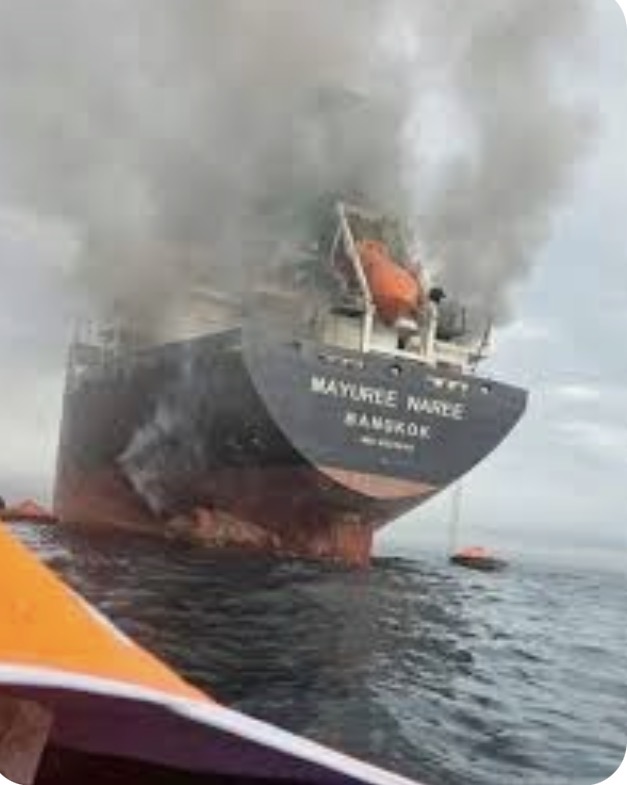
Rising Tensions in the Strait of Hormuz and the Risk of a Wider Global Conflict.
Introduction
The Strait of Hormuz, one of the most strategically vital waterways in the world, has once again become the center of escalating geopolitical tensions. Reports of attacks on commercial vessels, alleged naval confrontations, and fears of sea mines being deployed have heightened global concern about the stability of energy supply routes and the possibility of a broader regional conflict.
Attacks on Commercial Ships
Recent developments indicate that several merchant vessels operating near the Strait of Hormuz have suffered damage amid rising hostilities. While the exact nature of the attacks remains disputed, some reports suggest that naval mines or drone-operated boats may have been involved. The United States has claimed that it targeted and destroyed multiple Iranian vessels allegedly involved in laying mines in the region, although Iranian officials have not fully confirmed these claims. Such conflicting narratives are common in times of military confrontation, making it difficult to establish the precise sequence of events.
Strategic Importance of the Strait of Hormuz
The Strait of Hormuz is a critical maritime corridor through which nearly one-fifth of the world’s oil supply passes every day. Any disruption to this route has immediate global economic consequences, particularly for countries heavily dependent on Gulf oil exports. Even the perception of instability in this narrow passage can send shockwaves through international energy markets and raise oil prices worldwide.
Unverified Reports and Information Warfare
At the same time, reports have circulated on social media suggesting that only a limited number of countries’ vessels—such as those from China, Russia, and Pakistan—are currently being allowed to pass safely through the area. However, these claims remain largely unverified in official international reporting. Similarly, rumors regarding attacks on foreign diplomatic facilities and injuries to major political leaders have spread rapidly online but lack reliable confirmation from established global news organizations.
Pakistan’s Strategic Concerns
In Pakistan, attention has been focused on the security of maritime trade and energy supply routes. Like many countries in the region, Pakistan relies heavily on oil shipments passing through the Strait of Hormuz. Any prolonged disruption could have serious implications for the country’s economy. In such circumstances, naval preparedness and diplomatic caution become essential elements of national strategy.
Global Power Dynamics
Another important dimension of the current crisis is the position of regional and global powers. The United States and its allies are determined to maintain freedom of navigation in international waters, while Iran views its regional security interests as being under constant pressure. Meanwhile, countries such as China and Russia are carefully observing the developments, aware that instability in the Middle East could reshape global power dynamics.
Public Sentiment Inside Iran
Public demonstrations in Iran also reflect the complex domestic dimension of the conflict. Large gatherings and expressions of national solidarity suggest that many Iranians view the confrontation not merely as a military issue but as a matter of sovereignty and national dignity. History has shown that public morale and national unity can significantly influence the course of prolonged conflicts.
The Danger of Misinformation
One of the greatest challenges during crises of this nature is the rapid spread of misinformation. Social media platforms often circulate dramatic claims—ranging from major military victories to high-profile assassinations—long before credible verification emerges. Responsible analysis requires caution, patience, and reliance on verified sources.
Conclusion
Ultimately, the situation in the Strait of Hormuz represents more than a regional naval standoff. It highlights the fragile balance of global security, energy dependency, and international diplomacy. If tensions escalate further, the consequences could extend far beyond the Middle East, affecting economies, alliances, and political stability across the world.
For this reason, the international community must prioritize dialogue, de-escalation, and diplomatic engagement. Preventing a wider conflict is not only a regional necessity but a global responsibility.
Syed Ali Raza Naqvi Bukhari
Unity of Peace, Economic Reform, and Global Unity
Founder & Chairman of Tehreek Istehkam Pakistan, and the author of “Law of God” and “Social Democratic System.” Advocate for truth, social justice, and reform in all sectors of society.


Comments
Post a Comment