Salary Pays for Service, Not for Sacrifice
Salary Pays for Service, Not for Sacrifice
Why Reducing National Service to a Paycheck Is a Misleading Narrative
Introduction
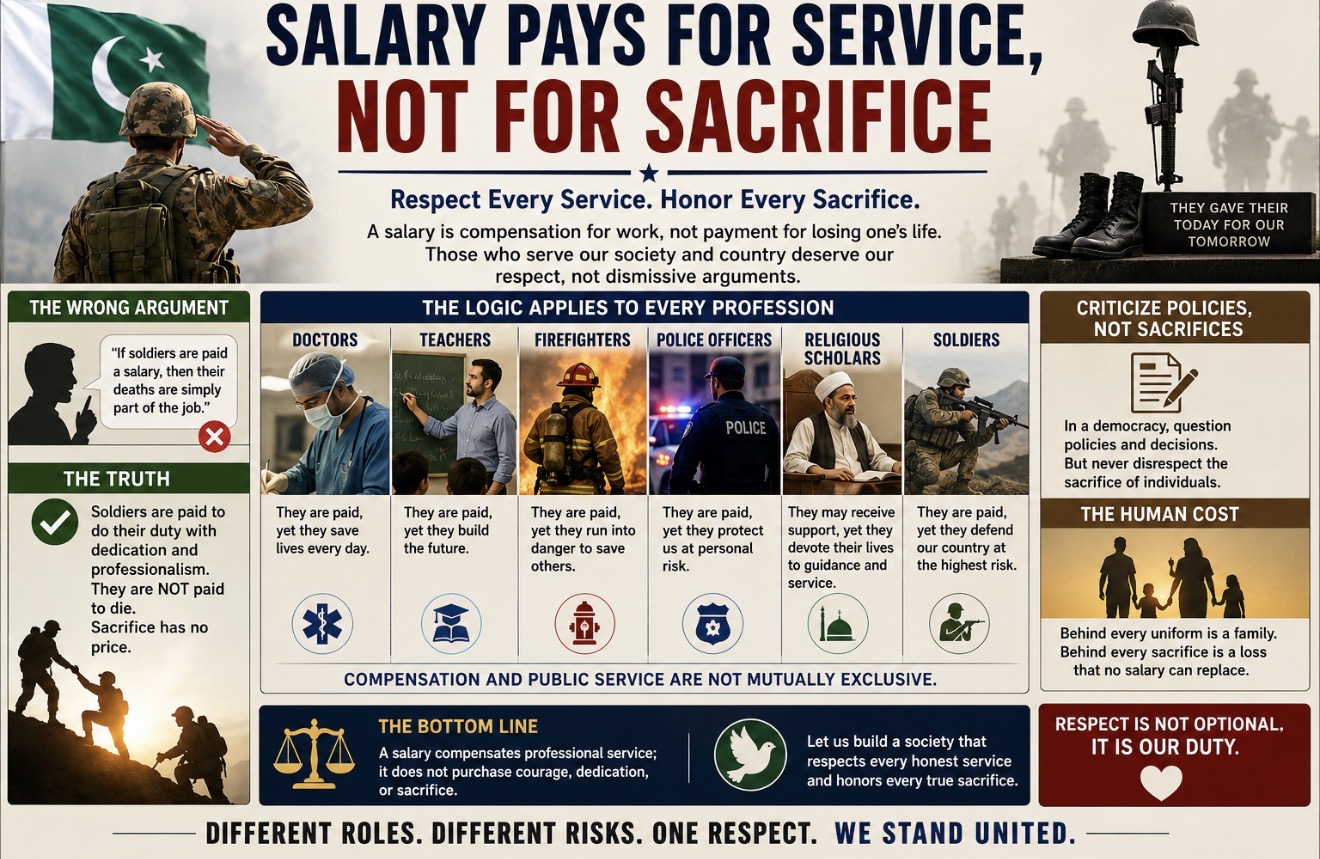
In recent years, a misleading argument has gained attention: “If soldiers are paid a salary, then their deaths are simply part of the job.” This claim is not only logically flawed but also dismisses the value of sacrifice made by those who risk their lives in the service of their nation.
The same reasoning, if applied consistently, would unfairly diminish the contributions of teachers, doctors, firefighters, police officers, religious scholars, rescue workers, and many others who receive compensation while dedicating themselves to serving society.
A Salary Is Compensation for Work—Not Payment for Sacrifice
A salary compensates individuals for their time, skills, and responsibilities. It does not place a price on their lives.
No employer pays someone to die. Soldiers are paid to perform demanding and dangerous duties in defense of their country. If they lose their lives in that service, their sacrifice represents something far beyond any financial compensation.
The distinction between employment and sacrifice is both morally and logically important.
The Logic Applies Across Every Profession
If receiving a salary means a person’s service has no value, then the same conclusion would have to apply to many professions:
- Doctors are paid, yet they save lives every day.
- Teachers are paid, yet they educate future generations.
- Firefighters are paid, yet they enter burning buildings to rescue strangers.
- Police officers are paid, yet they protect communities at personal risk.
- Religious scholars may receive financial support, yet many devote their lives to teaching and serving their communities.
Compensation and public service are not mutually exclusive.
The Unique Nature of Military Service
Military service carries responsibilities unlike most other professions. Service members willingly accept extraordinary risks, including the possibility of injury or death, in the performance of their duties.
Recognizing this sacrifice does not require agreement with every policy or decision made by governments or military institutions. Respect for individuals who risk or lose their lives can coexist with legitimate public debate.
Criticism and Respect Can Coexist
In a democratic society, citizens have every right to question policies, military strategies, or institutional decisions.
However, criticism should be directed toward decisions and policies—not toward denying the humanity or sacrifice of individuals who serve. Reducing the loss of life to “they were paid for it” overlooks the profound cost borne by service members and their families.
The Human Cost Behind Every Uniform
Behind every uniform is a son, daughter, parent, spouse, or friend.
When a service member dies, families lose a loved one, communities lose a citizen, and colleagues lose a companion. No paycheck can compensate for that loss.
Recognizing this reality reflects empathy and respect, regardless of one’s political or ideological views.
Conclusion
A salary compensates professional service; it does not purchase courage, dedication, or sacrifice.
Whether we speak of soldiers, doctors, teachers, firefighters, police officers, or religious scholars, society benefits when it recognizes both the value of their work and the dignity of those who perform it.
Public debate should remain thoughtful, evidence-based, and respectful. Disagreement is a hallmark of free societies, but reducing human sacrifice to a paycheck neither strengthens public discourse nor honors the values of fairness and reason.


Comments
Post a Comment