Islamabad Accord: A Defining Moment in Global Diplomacy.
Picture just for Reference
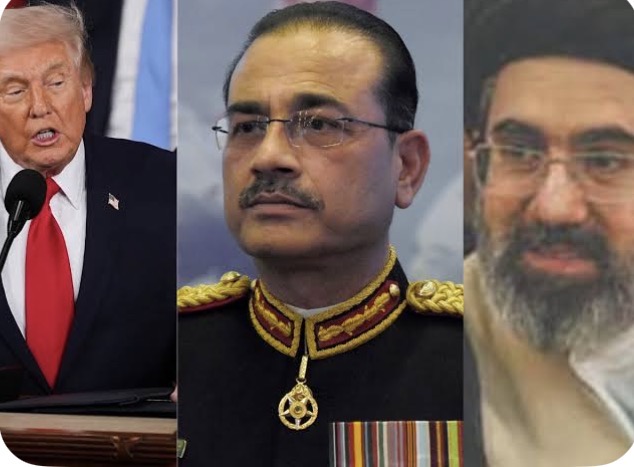
Islamabad Accord: A Defining Moment in Global Diplomacy.
In a world increasingly defined by conflict, uncertainty, and shifting alliances, the emergence of what is now being referred to as the “Islamabad Accord” marks a potentially transformative moment in global diplomacy. As tensions between United States and Iran escalate toward the brink of a broader regional war, an unexpected mediator has stepped forward: Pakistan.
At the center of this initiative is Asim Munir, whose reported ceasefire framework has rapidly gained international attention. While still in its proposal stage, the so-called Islamabad Accord reflects a bold attempt to prevent a catastrophic conflict that could engulf the Middle East and destabilize the global economy.
A Crisis at the Edge
The confrontation between the United States and Iran is not new, but the current escalation has reached a dangerous threshold. Military posturing, proxy engagements, and threats to strategic waterways—particularly the Strait of Hormuz—have raised fears of a full-scale war.
Such a conflict would not remain confined to the region. It would likely trigger:
- Severe disruptions in global oil supply
- Economic shocks across Europe and Asia
- A new wave of geopolitical polarization
In this volatile environment, the need for urgent diplomacy has never been greater.
The Islamabad Initiative
The Islamabad Accord, as described in multiple international reports, is a two-phase ceasefire framework designed to de-escalate tensions and create space for long-term negotiations.
Phase One: Immediate De-escalation
The first phase calls for:
- An immediate ceasefire between all involved parties
- The reopening of critical maritime routes, including the Strait of Hormuz
- A temporary pause in hostilities to build trust
Phase Two: Structured Negotiations
The second phase envisions:
- Comprehensive dialogue addressing Iran’s nuclear program
- Gradual easing of economic sanctions
- A roadmap toward a permanent peace agreement
Importantly, Islamabad is proposed as the venue for follow-up negotiations, symbolizing neutrality and regional connectivity.
Pakistan’s Strategic Role
Pakistan’s involvement is both strategic and symbolic. Historically positioned at the crossroads of South Asia, Central Asia, and the Middle East, Pakistan has maintained working relationships with both Washington and Tehran.
By stepping into a mediatory role, Pakistan is attempting to:
- Reassert its relevance in global diplomacy
- Promote regional stability
- Position itself as a bridge between competing powers
For Pakistan, success would not only enhance its international standing but also reinforce its long-standing narrative of advocating peace and dialogue.
Challenges and Uncertainty
Despite its promise, the Islamabad Accord faces significant hurdles.
Iran has reportedly expressed reservations, emphasizing the need for a permanent resolution rather than a temporary ceasefire. Meanwhile, the United States remains cautious, weighing strategic interests against diplomatic concessions.
Key challenges include:
- Deep mistrust between the two adversaries
- Diverging expectations regarding sanctions and nuclear policy
- The involvement of regional actors with competing agendas
These complexities mean that the path from proposal to agreement is far from guaranteed.
Global Implications
If successful, the Islamabad Accord could redefine diplomatic engagement in the 21st century. It would demonstrate that emerging powers can play constructive roles in resolving major international crises.
Potential outcomes include:
- Stabilization of global energy markets
- Reduction in military tensions across the Middle East
- A renewed emphasis on multilateral diplomacy
Conversely, failure could accelerate the slide toward conflict, with consequences that would reverberate far beyond the region.
Conclusion
The Islamabad Accord represents more than just a ceasefire proposal—it is a test of whether diplomacy can still prevail in an era of escalating confrontation. As the world watches closely, the coming days will determine whether this initiative becomes a historic breakthrough or another missed opportunity.
In either case, one truth remains clear: the stakes could not be higher.—
Syed Ali Raza Naqvi Bukhari
Unity of Peace, Economic Reform, and Global Unity
Founder & Chairman of Tehreek Istehkam Pakistan, and the author of “Law of God” and “Social Democratic System.” advocates for truth, social justice, and reform in all sectors of society.


Comments
Post a Comment