Can Iran Strike the United States? A Realistic Strategic Assessment.
Picture just for the reference
Can Iran Strike the United States? A Realistic Strategic Assessment.
🌍 Introduction
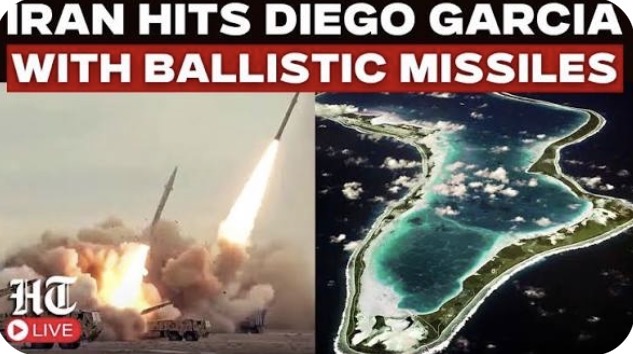
In recent weeks, rising tensions between Iran, the United States, Israel, and Western allies have sparked global concern. Reports of long-range missile attempts—such as the targeting of the remote island base of Diego Garcia—have fueled speculation about Iran’s true military reach.
A critical question now emerges:
Does Iran possess the capability to strike the United States directly?
This article presents a comprehensive, fact-based strategic analysis separating perception from reality.
🚀 Iran’s Missile Capabilities: Range vs Reality
Iran has developed one of the most advanced missile programs in the Middle East. Its arsenal includes:
- Short-range ballistic missiles (SRBM): 300–1,000 km
- Medium-range ballistic missiles (MRBM): 1,000–3,000 km
- Intermediate-range ballistic missiles (IRBM): up to ~4,000–5,000 km
The attempted strike toward Diego Garcia demonstrated that Iran can project power far beyond its immediate neighborhood. However, range alone does not equal global strike capability.
⚠️ Key Limitation
To strike the U.S. mainland, a country requires Intercontinental Ballistic Missiles (ICBMs) with ranges exceeding 8,000 km.
There is no verified evidence that Iran currently possesses operational ICBMs.
🛰️ Could Iran Be Hiding Advanced Capabilities?
A common concern is whether Iran has secretly developed such weapons—possibly with assistance from Russia or China.
✔️ Theoretical Possibility
- Technology sharing in limited forms is plausible
- Iran’s space-launch vehicles indicate progress in rocket science
❌ Practical Reality
- ICBM development requires large-scale testing
- Such tests are extremely difficult to conceal due to global satellite surveillance
- No credible intelligence has confirmed hidden operational systems
Conclusion:
Iran may be advancing technologically, but a fully operational, hidden ICBM program remains highly unlikely at present.
⚓ Could Iran Attack the U.S. from the Sea?
Another scenario often مطرح is whether Iran could launch missiles from submarines or ships in international waters.
✔️ In Theory
Yes, sea-based attacks are a known military strategy.
❗ In Practice
- Iran’s navy is primarily designed for regional defense
- It lacks confirmed long-range submarine-launched missile systems
- The United States Navy maintains unmatched global surveillance and detection capabilities
Result:
A covert maritime strike on the U.S. mainland would be extraordinarily difficult and likely detected before execution.
🌍 The Real Threat: Regional Power Projection
While Iran may not currently threaten the U.S. mainland directly, its regional influence is substantial:
- Ability to target U.S. bases in the Middle East
- Advanced drone warfare capabilities
- Strong network of regional allies and proxies
- Increasing missile accuracy within regional range
This makes Iran a formidable regional power, even without intercontinental reach.
⚖️ Is This a “Fight or Die” Situation?
Despite rising tensions, the situation has not yet reached an all-out existential war phase.
Iran’s strategy historically reflects:
- Controlled escalation rather than total war
- Measured retaliation instead of uncontrolled aggression
- Avoidance of direct full-scale conflict with the U.S.
However, the greatest risk lies in miscalculation—a single major incident could rapidly escalate into a broader conflict.
🧠 Strategic Reality Check
To directly attack the United States, Iran would need:
- Operational ICBMs or equivalent delivery systems
- Advanced guidance and re-entry technology
- Secure and survivable launch platforms
At present, these elements are not fully demonstrated.
🧾 Conclusion
The narrative that Iran can currently strike the U.S. mainland is not supported by verified evidence. However, dismissing Iran’s capabilities entirely would be equally misguided.
- ❌ No confirmed ability to hit the U.S. mainland directly
- ✔️ Proven capability to strike targets thousands of kilometers away
- ⚠️ Ongoing technological progress that could alter future dynamics
- 🎯 Strong regional military and asymmetric warfare strength
Final Assessment:
Iran is not yet a direct intercontinental threat to the United States—but it is a growing strategic force whose capabilities demand careful global attention.
✍️ Author
Syed Ali Raza Naqvi Bukhari
Unity of Peace, Economic Reform, and Global Unity
Founder & Chairman of Tehreek Istehkam Pakistan, and the author of “Law of God” and “Social Democratic System.” advocates for truth, social justice, and reform in all sectors of society.


Comments
Post a Comment