What America and the American People Have Lost in the Iran War.
Picture just for reference
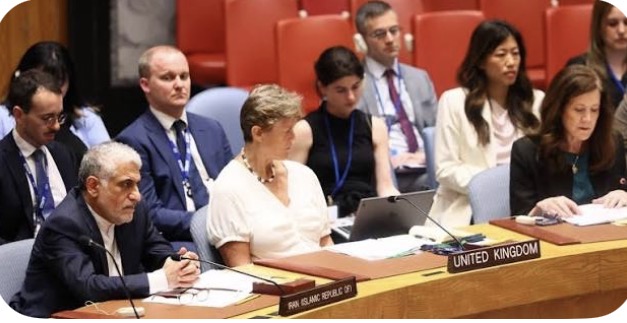 What America and the American People Have Lost in the Iran War
The ongoing conflict between the United States and Iran has rapidly evolved into one of the most controversial geopolitical decisions of recent years. While policymakers argue that the war is necessary to curb Iran’s nuclear ambitions and regional influence, a deeper analysis reveals a more complex reality. Beyond military calculations, the war has imposed significant political, economic, and social costs on both the United States as a global power and its own citizens.
1. Political Division and Institutional Strain
One of the most immediate consequences of the Iran war has been the deepening political divide within the United States. The U.S. Senate itself reflects this fracture.
Recent votes in the Senate show that while a narrow majority supported allowing the continuation of military operations, there was strong opposition—particularly from Democrats and even a few Republicans—who argued that the war lacked clear authorization and strategic clarity. A key resolution aimed at limiting presidential war powers failed by a 53–47 vote, highlighting sharp divisions within Congress. (The Guardian)
This division is not merely procedural; it represents a broader institutional tension:
- Questions over constitutional authority
- Concerns about executive overreach
- Lack of consensus on long-term strategy
The result is a weakened political system where critical decisions about war are contested rather than collectively owned.
2. Loss of Public Trust and Democratic Disconnect
Perhaps the most significant loss is the erosion of trust between the government and the American people.
Multiple national polls indicate that a majority of Americans oppose the war. Around 59% of the public disapprove of military action against Iran, while support remains significantly lower. (Wikipedia)
Another survey shows that only about one in four Americans support the strikes, reflecting widespread skepticism. (Reuters)
Even more striking:
- Only 7% support a full-scale ground war
- A majority oppose sending troops into Iran (Reuters)
This gap between public opinion and government action creates a democratic disconnect—where citizens feel that major national decisions are being made without their consent.
3. Economic Pressure and Rising Cost of Living
War inevitably brings economic consequences, and the Iran conflict is no exception.
Rising Energy Prices
The conflict has already contributed to volatility in global oil markets. Reports indicate that fuel prices have surged, and policymakers themselves have acknowledged that Americans may need to “adjust” to higher costs. (MarketWatch)
Massive Military Spending
The financial burden of the war is immense:
- The Pentagon has requested over $200 billion to sustain operations (Reuters)
- Daily war costs are estimated to approach billions of dollars (The Daily Beast)
These expenditures come at a time when Americans are already concerned about inflation, debt, and economic stability.
Opportunity Cost
Every dollar spent on war is a dollar not spent on:
- Healthcare
- Education
- Infrastructure
Thus, the war indirectly affects the quality of life for ordinary Americans.
4. Human Cost and Military Risk
Beyond economics, the war carries a human toll.
Reports confirm:
- Casualties among U.S. service members
- Thousands of deaths in the broader conflict (The Daily Beast)
Additionally, the risk of escalation remains high. The deployment of thousands of additional U.S. troops to the Middle East signals that the conflict could expand further. (Reuters)
For American families, this translates into:
- Fear of prolonged conflict
- Anxiety over troop deployments
- The possibility of another “endless war”
5. Global Reputation and Strategic Costs
On the international stage, the war has also affected America’s image.
Critics argue that:
- The war was initiated without sufficient global consensus
- It risks destabilizing an already volatile region
- It reinforces perceptions of unilateralism in U.S. foreign policy
Moreover, the conflict has triggered global reactions and concerns about regional escalation, affecting supply chains and international stability. (Atlantic Council)
While the U.S. remains militarily dominant, its moral and diplomatic standing faces increasing scrutiny.
6. Strategic Ambiguity and Long-Term Uncertainty
Finally, the war has exposed a lack of clear long-term strategy.
Key unanswered questions include:
- What is the end goal of the conflict?
- Is regime change the objective?
- How will stability be ensured post-conflict?
Even within government institutions, officials have struggled to provide consistent answers, reinforcing perceptions of uncertainty and policy incoherence.
Conclusion
The Iran war is not simply a military engagement—it is a multidimensional challenge with far-reaching consequences.
What America has lost:
- Political unity
- Institutional clarity
- Global credibility
What the American people have lost:
- Economic stability
- Trust in leadership
- A sense of security about the future
While the strategic intent behind the war may be framed as preventive or necessary, its costs—both visible and hidden—are already reshaping the American political, economic, and social landscape.
The ultimate question remains:
Will these losses be justified by the outcomes, or will they become part of a repeating pattern of costly conflicts with uncertain ends?
Syed Ali Raza Naqvi Bukhari
Unity of Peace, Economic Reform, and Global Unity
Founder & Chairman of Tehreek Istehkam Pakistan, and the author of “Law of God” and “Social Democratic System.” advocates for truth, social justice, and reform in all sectors of society.


Comments
Post a Comment