The Escalating Middle East Conflict and Its Implications for Pakistan and Afghanistan.
Picture just for reference
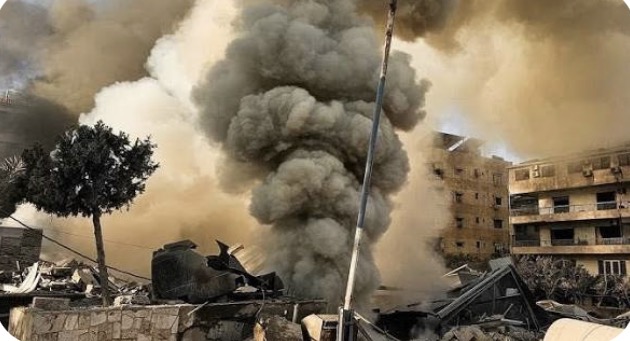
The Escalating Middle East Conflict and Its Implications for Pakistan and Afghanistan
The Middle East is witnessing a surge in conflict that is causing global concern. Recent military operations, geopolitical tensions, and regional rivalries have escalated, creating a complex environment with far-reaching implications. While social media often amplifies dramatic narratives, careful examination reveals the underlying dynamics and potential consequences for neighboring regions, including Pakistan and Afghanistan.
1. The Middle East Conflict: Current Status
The latest conflict involves multiple actors:
- United States and Israel: Conducting airstrikes and military operations targeting Iran’s nuclear and missile infrastructure.
- Iran: Responding with missile and drone attacks on Israel and U.S. bases across the Gulf.
- Lebanon (Hezbollah): Potentially supporting Iran’s regional strategy.
- Gulf States: Experiencing increased security threats and operational disruptions.
Reports confirm that an F‑35 fighter jet was not lost, but it was involved in operations targeting Iranian aircraft. Russia has publicly condemned the attacks but has not directly joined the conflict, maintaining a diplomatic stance for now.
2. Scope of the Conflict: Limited, Regional, or Global
The conflict could evolve in three stages:
- Limited War:
- Confined to Iran, Israel, the United States, and affiliated militias like Hezbollah.
- Targets include missile sites, airbases, and military infrastructure.
- Regional War:
- Could extend to Saudi Arabia, UAE, Syria, and Iraq.
- Significant disruption to Gulf shipping lanes and global oil supply.
- Global War Scenario:
- If major powers like Russia and China become involved, the conflict could risk escalation toward a broader global confrontation.
you like, I can also create a detailed infographic showing the Middle East–Afghanistan–Pakistan conflict chain, highlighting key players, risk areas, and potential escalation paths. This would make the article even more visually impactful.
Do you want me to prepare that infographic?
3. Religious Dimensions
Statements by U.S. officials describing this as a “religious war” risk reframing a primarily political and security-driven conflict into a sectarian narrative.
- Risks of this framing:
- Heightened public emotion and polarization.
- Increased activity of extremist groups across sectarian lines.
- Potential expansion of conflict beyond state actors into societal and civilian domains.
Currently, most military analysts consider the conflict primarily geopolitical, with religious framing serving more as a political tool.
4. Pakistan’s Strategic Response: Bagram Air Base Strike
Pakistan recently carried out an airstrike on Bagram Air Base in Afghanistan, targeting Taliban-controlled zones allegedly sheltering Tehreek-e-Taliban Pakistan (TTP) and other militant groups.
- Objective: Neutralize networks planning cross-border attacks into Pakistan.
- Operation “Ghadhab ul Haq”: Limited military objective, not territorial conquest.
- Justification: Afghan Taliban authorities reportedly ignored repeated warnings to prevent militant activity on Afghan soil.
The operation underscores Pakistan’s concern with border security and combating terrorism proactively.
5. Linking the Middle East Conflict with Pakistan–Afghanistan Tensions
While these conflicts occur in different regions, there are indirect connections:
- Militant Networks: Groups in the Middle East often share training, resources, and ideological support with actors in Pakistan and Afghanistan.
- Global Power Dynamics: U.S., Russia, and China’s involvement in the Middle East affects diplomatic and military attention in South Asia.
- Economic Impacts: Gulf instability pushes oil prices up, affecting Pakistan’s economy, currency, and trade.
- Security Spillover: Weapons, funds, and fighters can cross borders, raising internal security risks.
Essentially, the Middle East → Afghanistan → Pakistan chain represents an indirect but potent influence on Pakistan’s security and strategic planning.
6. Potential Risks for Pakistan
- Rising energy prices and inflation due to Gulf instability.
- Increased cross-border militant activity from Afghanistan.
- Disruption of trade and regional commerce.
- Heightened geopolitical pressure from global powers.
Conclusion
The current Middle East conflict, though geographically distant, has significant implications for Pakistan and Afghanistan. Understanding the interplay between regional wars, global powers, and militant networks is essential to anticipate economic, security, and political outcomes. Pakistan’s proactive border measures, such as the Bagram Air Base strike, demonstrate a focus on national security while avoiding a direct full-scale war.
The world must watch closely: escalation in the Middle East has the potential to amplify regional instability in South Asia, but measured diplomacy, security preparedness, and strategic restraint can prevent a larger conflagration.


Comments
Post a Comment