The Emerging Challenge to the Petrodollar: Geopolitics, Energy Power, and the Future of the Global Financial System.
The Emerging Challenge to the Petrodollar: Geopolitics, Energy Power, and the Future of the Global Financial System.
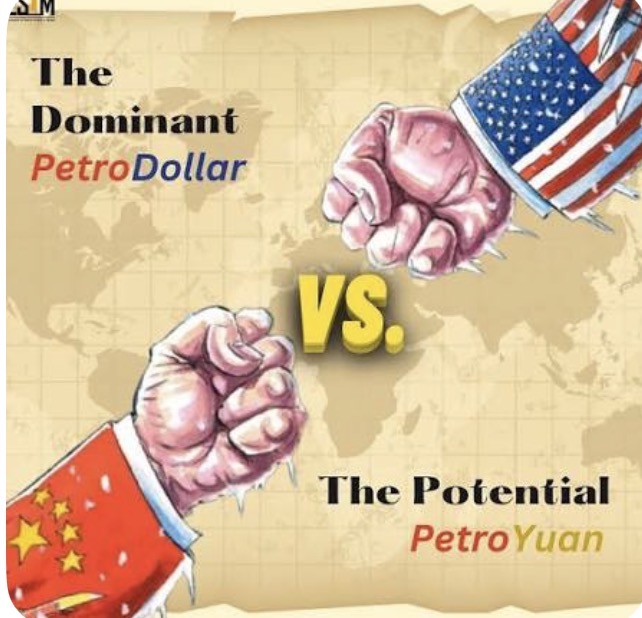
Picture just for Reference
Introduction
For more than five decades, the global economic order has been strongly influenced by the dominance of the United States dollar in international energy markets. The arrangement commonly known as the Petrodollar System, which emerged in the 1970s, ensured that most global oil transactions were conducted in U.S. dollars. This system strengthened the economic and geopolitical influence of the United States and helped maintain the dollar as the world’s primary reserve currency.
However, shifting geopolitical dynamics, rising global powers, and increasing dissatisfaction with the current financial architecture are now raising questions about whether the Petrodollar system will remain unchallenged in the decades ahead.
Historical Roots of the Petrodollar System
The origins of the Petrodollar system can be traced back to the mid-1970s when the United States reached strategic understandings with major oil-producing countries in the Middle East, particularly Saudi Arabia. Under this framework, oil would be traded internationally in U.S. dollars, and oil-producing nations would recycle their revenues into U.S. financial markets, particularly Treasury securities.
This arrangement created a powerful cycle: countries around the world needed dollars to purchase oil, which increased demand for the U.S. currency and reinforced its position as the backbone of global trade and finance. As energy demand grew, so did the centrality of the dollar.
Rising Geopolitical Pressures
Today, the global geopolitical landscape is evolving rapidly. Several countries—most notably China, Russia, and Iran—have increasingly explored alternatives to the dollar-dominated financial system.
China, the world’s largest energy importer, has sought to expand the international use of its currency, the yuan, particularly in energy trade. Russia, facing extensive Western sanctions, has accelerated efforts to conduct energy transactions in non-dollar currencies. Iran, long under sanctions, has similarly promoted alternative payment systems and trade arrangements.
Together, these three countries represent a significant geopolitical bloc capable of influencing global energy markets. If a substantial portion of their energy trade were to be conducted in non-dollar currencies, the dominance of the Petrodollar system could gradually erode.
Strategic Chokepoints and Energy Security
Another key dimension of this geopolitical equation involves strategic maritime routes such as the Strait of Hormuz. This narrow passage connects the Persian Gulf to global shipping lanes and carries roughly one-fifth of the world’s oil supply.
Control or disruption of such chokepoints has the potential to influence global markets and geopolitical calculations. Regional tensions and security concerns in these areas often amplify debates about energy security, economic sovereignty, and global power structures.
The Position of Gulf Arab States
Despite growing geopolitical competition, Gulf Arab states remain central to the future of the global energy system. Countries such as Saudi Arabia, the United Arab Emirates, Kuwait, and Qatar are among the largest oil and gas exporters in the world.
Historically, these states have maintained strong security and economic partnerships with the United States. Their energy exports have largely been priced and traded in dollars, reinforcing the Petrodollar system.
At the same time, many of these countries are pursuing increasingly diversified foreign policies. They are expanding economic ties with China, strengthening regional diplomacy, and exploring new financial partnerships, including potential cooperation within emerging economic blocs.
Rather than abruptly abandoning the dollar, Gulf states appear to be gradually adopting a more balanced geopolitical approach—maintaining relations with the United States while also deepening connections with Asia and other global partners.
Can the Petrodollar System Be Overturned?
While discussions about the decline of the dollar are increasingly common, the reality is more complex. The U.S. dollar remains deeply embedded in the global financial system. A large share of international trade, global reserves, and financial assets continues to be denominated in dollars.
Replacing or even significantly weakening such an entrenched system would require coordinated action by multiple major economies, the development of alternative financial infrastructures, and long-term shifts in global trust and stability.
However, gradual changes are possible. If energy trade increasingly incorporates multiple currencies—including the yuan, euro, or regional currencies—the global system could evolve toward a multi-currency energy market rather than a purely dollar-based one.
The Future of Global Economic Power
The debate over the Petrodollar system ultimately reflects a broader transformation in global power. As emerging economies gain influence and geopolitical alliances shift, the international financial system may also adapt.
Whether this transition leads to a multipolar currency world or reinforces existing structures will depend on political stability, economic strength, technological innovation, and the strategic choices of major powers.
What is clear is that energy, finance, and geopolitics will remain deeply interconnected. The evolution of global energy trade may therefore become one of the defining factors shaping the balance of power in the twenty-first century.
Syed Ali Raza Naqvi Bukhari
Unity of Peace, Economic Reform, and Global Unity
Founder & Chairman of Tehreek Istehkam Pakistan, and the author of “Law of God” and “Social Democratic System.” Advocates for truth, social justice, and reform in all sectors of society.


Comments
Post a Comment