Escalation in the Middle East: Iran, Israel, U.S. Assets, and the Question of Regime Change
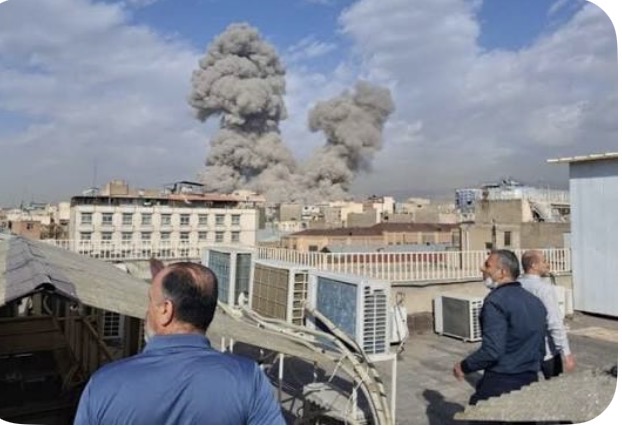
Escalation in the Middle East: Iran, Israel, U.S. Assets, and the Question of Regime Change
Introduction
The recent escalation between Iran, Israel, the United States, and Gulf states has intensified geopolitical tensions across the Middle East. Reports of missile strikes, drone attacks, targeted assassinations, and retaliatory operations have created widespread uncertainty. Amid these developments, questions have also emerged regarding the stability of Iran’s leadership and the possibility of regime change.
This article provides a structured overview of the military escalation, reported casualties among Iranian leadership, regional implications, and the deeper question of whether regime change in Iran is realistic.
1. Iranian Strikes on Israel and U.S. Assets
Recent reports indicate that Iran launched missile and drone attacks targeting Israeli territory and U.S. military installations across the Gulf region. Some Gulf-based facilities hosting American forces were reportedly targeted, including bases in Kuwait and Saudi Arabia.
While several interceptions were claimed by regional air defense systems, the attacks marked a significant expansion of the conflict’s geographic scope. Israel also reported civilian casualties and infrastructure damage from incoming projectiles.
This phase of escalation reflects a shift from proxy confrontation to more direct engagement.
2. Attacks on Saudi Arabia and Energy Infrastructure
In addition to Israel and U.S. assets, Saudi Arabia reportedly faced attempted strikes on strategic facilities, including air bases and energy installations. Energy markets reacted sharply due to concerns over the security of oil infrastructure and shipping lanes, particularly around the Strait of Hormuz.
Even limited damage to energy infrastructure can create global ripple effects, affecting oil prices and international trade flows.
3. Reported Deaths of Senior Iranian Figures
One of the most dramatic developments in recent reports has been claims regarding the deaths of high-ranking Iranian officials, including military commanders and political leaders.
Among the most sensitive reports were claims concerning Ali Khamenei, Iran’s Supreme Leader. However, conflicting reports and lack of consistent official confirmation have made it difficult to verify such claims conclusively.
Additionally, reports suggested casualties among senior figures within the Islamic Revolutionary Guard Corps (IRGC) and defense establishment. In modern conflicts, targeted strikes against leadership structures are often intended to disrupt command and control systems.
However, wartime information environments are often saturated with misinformation, psychological operations, and strategic messaging. Therefore, verification remains critical.
4. Understanding Iran’s Political System
To evaluate the possibility of regime change, it is essential to understand Iran’s constitutional structure.
Following the 1979 Islamic Revolution, Iran established a system based on Wilayat al-Faqih (Guardianship of the Islamic Jurist). This hybrid model combines republican institutions (President, Parliament) with the authority of a Supreme Leader, who holds ultimate constitutional power.
Key institutional pillars include:
- The Supreme Leader
- The Assembly of Experts
- The Guardian Council
- The Islamic Revolutionary Guard Corps (IRGC)
- An elected President and Parliament
Because the system is both ideological and institutional, it is not purely dependent on one political party or individual.
5. Is Regime Change in Iran Possible?
Many observers argue that regime change in Iran is unlikely because the system is rooted in religious legitimacy. However, history suggests that no political system is entirely immune to transformation.
Regime change can occur through:
- Internal reform movements
- Leadership succession dynamics
- Economic pressure leading to structural adjustments
- Institutional fragmentation
However, external military pressure alone rarely produces stable political transitions in ideologically structured states.
In Iran’s case, any fundamental change would most likely emerge from internal constitutional mechanisms or gradual political evolution rather than sudden externally imposed collapse.
6. Regional and Global Implications
The current escalation carries serious risks:
- Broader regional war involving Gulf states
- Disruption of global energy markets
- Increased sectarian polarization
- Heightened U.S.–Iran direct confrontation
- Expansion of proxy conflicts
The strategic balance in the Middle East remains fragile. Even limited engagements risk triggering unintended escalation.
7. The Information War Factor
Another critical dimension of the crisis is information warfare. Conflicting reports regarding leadership casualties, military success, and battlefield outcomes highlight how modern conflicts extend beyond physical battlegrounds into digital and psychological domains.
Verification from multiple credible sources is essential before drawing firm conclusions.
Conclusion
The current confrontation between Iran, Israel, and the United States represents one of the most serious escalations in recent Middle Eastern geopolitics. Military strikes, reported high-level casualties, and threats to regional infrastructure have intensified uncertainty.
While speculation about regime change in Iran has resurfaced, structural realities suggest that any meaningful transformation would require internal institutional shifts rather than external force alone.
The situation remains fluid. Diplomatic engagement, de-escalation mechanisms, and responsible global mediation may ultimately determine whether the region moves toward broader war or cautious stabilization.


Comments
Post a Comment