Escalating Middle East Tensions: Iran, Hezbollah, Israel, and Global Power Dynamics.
Picture just for reference
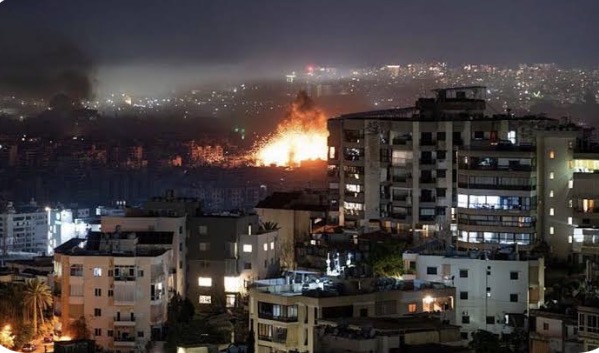
Escalating Middle East Tensions: Iran, Hezbollah, Israel, and Global Power Dynamics.
By Syed Ali Raza Naqvi Bukhari
Unity of Peace, Economic Reform, and Global Unity
Founder & Chairman of Tehreek Istehkam Pakistan, and the author of “Law of God” and “Social Democratic System.” He advocates for truth, social justice, and reform in all sectors of society.
Iran Attacks Oil Tankers in the Persian Gulf
On March 11, 2026, Iranian forces reportedly attacked two oil tankers in the Persian Gulf, near Basra, Iraq. One of the ships, the Safesea Vishnu—a US-owned vessel with Indian crew members—was targeted. Tragically, one Indian crew member was killed, while the rest were safely evacuated.
The attacks were reportedly carried out using suicide boats or underwater drones, marking a sharp escalation in regional maritime tensions. At least six commercial vessels in the Strait of Hormuz and nearby waters were affected, causing fears for global shipping safety and prompting a surge in oil prices.
Implications for India and Global Trade:
- India coordinated with Iran to allow safe passage for Indian-flagged ships.
- The incident underscores the vulnerability of the Strait of Hormuz, a critical chokepoint through which nearly 20% of the world’s oil supply passes.
U.S. and Israel: Preemptive Actions or Self-Defense?
Former U.S. President Donald Trump publicly stated that the U.S. Navy would escort oil tankers through the Strait of Hormuz if necessary. However, no such escort operations have been conducted yet, primarily due to the risk of direct conflict with Iran. The Strait’s narrow waters, combined with Iran’s anti-ship missiles, drones, and explosive boats, make U.S. naval intervention highly dangerous.
Trump also urged shipping companies to take risks and continue operations, which some interpret as pushing global trade to continue despite the threat, while avoiding direct U.S. naval exposure. This raises ethical and legal questions: can powerful nations encourage private actors to face lethal risk while avoiding the danger themselves?
Netanyahu’s Absence and Rumors
Amid the conflict, Israeli Prime Minister Benjamin Netanyahu has been notably absent from public appearances for several days. Some Iranian media and social platforms circulated rumors that he might be injured or even dead.
- Israeli authorities and credible international sources denied these claims, suggesting that Netanyahu is likely operating from a secure location for strategic reasons.
- Such disappearances are common during wartime to protect leadership from targeted attacks.
Iran and Hezbollah’s Joint Attack on Israel
In a significant escalation, Iran’s Revolutionary Guard (IRGC) and Hezbollah launched a coordinated attack on Israel, targeting cities including Tel Aviv, Haifa, and Beersheba, as well as Israeli military installations.
- Hezbollah reportedly fired over 150 rockets, while Iran launched ballistic missiles.
- Israel responded with airstrikes on southern Lebanon and Beirut suburbs, targeting Hezbollah infrastructure.
This joint operation marks the first integrated offensive by Iran and Hezbollah, raising concerns about a potential Middle East-wide conflict. Analysts warn that any further escalation could drag in regional and global powers.
Legal and Ethical Considerations
According to the United Nations Charter:
- Countries can only use force in self-defense or with UN Security Council approval.
- Preemptive attacks without authorization are legally disputed, while retaliatory actions are often justified as self-defense.
In this context:
- U.S. and Israel’s attacks may be viewed as preemptive or offensive, depending on perspective.
- Iran and Hezbollah’s responses fall under self-defense from international law’s viewpoint.
Nuclear Capabilities and Global Inequality
The conflict also highlights the global imbalance in nuclear power:
|
Country |
Nuclear Weapons |
Status |
|
U.S. |
Yes |
NPT-recognized nuclear-weapon state |
|
Israel |
Yes (undeclared) |
Not part of NPT, widely acknowledged |
|
Iran |
No |
NPT signatory, only civilian nuclear program allowed |
This disparity allows a few powerful nations to exert disproportionate influence, while countries like Iran remain legally and strategically constrained. The result is a global hierarchy of power, where only a handful of countries can act with near impunity, and smaller nations must operate under restrictions.
Conclusion: A World Governed by Power
The current escalation in the Middle East demonstrates several key realities:
- A few powerful nations—U.S., Israel, Russia, China—can shape global politics and act beyond conventional international limits.
- Smaller countries, even with regional influence like Iran, face constraints and international pressure.
- Maritime chokepoints like the Strait of Hormuz are flashpoints for global economic and political instability.
- International law often becomes secondary to military power and strategic interests, highlighting inequalities in enforcement and accountability.
The crisis underscores that global peace and security often depend on the decisions of a few key players, and that defensive actions by smaller nations can escalate rapidly into broader conflicts.
Syed Ali Raza Naqvi Bukhari
Unity of Peace, Economic Reform, and Global Unity
Founder & Chairman of Tehreek Istehkam Pakistan, and the author of “Law of God” and “Social Democratic System.” Advocate for truth, social justice, and reform in all sectors of society.


Comments
Post a Comment