Women Are Not Property: Islam, Justice, and the Crisis of Women’s Rights in Afghanistan.
Picture just for reference only
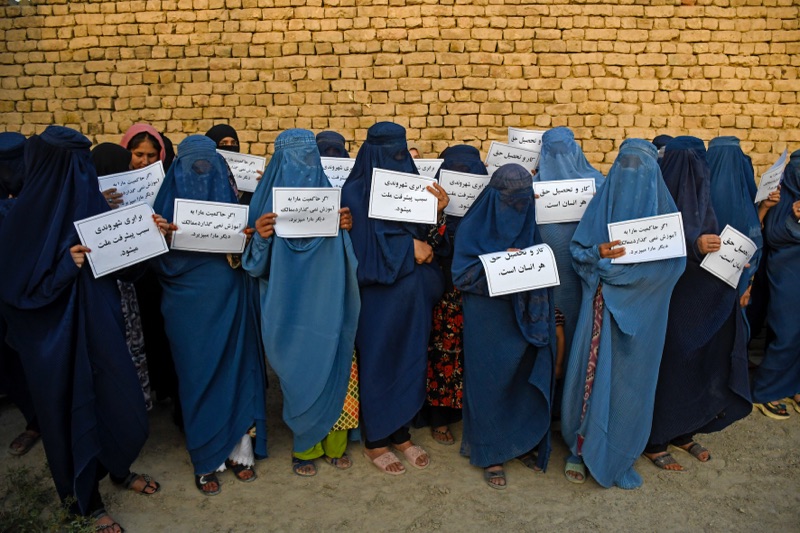
Women Are Not Property: Islam, Justice, and the Crisis of Women’s Rights in Afghanistan.
Introduction
In recent months, growing concern has emerged over the implementation of new legal regulations in Afghanistan under Taliban rule. Reports and analyses by international observers suggest that these laws significantly weaken the legal protection of women, normalize domestic violence, and revive concepts resembling servitude and ownership.
This situation has triggered a dangerous misconception: that Islam itself permits men to own, control, or abuse women. This claim is not only false — it is a grave injustice to Islamic teachings, Afghan society, and humanity at large.
This article seeks to clarify three essential truths:
- What is actually happening in Afghanistan
- What Islam truly teaches about women
- Why reform is both religiously necessary and morally urgent
The Reality on the Ground
While no Afghan law explicitly states that a wife is the property of her husband, the newly enforced criminal regulations have dramatically reduced women’s legal status and protection.
Key concerns include:
- Minimal penalties for domestic violence against women
- Severe restrictions on women’s mobility and autonomy
- Legal language that introduces social classifications incompatible with modern human dignity
- Lack of independent legal recourse for women subjected to abuse
In practice, these laws create an environment where women are treated as dependent, controllable, and punishable beings, rather than autonomous human beings with rights.
This is not merely a legal issue — it is a systemic moral failure.
Islam’s Position: Clear and Unambiguous
Islam does not recognize women as property.
Marriage in Islam is not ownership; it is a moral and legal covenant (mithaq) between two equal human beings.
The Qur’an states:
“They (wives) are a garment for you, and you are a garment for them.”
(Qur’an 2:187)
A garment protects, dignifies, and covers — it does not dominate or enslave.
Another verse commands:
“Live with them in kindness.”
(Qur’an 4:19)
Kindness is not compatible with violence, humiliation, or coercion.
The Prophet’s Example
The life of Prophet Muhammad ﷺ is the ultimate interpretation of Islam.
- He never struck a woman
- He condemned men who abused their wives
- He declared:
“The best among you are those who are best to their families.”
Any system that legitimizes violence against women contradicts the Prophet’s character and teachings.
Misuse of Scripture
Certain interpretations misuse Qur’an 4:34 to justify abuse. However:
- Classical and contemporary scholars agree that it does not permit violence
- Any action causing harm, injury, or humiliation is haram
- The Prophet ﷺ himself discouraged even symbolic harshness
Using religion to legitimize cruelty is not piety — it is corruption.
Women Are Not Servants
Islam does not impose forced labor on wives.
Household responsibilities are based on cooperation, mercy, and mutual consent, not coercion.
The early Islamic household model was built on shared responsibility, not domination.
Why This Matters
When injustice is committed in the name of Islam:
- Islam is blamed
- Extremism is strengthened
- Muslim societies lose moral credibility
- Women suffer irreparable harm
Silence in the face of injustice is not neutrality — it is complicity.
A Call for Reform
True Islamic governance must:
- Restore women’s legal protection
- Criminalize domestic violence meaningfully
- Recognize women as full legal persons
- Align law with Qur’anic justice and Prophetic ethics
Reform is not Westernization.
Reform is a return to Islam’s moral core.
Conclusion
Afghan women do not need ownership.
They do not need fear.
They do not need silence.
They need justice.
Islam stands with justice — not with oppression disguised as piety.
Any law, authority, or ideology that degrades women stands against Islam, not for it.
Author
Syed Ali Raza Naqvi Bukhari
Unity of Peace, Economic Reform, and Global Unity
Founder & Chairman of Tehreek Istehkam Pakistan, and author of “Law of God” and “Social Democratic System.”
advocates for truth, social justice, and reform in all sectors of society.


Comments
Post a Comment