The Emergence of Positive Politics in Pakistan: A Shift from Confrontation to Cooperation.
Picture just for reference
The Emergence of Positive Politics in Pakistan: A Shift from Confrontation to Cooperation.
Introduction: A Nation at a Crossroads
Pakistan stands at a critical juncture in its political history. After years of polarization, institutional confrontation, and street agitation, recent developments suggest the beginning of a much-needed transition toward positive, cooperative politics. Signals emerging from different provinces and political actors indicate a gradual realization that national progress is impossible without unity, dialogue, and mutual respect.
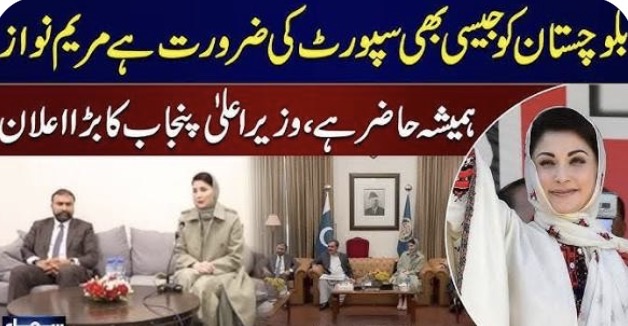
Maryam Nawaz’s Quetta Visit: A Message of National Solidarity
Maryam Nawaz’s visit to Quetta and her public address affirming that Punjab stands with Balochistan carry deep symbolic and political significance. For decades, Balochistan has suffered from a sense of marginalization and neglect. A clear acknowledgment from Punjab’s leadership helps counter long-standing grievances and reinforces the idea that Pakistan’s strength lies in inclusivity.
The announcement of cultural activities and the allocation of substantial funds for security further signal a shift toward restoring normalcy, dignity, and confidence in public life. Culture, celebration, and safety are not luxuries—they are indicators of peace and trust between the state and its people.
Federal–Provincial Engagement: A Step Toward Stability
Another encouraging development is the evolving relationship between the federal government and Khyber Pakhtunkhwa. The meeting of the KP Chief Minister with the Prime Minister, followed by engagements with the Foreign Minister and the Corps Commander, reflects institutional coordination rather than confrontation.
Such interactions demonstrate political maturity and a recognition that governance requires cooperation across political and institutional lines. When provinces engage constructively with the center, it strengthens the federation and reduces the space for instability.
Peshawar Hosting PSL Matches: Sports as a Symbol of Peace
The decision to host multiple PSL matches in Peshawar is more than a sporting event—it is a national statement. For years, KP was associated with insecurity and conflict. Bringing international-level cricket back to Peshawar symbolizes restored confidence, improved security, and reintegration into the national mainstream.
Sports have the power to unite people beyond political divisions, and this initiative sends a strong message of hope, resilience, and progress.
Political Reconciliation and Human Sensitivity
Recent meetings involving Imran Khan’s legal representatives and interactions with Bushra Bibi’s family also point toward a softer, more humane political climate. While political differences remain, such engagements suggest an acknowledgment that personal dignity, legal process, and human considerations must be respected.
This approach helps lower political temperatures and creates space for dialogue rather than perpetual hostility.
A Call to PTI: Choosing Cooperation Over Confrontation
At this stage, it is crucial for Imran Khan and Pakistan Tehreek-e-Insaf to avoid falling into the trap of extremist or chaos-driven elements. Continuous agitation and institutional conflict have already inflicted significant damage on the economy and democratic norms.
PTI has a substantial public mandate and political responsibility. By engaging constructively, participating in parliamentary processes, and prioritizing national interest over political revenge, the party can play a historic role in stabilizing Pakistan.
Extending Positive Politics to Sindh and KP
For national unity to become a reality, this positive political approach must extend to Sindh and Khyber Pakhtunkhwa as well. Development, harmony, and inclusion should not be province-specific—they must be nationwide.
When all provinces feel respected, heard, and equally invested in the federation, regional mistrust dissolves, and a collective national identity emerges.
Thinking as One Nation: The Path Forward
Pakistan cannot afford further division. Ethnic, provincial, and political fault lines have already weakened the social fabric. The need of the hour is a shared national vision—one that emphasizes cooperation over conflict, service over slogans, and reform over revenge.
If political leadership across the spectrum commits to this path, Pakistan can move from crisis management to sustainable progress.
Conclusion: From Politics of Resistance to Politics of Responsibility
The signs of positive political evolution are visible. What remains is consistency, sincerity, and courage. History will not judge leaders by how loudly they resisted, but by how wisely they reconciled and rebuilt.
A united Pakistan—politically mature, institutionally balanced, and socially cohesive—is not just possible; it is necessary.
Syed Ali Raza Naqvi Bukhari
Unity of Peace, Economic Reform, and Global Unity
Founder & Chairman of Tehreek Istehkam Pakistan, and the author of “Law of God” and “Social Democratic System.”
Advocate for truth, social justice, and reform in all sectors of society.


Comments
Post a Comment