Politics Must Return to Performance, Not Personal Vendetta.
Politics Must Return to Performance, Not Personal Vendetta
Introduction: A Nation at a Political Crossroads
Pakistan stands at a decisive moment in its democratic journey. For years, political discourse has been driven more by hostility than by healthy competition. Opposition for the sake of opposition, narrative-building instead of nation-building, and political rivalry turning into personal enmity have weakened institutions and divided society.
Democracy thrives on disagreement—but it collapses under revenge.
Political Opposition vs. Political Revenge
Political disagreement is not only normal; it is essential. In every functioning democracy, governments are questioned and criticized. However, there is a clear difference between principled opposition and political vendetta.
When rivalry becomes retaliation, democracy suffers.
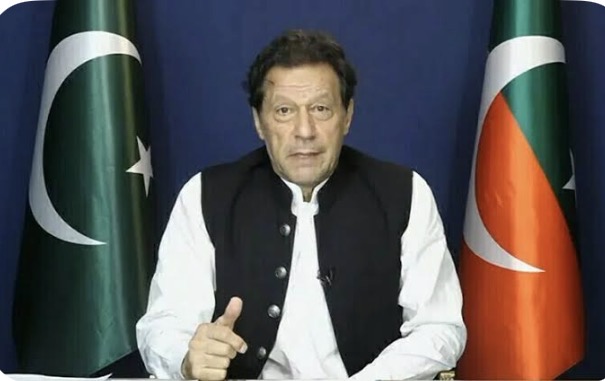
The recent environment surrounding Imran Khan reflects a broader problem in our political culture: the transformation of competition into confrontation. Whether one supports or opposes him is secondary. The real issue is whether political disputes are handled through institutional fairness or through resentment.
A confident government does not fear opposition. It defeats it through governance.
The Culture of Narrative Politics
Pakistan’s political system has long been trapped in narrative-driven politics. Speeches dominate over solutions. Media debates prioritize personalities over policy. Emotional mobilization replaces economic planning.
This culture produces headlines—but not development.
When politics becomes a battle of narratives rather than a contest of performance, the public becomes polarized instead of empowered.
Why Performance Is the Strongest Argument
The most powerful political answer is performance. A government that believes in its mandate should demonstrate its strength through:
- Economic stability and job creation
- Educational reform and institutional modernization
- Transparent governance and accountability
- Efficient public service delivery
- Reduction in inflation and improvement in living standards.
Results silence critics more effectively than restrictions ever can.
The Cost of Political Hostility
Political revenge rarely weakens opponents—it often strengthens them. Suppression generates sympathy. Restrictions create resistance. History repeatedly shows that when governments appear vindictive, public perception shifts toward the targeted individual.
In such cases, the state itself becomes politically weaker.
True leadership requires restraint, confidence, and adherence to the rule of law. Institutions must remain neutral and credible.
Rebuilding Democratic Maturity
Pakistan needs a shift in political culture.
- Opposition must be constructive, not destructive.
- Governments must compete through delivery, not deterrence.
- Legal processes must remain transparent and impartial.
- National interest must rise above personal rivalry.
Democracy is not about eliminating opponents; it is about outperforming them.
Conclusion: Let the Public Judge Through Results
The future of Pakistan cannot be secured through hostility. It can only be secured through measurable progress, economic reform, educational transformation, and institutional strength.
In the end, the people are the ultimate judges. And history proves one truth:
The public does not reward revenge.
The public rewards results.
Syed Ali Raza Naqvi Bukhari
Unity of Peace, Economic Reform, and Global Unity
Founder & Chairman of Tehreek Istehkam Pakistan, and the author of “Law of God” and “Social Democratic System.” Advocate for truth, social justice, and reform in all sectors of society.


Comments
Post a Comment