Why Regime Change by Assassination Will Fail in Iran.
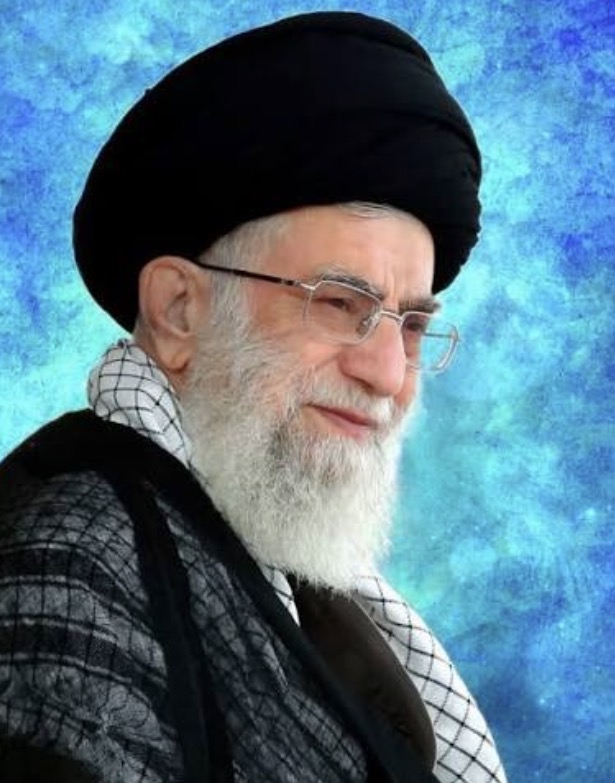
Why Regime Change by Assassination Will Fail in Iran.
In recent years, speculation has periodically surfaced in Western policy circles about “decapitating” the Iranian system—removing Supreme Leader Ayatollah Ali Khamenei through force and attempting to install an alternative leadership, sometimes nostalgically linked to Iran’s monarchical past. Such thinking reflects a profound misunderstanding of Iran’s political structure, social psychology, and the nature of modern conflict.
Even at the level of hypothesis, assassinating Iran’s Supreme Leader would not weaken the Islamic Republic. On the contrary, it would likely consolidate it.
A Relationship Beyond Politics
The most critical miscalculation lies in assuming that Ayatollah Khamenei is merely a political ruler. In reality, for a significant portion of Iranian society, his legitimacy is not electoral but religious and doctrinal. As Wali al-Faqih (Guardian Jurist), the Supreme Leader represents the ideological core of the post-revolutionary state.
Political dissatisfaction exists in Iran, as it does in all societies. However, external violence against the Supreme Leader would not be interpreted as a political intervention—it would be perceived as an attack on belief, identity, and sovereignty. History shows that when belief systems are targeted, societies rarely fragment; they harden.
Assassination Does Not Create a Power Vacuum
Another flawed assumption is that eliminating Khamenei would paralyze the Iranian system. Iran is not a personalist dictatorship dependent on a single individual. The mechanism for succession is constitutionally embedded.
The Assembly of Experts (Majlis-e-Khobregan) is empowered to appoint a new Supreme Leader immediately. This means:
- No prolonged leadership vacuum
- No institutional collapse
- No automatic pathway for foreign manipulation
In fact, under such circumstances, the successor is likely to be more hardline, not more conciliatory—chosen precisely to demonstrate resilience and continuity.
National Unity Through External Threat
Contrary to the expectation of internal collapse, external assassination would most likely produce national consolidation. Iranian political history—especially the 1953 overthrow of Prime Minister Mohammad Mossadegh—has ingrained a deep suspicion of foreign intervention.
In moments of external aggression:
- Reformists and conservatives often close ranks
- Internal dissent is postponed, not amplified
- Nationalist sentiment overrides factional divides
Thus, instead of civil war, the more probable outcome would be societal mobilization against a foreign enemy.
America and Iran: Two Different War Doctrines
At the strategic level, the United States and Iran operate under fundamentally different theories of war.
The United States excels at short, high-intensity conflicts:
- Rapid air superiority
- Precision strikes
- Technological dominance
- Early political signaling of “victory”
However, American power is constrained by:
- Domestic political fatigue
- Media pressure
- Economic cost sensitivity
Iran, by contrast, is structurally optimized for long-duration conflict:
- Strategic patience
- Indirect engagement
- Regional pressure rather than frontal confrontation
- A willingness to absorb economic and human costs
Iran does not need to defeat the United States militarily. Its strategy is simpler: outlast, exhaust, and delegitimize.
The Willingness to Sacrifice
Perhaps the most underestimated factor is societal endurance. Iranian collective memory—particularly of the Iran–Iraq War—has normalized sacrifice as a component of national survival. Hardship is often framed not as failure, but as proof of resistance.
In Western societies, prolonged conflict tends to erode public consent. In Iran, external pressure frequently reinforces the narrative of resistance and martyrdom. This asymmetry matters more than raw military capability in long wars.
Modern conflicts are not won solely by firepower; they are won by who breaks first psychologically.
Why Regime Change by Force Backfires
The cumulative effect of these dynamics leads to a clear conclusion:
- Assassination would not dismantle Iran’s system
- It would not alienate the public from religious authority
- It would not prevent immediate succession
- It would not shorten conflict
Instead, it would:
- Legitimize the most hardline narratives within Iran
- Strengthen regional resistance networks
- Increase instability across the Middle East
- And potentially drag external powers into an unwinnable long war.
The lesson from Iraq, Libya, Afghanistan, and elsewhere is consistent: regime change imposed from outside produces chaos, not control.
Conclusion
Iran is not designed to win short wars—and the United States is not designed to fight long ones. Any strategy that ignores this reality is destined to fail.
Leadership in Iran is not sustained by fear alone, but by ideology, institutional continuity, and societal endurance. Killing a leader does not erase a belief system; more often, it sanctifies it.
If genuine change in Iran is ever to occur, it will come from internal evolution, not external execution.
Syed Ali Raza Naqvi Bukhari
Unity of Peace, Economic Reform, and Global Unity
Founder & Chairman of Tehreek Istehkam Pakistan, and the author of “Law of God” and “Social Democratic System.” Advocate for truth, social justice, and reform in all sectors of society.


Comments
Post a Comment