Trump’s New Global Forum: The Emergence of a Parallel World Order.
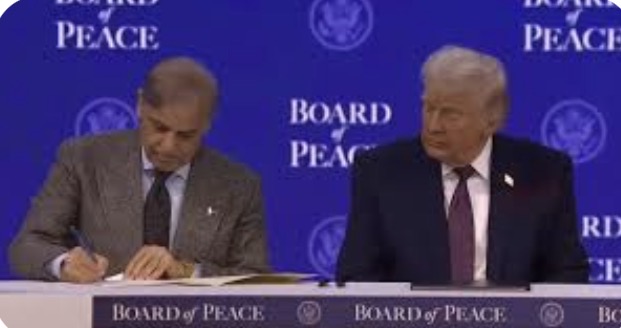
Trump’s New Global Forum: The Emergence of a Parallel World Order
In January 2026, former U.S. President Donald Trump unveiled a new international initiative, the “Board of Peace”, at the Davos Economic Forum. Ostensibly framed as a peace-promoting forum, careful analysis suggests that this initiative is the operational launch of a parallel global order—one that may shape international decision-making for the coming decades.
1. Genesis of the Board of Peace
Trump’s initiative emerges in a context where the United Nations has increasingly lost its operational relevance. Although UN resolutions and General Assembly discussions continue, they often fail to produce enforceable outcomes, particularly in ongoing conflicts such as Gaza, Ukraine, and Yemen.
The Board of Peace, in contrast, is designed as a limited, selective, and action-oriented forum:
- Membership is restricted to strategically aligned and manageable countries, avoiding full global consensus.
- Decision-making is fast, centralized, and enforceable, bypassing the protracted processes of the UN.
- It positions itself as an entity capable of shaping peace, reconstruction, and conflict management, particularly in hotspots like Gaza, but with a potential global remit.
2. Structural Features of the New Forum
The Board of Peace operates on a model that is parallel to, not a replacement for, existing institutions:
a) Limited Membership
- Only selected countries with strategic, military, or geographic significance are invited.
- Smaller or mid-sized nations like Pakistan, Qatar, and Jordan are included, while larger powers like India are conspicuously excluded.
b) Action-Oriented Decision-Making
- Unlike the UN General Assembly, where discussions can drag on for months, this forum emphasizes rapid consensus and implementation.
- Decisions are largely binding within the member framework, with peace defined as compliance with the system rather than ethical consensus.
c) Centralized Leadership
- Trump chairs the board personally, with a trusted inner circle of advisors and global figures, including Jared Kushner, Marco Rubio, and Tony Blair.
- Operational reliability is reinforced by the inclusion of figures like Pakistan’s General Asim Munir, ensuring predictable enforcement in strategic regions.
3. Strategic Calculus Behind Membership Choices
The selection of countries reflects a pragmatic and geopolitical calculus:
- Pakistan: Invited due to its strategic position in South Asia, nuclear capability, influence in the Muslim world, and alignment with Gulf security networks.
- Saudi Arabia, UAE, Qatar, Turkey: Gulf powers with financial leverage and security cooperation are critical for regional influence.
- India: Excluded due to its assertive independent foreign policy, unwillingness to follow unilateral directives, and potential to challenge decisions.
This model prioritizes compliance and manageability over legitimacy or democratic representation, signaling a shift from multilateralism to selective power-based governance.
4. Implications and Potential Impact
a) Global Decision-Making
- The Board effectively creates a “mini UN” with teeth, where selected nations control peace, sanctions, and reconstruction funding.
- It shifts decision-making power from 193-member multilateral institutions to a closed circle, setting the stage for a new operational world order.
b) Regional Dynamics
- For South Asia, Pakistan’s inclusion elevates its strategic relevance, while India’s exclusion may influence its regional positioning.
- In the Middle East, Gulf nations gain a forum to influence Palestinian, Iranian, and Red Sea-related security matters directly.
c) Perception vs Reality
- The forum is branded as a peace-promoting initiative, but the underlying driver is strategic control and compliance.
- “Peace” is equated with alignment to the forum’s decisions, rather than justice or ethical resolution of conflicts.
5. Acceptance: Who Supports and Who Hesitates
Supporters:
- Member states that gain practical influence and funding, without the responsibility of wider global consensus.
- Countries seeking to maintain regional balance or influence with minimal pushback.
Hesitant or Excluded Parties:
- Major powers unwilling to follow a prescriptive framework, such as India or Russia in certain contexts.
- Advocates of traditional multilateralism who may see the forum as undermining international norms.
This selective acceptance reflects a shift in global legitimacy from ethical-multilateral consensus to selective operational power.
6. Likely Success Factors
The forum’s potential success depends on:
- Operational Control: Ability to implement decisions quickly, as opposed to UN delays.
- Member Compliance: Countries with limited ability to resist enforce the Board’s resolutions.
- Strategic Crises: Immediate crises (e.g., Gaza reconstruction) allow the Board to demonstrate efficacy.
If these conditions hold, the Board may become the de facto decision-making forum for high-stakes global matters, particularly where the UN is ineffective.
7. Risks and Potential Failures
Despite its potential, the Board faces inherent risks:
- Perceived Legitimacy: Excluding major powers and relying on selective membership could undermine broader acceptance.
- Ethical Criticism: Defining peace as compliance may provoke accusations of authoritarianism on a global scale.
- Conflict Escalation: Excluded powers may act independently or form counter-alliances.
- Overreliance on Key Individuals: The forum depends heavily on Trump, trusted leaders, and specific military figures; a change could destabilize the system.
8. Conclusion: A New Parallel Global Order
Trump’s Board of Peace is less an “initiative for peace” than a strategic operational forum that effectively establishes a new world order:
- Decision-making power has shifted from the UN to a limited, controllable circle of nations.
- Peace is now defined by compliance, not moral or legal consensus.
- Countries like Pakistan gain temporary strategic elevation, while major powers like India are sidelined.
This initiative marks a paradigm shift in global governance: from universal multilateralism to selective, power-based operational control. Its success will depend on member compliance, crisis management, and the forum’s ability to maintain legitimacy in a skeptical world.
In essence, Trump has not just launched a forum; he has operationalized a parallel world order, where control, alignment, and strategic trust outweigh representation, ethics, and broad consensus.


Comments
Post a Comment