The Return of the Old Era: Resource Wars and the Fate of Weak States.
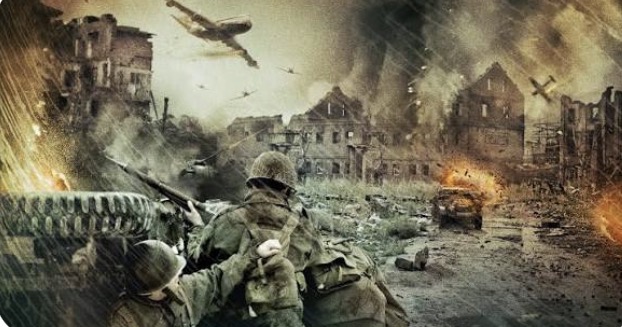
The Return of the Old Era: Resource Wars and the Fate of Weak States.
The modern world likes to believe it has evolved beyond the brutal logic of ancient empires. We speak of international law, human rights, global institutions, and a “rules-based order.” Yet reality tells a different story. The world is quietly but decisively returning to an Old Era—one where power determines truth, resources dictate morality, and weak states pay the price.
The tools have changed, but the instinct has not.
From Swords to Sanctions: Same War, New Weapons
In the past, wars were fought openly for land, gold, food, animals, and trade routes. Empires expanded by conquest, and weaker societies were crushed or absorbed. Today, the battlefield looks more sophisticated, but the objective remains identical.
Modern wars are fought over:
- Oil and gas
- Strategic minerals (lithium, cobalt, rare earths)
- Food security (grain, water, arable land)
- Currency dominance (the dollar system)
- Supply chains and transit corridors
Instead of swords and cavalry, today’s weapons include:
- Economic sanctions
- Frozen assets
- Currency manipulation
- Proxy wars
- Political isolation
- Controlled instability
This is not a new world order. It is old imperial logic in modern packaging.
Ukraine: A Deer Trapped Between Lions
Ukraine is often presented as a moral battlefield—democracy versus authoritarianism. In truth, it is something more tragic and more historical.
Ukraine is a buffer state, caught between two power blocs:
- Russia, seeking strategic depth and security
- Europe/NATO, seeking containment of Russia and resource stability
Like a deer trapped between two lions:
- The fight happens on Ukrainian soil
- Ukrainian cities burn
- Ukrainian generations are lost
Meanwhile, major powers negotiate, recalibrate, and prepare settlements that will ultimately serve their own survival and interests.
This is not unique to Ukraine. History is filled with such examples.
The Core Rule of the System
One brutal rule governs today’s international system:
When conflict arises, weak states are destroyed.
When compromise is needed, strong states settle with each other.
Weak states are:
- Exhausted economically
- Fragmented socially
- Delegitimized politically
- Forced into dependency
Strong states, even after confrontation, eventually:
- Negotiate
- Rebalance power
- Preserve their core interests
The weak are not invited to these settlements.
Why Weak States Always Lose
Weak states fail not because they are immoral or incompetent by nature, but because they lack:
- Strategic autonomy
- Economic self-reliance
- Internal cohesion
- Long-term vision
In a system governed by power:
- Law applies selectively
- Morality is a narrative tool
- Institutions serve those who fund and control them
The weak are punished for alignment mistakes, while the strong are forgiven for strategic aggression.
The New Resource Frontiers
The next arenas of conflict are already visible:
- Venezuela (oil)
- Africa (minerals, uranium, cobalt)
- Greenland and the Arctic (rare earths, new sea routes)
- Food-producing regions under climate stress
These regions resemble the colonial maps of the past—rich in resources, poor in protection.
This is neo-colonialism without formal colonies.
Lessons Weak States Must Learn
If weak and developing states want to survive this era, they must abandon illusions.
1. Neutrality Is Not Passivity
Survival lies in strategic balance, not emotional alignment.
2. Self-Reliance Is Security
Food, energy, and financial independence are national defenses.
3. Institutions Must Be Stronger Than Personalities
States collapse when systems are weak and leadership is personalized.
4. Avoid Becoming a Frontline State
Being a “strategic partner” often means being a battlefield.
5. Silent Diplomacy Beats Public Posturing
The loudest states often pay the highest price.
The Most Dangerous Illusion
The greatest danger is believing that:
- Global powers will protect weak allies indefinitely
- Moral alignment guarantees survival
- International sympathy translates into security
History proves otherwise.
Conclusion: A Harsh but Necessary Truth
We are not entering a new age of justice.
We are returning to an age of power, scarcity, and competition.
Those who understand this reality early may survive.
Those who cling to idealism without strength will become case studies.
In today’s world:
- Power defines law
- Resources define alliances
- Weakness invites destruction
The question for weak states is no longer what is right,
but what ensures survival.
Author
Syed Ali Raza Naqvi Bukhari
Unity of Peace, Economic Reform, and Global Unity
Founder & Chairman of Tehreek Istehkam Pakistan, and author of “Law of God” and “Social Democratic System.”
Advocate for truth, social justice, and reform in all sectors of society.


Comments
Post a Comment