A War with Iran Will Not Be a Regional Conflict.
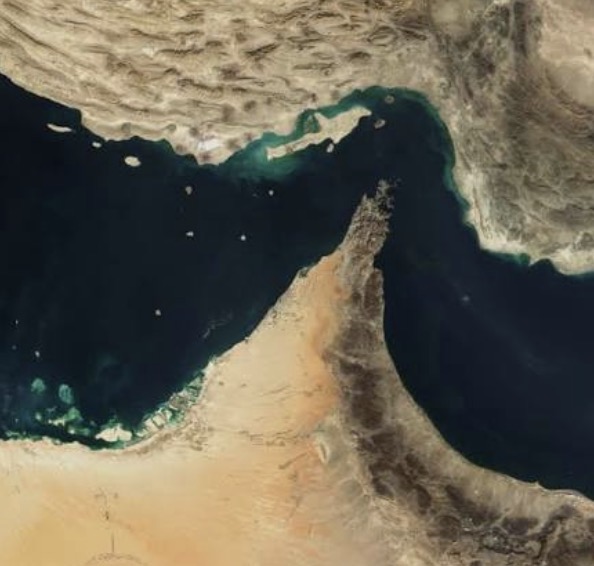
The Strait of Hormuz: The World’s Economic Jugular Vein.
A War with Iran Will Not Be a Regional Conflict — It Will Be a Global Economic Catastrophe
The world is standing at the edge of a crisis far greater than a conventional military confrontation. The escalating tensions between the United States and Iran are being discussed largely in military and geopolitical terms, but the real danger lies elsewhere — in the catastrophic collapse of the global economy that would follow any major conflict, particularly if the Strait of Hormuz is disrupted.
This is not a warning driven by ideology.
It is a warning driven by economic reality.
The Strait of Hormuz: The World’s Economic Jugular Vein
Approximately one-quarter of the world’s oil supply and a significant portion of global liquefied natural gas (LNG) pass through the Strait of Hormuz every single day. There is no alternative route capable of absorbing this volume in the short or even medium term.
If war breaks out and this strait is closed — even temporarily — the consequences will be immediate and devastating:
- Oil prices could surge beyond $150–$200 per barrel
- Energy costs would skyrocket globally
- Inflation would explode across developed and developing economies alike
This would not be a Middle Eastern problem.
It would be a global economic shockwave.
Europe, Asia, China — No One Is Immune
Europe, already strained by energy insecurity, would face industrial slowdowns and deep recession.
Asia’s manufacturing hubs — Japan, South Korea, India — would be hit with supply-chain paralysis.
China, the world’s largest energy importer and industrial engine, would face rising costs, slowing growth, and internal economic pressure.
Even the United States would not be spared:
- Global recession would drag down American markets
- Allies would bear the cost of instability
- Political and financial fallout would echo domestically
The illusion that war would be “manageable” or “contained” is dangerously false.
Iran Is Prepared — And That Changes Everything
Unlike past conflicts, Iran is not unprepared or isolated in its calculations. It possesses:
- Advanced missile and drone capabilities
- Regional influence through allied groups
- The strategic leverage of the Strait of Hormuz itself
This means any conflict would not be quick, clean, or controllable.
Escalation would be almost inevitable — and miscalculation could spiral into uncontrollable chaos.
This Is Not Deterrence — This Is Mutual Economic Destruction
The world has long understood the concept of Mutually Assured Destruction in nuclear terms.
What we face now is Mutual Economic Destruction.
No nation — not the U.S., not Europe, not China, not the Gulf states — would emerge as a winner. The global economy, already fragile, would fracture under the pressure of energy shocks, inflation, and market collapse.
A Call for Responsibility, Not Recklessness
The United States, as a global power, carries a responsibility that goes beyond military strength. Leadership today means restraint, diplomacy, and a clear understanding that economic warfare through conflict harms humanity as a whole.
This is the moment to:
- De-escalate, not provoke
- Engage diplomatically, not militarily
- Prevent a war whose cost would be paid by billions of ordinary people worldwide
History will not judge who fired the first missile —
It will judge who failed to stop a disaster they clearly saw coming.
Conclusion
A war with Iran will not secure the world.
It will destabilize it.
Closing the Strait of Hormuz would not be a strategic move — it would be a global economic collapse in motion. The world must act now, collectively and wisely, to prevent a conflict whose consequences would reach far beyond any battlefield.
This war must be stopped — not after it begins, but before it becomes inevitable.


Comments
Post a Comment