A Manifesto for Humanity: Reimagining Global Order Beyond Power Politics.
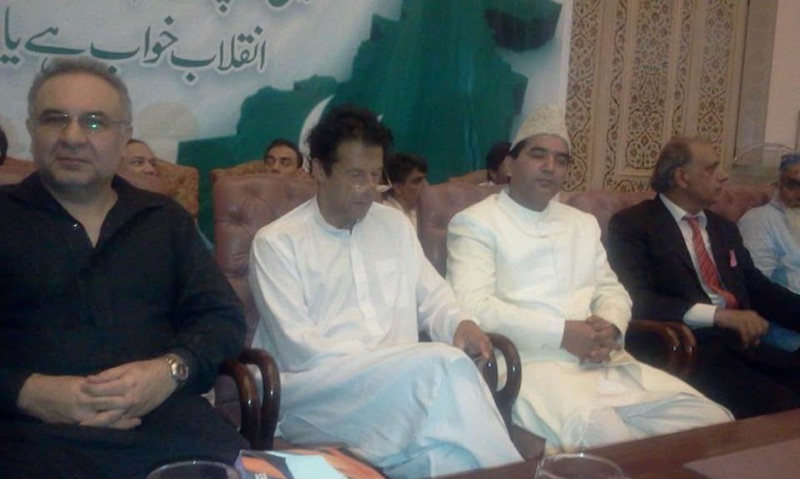
A Manifesto for Humanity: Reimagining Global Order Beyond Power Politics.
Preamble
The world stands at a historic crossroads. Global politics has descended into chaos where power overrides principle, might dictates right, and human dignity is routinely sacrificed at the altar of strategic interest. Wars are normalized, sanctions are weaponized, sovereignty is selectively respected, and justice is applied only to the powerless.
This manifesto emerges from a simple yet revolutionary conviction: humanity must be the center of all political systems. No nation, ideology, religion, or empire has the moral authority to dominate others or devalue human life. The survival of civilization now depends on a radical shift—from power-centered governance to human-centered global order.
The Failure of the Existing World Order
The current international system has failed humanity.
- It rewards aggression and punishes vulnerability
- It protects the powerful through vetoes and alliances
- It commodifies human life under economic and military logic
- It turns international law into a selective tool rather than a universal standard
Superpowers no longer lead; they coerce. Emerging powers expand without moral responsibility. International institutions observe injustice but lack the courage or structure to stop it. This is not order—it is organized disorder.
Our Core Belief
Human dignity is sacred, universal, and non-negotiable.
Every human being—regardless of nationality, race, religion, language, or economic status—possesses equal worth. Political legitimacy does not arise from force, wealth, or historical dominance, but from service to humanity.
Foundational Principles of the Human-Centered Political System
1. Supremacy of Human Dignity
Human life is not collateral damage. No strategic objective justifies the destruction of civilians, cultures, or futures. Access to food, shelter, healthcare, education, and security is a fundamental human right, not a charitable concession.
2. Equality of Nations and Peoples
All nations are equal in moral worth. No state has the right to dictate the destiny of another under any pretext—security, democracy, development, or civilization.
Sovereignty must be respected equally, not selectively.
3. Freedom as a Basic Human Need
Freedom is not a cultural privilege—it is a universal necessity.
This system guarantees:
- Freedom of thought, expression, and conscience
- Freedom of belief and religion
- Freedom from occupation, fear, and economic exploitation
No ideology may be imposed by force, and no belief suppressed by authority.
4. Absolute Religious Freedom and Cultural Pluralism
Faith is a personal and collective right. Religion must never be weaponized for political power nor suppressed in the name of progress.
Diversity of belief and culture is not a threat—it is the natural state of humanity.
5. Justice Without Power Bias
Justice must be independent of power. War crimes, crimes against humanity, and systemic oppression must be judged by impartial international mechanisms free from veto politics and geopolitical bargaining.
No alliance should shield injustice. No power should stand above accountability.
6. Welfare-Oriented Governance
Economies exist to serve people, not enslave them.
A human-centered system prioritizes:
- Elimination of extreme poverty
- Fair distribution of resources
- Universal access to education and healthcare
- Ethical and humane use of technology
Profit without purpose is exploitation.
A Moral Multipolar World
Multipolarity is inevitable—but without morality, it will only multiply conflicts.
We call for moral multipolarity: a world where multiple centers of power exist, bound by shared ethical commitments, mutual respect, and collective responsibility toward humanity.
Power must be balanced by conscience.
Reforming Global Institutions
International institutions must be restructured to serve people, not power blocs.
Key reforms include:
- Removal of veto-based immunity from accountability
- Equal representation of nations
- Enforcement of international law without discrimination
- Direct mechanisms for protecting civilian populations
Global governance must be an instrument of justice, not dominance.
A Call to Conscience
This manifesto is not against any nation, culture, or people. It is against a system that thrives on domination, fear, and inequality.
We call upon:
- Nations to reject aggressive imperial politics
- Leaders to place humanity above ambition
- Intellectuals to challenge power with truth
- Citizens to demand dignity over deception
Conclusion: The Choice Before Humanity
The age of unchecked power is ending. Humanity must now choose between two futures:
- A world ruled by force, fear, and fragmentation
- A world governed by dignity, justice, freedom, and equality
This manifesto affirms that another world is not only possible—it is necessary.
The future must belong not to the strongest, but to the most humane.
Syed Ali Raza Naqvi Bukhari
Unity of Peace, Economic Reform, and Global Unity
Founder & Chairman of Tehreek Istehkam Pakistan, and the author of Law of God and Social Democratic System.Advocate for truth, social justice, and reform in all sectors of society.


Comments
Post a Comment