A Clash of Power, Resistance, and Strategic Realism.
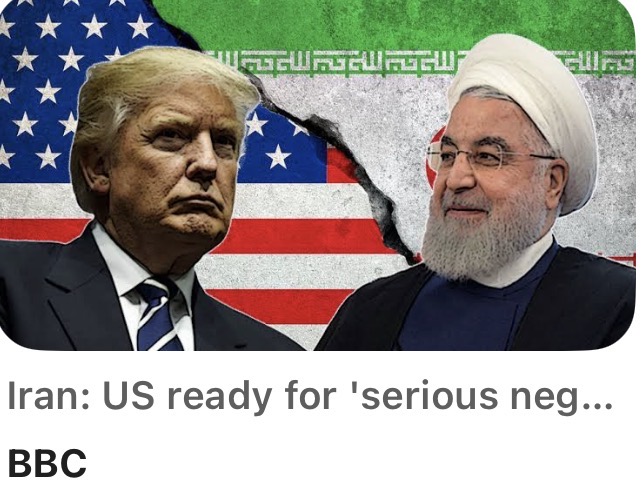
Iran and the United States: Potential Conflict and Its Likely Outcomes
A Clash of Power, Resistance, and Strategic Realism
The world is once again closely observing the growing tensions between Iran and the United States. While rhetoric is escalating, sanctions are being enforced, and limited military operations remain possible, ground realities indicate that a full-scale, direct war would be neither in America’s interest nor conducive to regional or global stability.
America’s Strategic Approach: Caution and Limited Actions
The United States is undoubtedly a global superpower, but experiences in Iraq and Afghanistan have shown that toppling a government may be feasible, but managing the aftermath is extremely difficult. Therefore, current US strategy is likely to remain focused on:
- Avoiding prolonged ground wars
- Conducting limited airstrikes or intelligence-based operations
- Using cyber warfare and economic sanctions to exert pressure
- Maintaining regional alliances to counterbalance Iran
The goal is less about outright conquest and more about containment and influence. A direct attempt at regime change would carry high political, economic, and strategic costs.
Iran’s Strengths: Resistance and Asymmetric Warfare
Iran, while not matching the US in conventional military technology, possesses significant advantages in regional influence and asymmetric warfare:
- Well-developed ballistic and cruise missile programs
- Proxy networks across the Middle East (Hezbollah in Lebanon, Houthis in Yemen, Shiite militias in Iraq and Syria)
- Strong ideological and nationalistic motivation to resist external intervention
- Experience in unconventional and guerrilla warfare
These factors make Iran capable of inflicting serious damage even without direct confrontation, particularly in strategically sensitive regions like the Persian Gulf, Iraq, and southern Lebanon.
Likely Outcomes of a Conflict
- Direct, conventional war: The US holds clear technological and logistical superiority.
- Prolonged regional or asymmetric conflict: Iran could inflict significant economic and military costs on the US and its allies.
- Regime change: Highly improbable without massive, long-term investment, which the US is unlikely to pursue.
- Global impact: Even limited conflict would disrupt oil markets, regional stability, and international trade, affecting the global economy.
Implications for Pakistan and the Muslim World
- Pakistan: Geopolitically, Pakistan is positioned close to the epicenter of such tensions. Any conflict could:
- Affect energy prices and economic stability
- Increase regional security challenges, including refugee flows
- Demand strategic neutrality or careful diplomacy to maintain domestic and international balance
- Muslim World: A direct confrontation would:
- Test the cohesion and leadership of Muslim-majority nations
- Highlight the importance of independent foreign policy rather than reliance on external powers
- Show that regional strength, alliances, and internal unity are more decisive than external intervention
- Strategic Lesson:
The conflict underlines a broader principle applicable to all nations: asymmetric capabilities, national unity, and diplomatic foresight can balance even the strongest conventional powers. For Muslim nations, this means emphasizing regional cooperation, self-reliance, and strategic vision over dependence on foreign superpowers.
Conclusion
While the United States has unmatched conventional power, Iran’s regional influence, asymmetrical capabilities, and ideological resilience make any direct intervention costly and uncertain. Both nations are likely to avoid full-scale war, preferring a combination of diplomacy, economic sanctions, and proxy engagements.
For Pakistan and the Muslim world, the conflict is a reminder that strategic foresight, unity, and self-reliance are essential for safeguarding sovereignty and regional stability. Military might alone does not guarantee success—wisdom, resistance, and alliances are equally critical.
Syed Ali Raza Naqvi Bukhari
Unity of Peace, Economic Reform, and Global Unity
Founder & Chairman of Tehreek Istehkam Pakistan, and the author of “Law of God” and “Social Democratic System.” He advocates for truth, social justice, and reform in all sectors of society.


Comments
Post a Comment