The World Is Not Heading Toward a World War — It Is Entering an Economic and Influence War.
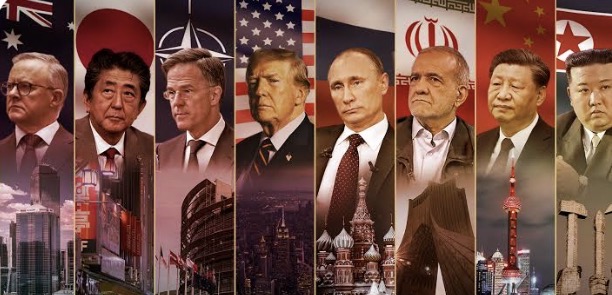
The World Is Not Heading Toward a World War — It Is Entering an Economic and Influence War
For decades, global politics was interpreted through the lens of wars, invasions, and military alliances. However, the world today is moving in a very different direction. Contrary to popular fears, humanity is not standing at the edge of a Third World War resembling World War II. Instead, we are witnessing a silent but decisive global realignment, where power is shifting not through bombs and tanks, but through economics, resources, influence, and long-term strategy.
This is not a battlefield war — it is a systemic war.
From Military Confrontation to Systemic Competition
In the 20th century, wars were fought openly between clearly defined blocs. In the 21st century, such direct confrontation is unlikely, primarily because nuclear deterrence makes full-scale wars suicidal for all major powers.
What has replaced conventional war is a hybrid struggle, fought through:
- Economic pressure and sanctions
- Control over global financial systems
- Supply chain dominance
- Energy and resource security
- Media narratives and political influence
This form of conflict is slower, quieter, and far more complex — but ultimately more transformative.
The Emerging Global Blocs — Not as Simple as Before
There is a visible division forming in the world, but it does not resemble the rigid alliances of the past.
The Western Status-Quo Bloc
Led by:
- United States
- European Union
- United Kingdom
- Israel
- Japan
- Taiwan
This bloc seeks to preserve the existing global order built around the dollar-based financial system, Western-controlled institutions, and military alliances such as NATO. Its strength lies not in natural resources, but in financial leverage, advanced military technology, and global media influence.
The Emerging Multipolar Sphere
Gradually taking shape around:
- China
- Russia
- Pakistan
- Iran
- Parts of the Arab and Muslim world
- South Asia, Africa, and Latin America
This group is not a formal alliance, but a shared strategic direction — reducing dependence on Western systems and building alternative economic and political frameworks such as BRICS and SCO.
The Core Reality: Resources Decide the Future
The fundamental weakness of the Western bloc is structural:
- Limited natural resources
- Aging populations
- Economies sustained by debt
- Dependence on external supply chains
In contrast, Asia, Russia, and the broader Global South possess the real engines of future power:
- Energy (oil, gas, coal)
- Rare earth minerals
- Agriculture and water resources
- Young populations and labor
- Manufacturing capacity
- Expanding consumer markets
For decades, Western prosperity relied on access to other nations’ resources, labor, and markets. That model is now under strain as countries begin to demand sovereignty over their economies.
Why Israel, Japan, and Taiwan Are on the Front Line
These states function as strategic pressure points, not independent war leaders:
- Israel serves as a forward Western asset in the Middle East
- Taiwan is the pressure valve against China
- Japan anchors Western influence in East Asia
Their role is to contain, distract, and apply pressure — while the strategic direction remains largely driven by Washington.
Pakistan’s Position: Quiet, Strategic, and Central
Pakistan is not playing a loud or aggressive role, and that is intentional.
As:
- The only nuclear power in the Muslim world
- A strategic partner of China
- A bridge between South Asia, the Middle East, and Central Asia
Pakistan’s current posture reflects strategic restraint and balance, not weakness. In an era where alignment must be flexible, Pakistan’s value lies in stability, geography, and diplomatic weight, not in becoming a frontline state.
No World War — But a Long Global Transition
The future will not be decided by sudden explosions, but by:
- Currency diversification
- Control of trade routes
- Energy independence
- Technological self-reliance
- Economic resilience
The old powers will not collapse overnight. Instead, influence will gradually shift eastward, toward nations that control resources, production, and population growth.
This is not a clash of civilizations or religions — it is a competition for survival in a post-unipolar world.
Final Thought
The nations that understand this reality will avoid unnecessary wars and focus on strengthening their economies, securing resources, and building long-term alliances. Those who remain trapped in the mindset of military dominance alone will slowly lose relevance.
The next global order will not be written by generals —
it will be written by economists, strategists, and patient nations.
Author
Syed Ali Raza Naqvi Bukhari
Unity of Peace, Economic Reform, and Global Unity
Founder & Chairman of Tehreek Istehkam Pakistan, and the author of “Law of God” and “Social Democratic System.”
Advocate for truth, social justice, and reform in all sectors of society.


Comments
Post a Comment