Trump’s 48-Hour Ultimatum: Reality, Rhetoric, and the Question of Erasing a Civilization.
Picture just for Reference
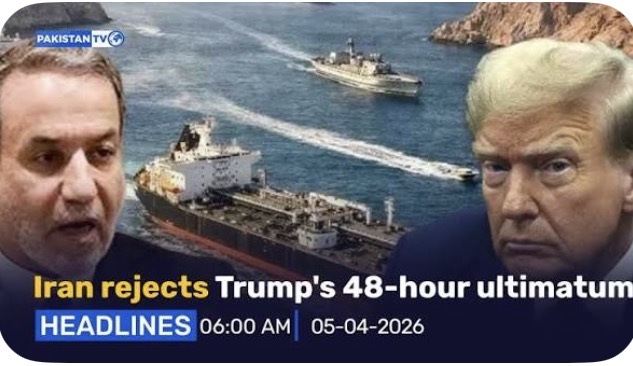
Trump’s 48-Hour Ultimatum: Reality, Rhetoric, and the Question of Erasing a Civilization.
Introduction
Recent tensions surrounding Donald Trump and his reported 48-hour ultimatum to Iran have ignited global concern. The language attributed to this moment—suggesting catastrophic consequences and even the destruction of a “civilization”—has raised urgent moral, legal, and geopolitical questions.
Is such an ultimatum grounded in reality, or is it a reflection of power politics amplified through rhetoric? More importantly, can the idea of eliminating a nation or civilization ever be justified in the modern world?
The Ultimatum: Power, Pressure, and Perception.
The alleged ultimatum centered around reopening the Strait of Hormuz, a critical artery for global oil trade. From a strategic standpoint, any disruption in this region directly impacts international markets and energy security.
For the United States, ensuring open sea lanes aligns with its long-standing global security doctrine. However, framing compliance through threats of overwhelming force—especially language implying total destruction—moves beyond strategic deterrence into the realm of psychological and political escalation.
Such rhetoric is not merely diplomatic pressure; it shapes global perception, heightens fear, and risks triggering unintended consequences.
The Role of Global Powers
The situation is further complicated by the positions of China and Russia, both of whom traditionally oppose unilateral military coercion.
Within the United Nations Security Council, their resistance to force-based resolutions reflects a broader divide:
- One side emphasizes enforcement and deterrence
- The other insists on sovereignty and diplomatic resolution
This deadlock highlights a fractured global order, where consensus is increasingly difficult, and unilateral actions become more likely—raising the stakes for global stability.
International Law and the Limits of Power
Under the framework of the United Nations, the use of force is strictly regulated. While states retain the right to self-defense, this right is neither absolute nor unlimited.
The deliberate targeting of civilians, infrastructure essential for survival, or the intent to destroy a people falls under the gravest crimes recognized by international law. Institutions like the International Criminal Court define such actions as crimes against humanity or even genocide.
Thus, any narrative that normalizes the “elimination” of a civilization is fundamentally incompatible with modern legal and moral standards.
Historical Lessons: The Shadow of the Holocaust
History offers a stark warning through The Holocaust—one of humanity’s darkest chapters.
The systematic destruction of millions was once justified through ideology, fear, and dehumanization. Today, it stands universally condemned as a crime against humanity.
To echo similar language in contemporary geopolitics—even rhetorically—risks normalizing a mindset that the world has already paid dearly to reject.
The Moral Question: Can a Civilization Be Erased?
Civilizations are not merely political entities; they are living tapestries of culture, history, identity, and human experience. The idea of erasing one is not only impractical—it is morally indefensible.
No strategic interest, no geopolitical rivalry, and no security concern can justify the destruction of an entire people. Such a path does not lead to victory; it leads to irreversible loss—for humanity as a whole.
The Pakistan Perspective: A Bridge for Peace
In a deeply polarized world, countries like Pakistan hold a unique position. With historical ties across regions and a tradition of diplomatic engagement, Pakistan has the potential to act as a bridge between competing powers.
Rather than aligning with confrontation, the path forward lies in dialogue—bringing adversaries to the table, de-escalating tensions, and prioritizing peace over dominance.
Conclusion: Strength Lies in Peace, Not Destruction
The true measure of power is not the ability to destroy but the capacity to prevent destruction. Ultimatums rooted in fear and force may achieve short-term compliance, but they undermine long-term stability.
The world does not need another chapter of devastation. It needs leadership that recognizes a simple truth:
Winning a war is not victory—establishing peace is.
Syed Ali Raza Naqvi Bukhari
Unity of Peace, Economic Reform, and Global Unity
Founder & Chairman of Tehreek Istehkam Pakistan, and the author of “Law of God” and “Social Democratic System.” advocates for truth, social justice, and reform in all sectors of society.


Comments
Post a Comment