The Perpetual Bridge: Pakistan's Decades-Long Role as a Diplomatic Conduit.
The Perpetual Bridge: Pakistan's Decades-Long Role as a Diplomatic Conduit.
Pakistan is a Diplomatic Power in the World.
1971-72 China & USA
Today
2026 Iran & USA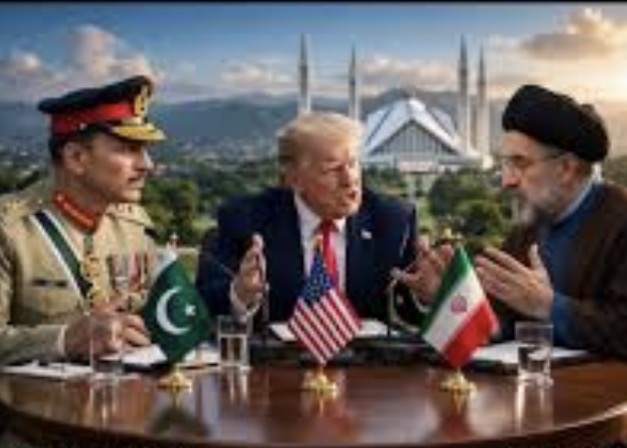
For over half a century, Pakistan has positioned itself—and has been utilized by global powers—as a unique diplomatic bridge. From the clandestine corridors of Cold War diplomacy to the complex web of Middle Eastern rivalries and the uncertain future of Afghanistan, Pakistan has consistently served as a geographic and political conduit. While it has never attained the economic or military stature of a superpower, its role as an indispensable intermediary has been a defining feature of its foreign policy. This article examines Pakistan’s evolution as a diplomatic bridge, the recurring patterns of its mediation, and the limits of its influence.
The Genesis: The 1971–72 Breakthrough
The foundation of Pakistan’s self-image as a diplomatic bridge lies in one undeniable historical achievement: the secret facilitation of US-China rapprochement. During the administration of General Yahya Khan, Pakistan served as the crucial conduit between Washington and Beijing at the height of the Cold War. Henry Kissinger’s clandestine journey—departing from Islamabad under the guise of illness and flying to Beijing—was a logistical and intelligence feat enabled entirely by Pakistani trust and discretion.
This back-channel diplomacy paved the way for President Nixon’s historic 1972 visit to China, fundamentally reshaping the global balance of power. For Pakistan, the lesson was clear: geography, trust, and strategic alignment could elevate a middle power to a position of historic significance. The episode cemented Islamabad’s belief in its ability to “deliver” on the world stage, even during moments of domestic turmoil.
A Bridge Across the Islamic World
Beyond US-China relations, Pakistan’s most consistent diplomatic role has been as a bridge within the Muslim world. Since the 1970s, Pakistan has repeatedly served as an intermediary between Iran and Saudi Arabia—two regional giants divided by sectarian, political, and geopolitical fault lines.
· The 1970s–80s: Pakistan maintained warm relations with both revolutionary Iran and Saudi Arabia, often using its influence to calm tensions.
· The 1990s–2000s: As sectarian divisions deepened, Pakistan continued to host delegations and offer mediation, though with diminishing success.
· The 2010s–present: Pakistan has made concerted efforts to position itself as a peacemaker between Riyadh and Tehran. In 2016, following the execution of Saudi cleric Nimr al-Nimr and the subsequent attack on the Saudi embassy in Tehran, Pakistan’s then-army chief and prime minister undertook high-profile visits to both capitals to de-escalate tensions. While a formal breakthrough remained elusive until the China-brokered reconciliation in 2023, Pakistan consistently provided the diplomatic infrastructure for dialogue.
This role has not been without cost. Pakistan’s deep military and economic ties with Saudi Arabia have often compromised its perceived neutrality in the eyes of Iran. Nevertheless, Islamabad’s geographic contiguity with Iran and its historical relationship with the Gulf monarchies have made it an unavoidable interlocutor.
The Afghan Nexus: A Bridge of Necessity
Perhaps no theater demonstrates Pakistan’s dual role as a bridge and a stakeholder more than Afghanistan. For decades, Pakistan has been the primary conduit for international engagement with various Afghan factions.
· During the Soviet-Afghan War (1980s): Pakistan served as the frontline state and logistical bridge for US and Saudi support to the mujahideen.
· Post-2001: Pakistan became the essential supply route for NATO forces in landlocked Afghanistan, with the majority of coalition supplies passing through Pakistani territory. Simultaneously, Pakistan maintained channels to the Taliban, positioning itself as the indispensable intermediary for any peace process.
· The 2020s: Following the US withdrawal and the Taliban’s return to power, Pakistan’s role as a bridge has become more complex. While it retains influence over certain factions, the border has become a site of tension rather than seamless cooperation. Yet no regional or global power can engage effectively with Afghanistan without passing through Pakistan’s diplomatic or logistical corridors.
The Iran-US Dimension: An Unfulfilled Bridge
Given its historical role, Pakistan has frequently been floated as a potential mediator between Iran and the United States. Pakistan shares a long border with Iran, maintains intelligence and military-to-military contacts, and has historically served as a discreet channel for communication during periods of crisis.
However, unlike the successful 1971 mediation, Pakistan has not yet formally seated Iran and the US at the same table. Several factors constrain this potential role:
· Pakistan’s own economic dependence on the US and its Gulf allies limits its freedom of action.
· Domestic political instability reduces the credibility of long-term diplomatic commitments.
· The China factor: As Pakistan deepens its alignment with China—Iran’s strategic partner—it risks being perceived as part of an axis rather than a neutral arbiter.
Nevertheless, Pakistan remains one of the few countries that could plausibly facilitate a breakthrough if both Washington and Tehran ever seriously sought a mediator.
The Distinction: Strategic Pivot vs. Global Superpower
A recurring theme in Pakistan’s self-perception is the aspiration to be recognized as a major global power. Yet a distinction must be made between being a diplomatic bridge and being a superpower.
Attribute Diplomatic Bridge (Pakistan’s Role) Global Superpower (US, China)
Economic Power Fragile, aid-dependent, limited foreign aid capacity Massive GDP, global reserve currency, large-scale development financing
Military Reach Regional, focused on deterrence Global force projection, naval presence across oceans
Diplomatic Influence Situational, trusted by specific parties Systemic, sets international agendas and norms
Soft Power Limited cultural/technological exports Global media, technology, educational influence
Pakistan possesses undeniable strategic weight: nuclear capability, a large military, geographic centrality, and a diaspora with influence in key Western countries. However, it lacks the economic, technological, and institutional foundations of a superpower. Its role is better understood as that of a regional swing state or pivot state—one whose alignment can alter regional balances but which does not set global agendas.
Conclusion: The Real Reality
The positive dimension of Pakistan’s diplomatic identity is that it has served as a bridge for peace, repeatedly, over decades. The 1971 episode is not an anomaly but the most dramatic example of a recurring pattern: Pakistan leveraging its geography, its relationships across ideological divides, and its strategic necessity to facilitate dialogue.
However, elevating this role to the level of a superpower is an emotional interpretation rather than a reflection of geopolitical reality. Pakistan’s diplomatic influence remains influential but not decisive; situational but not systemic.
To transition from being a perpetual bridge to a genuine diplomatic power, Pakistan must address its internal vulnerabilities: economic stability, civil-military balance in foreign policymaking, domestic political cohesion, and normalized relations with its neighbors. Until then, Pakistan will remain what it has always been: a pivotal state on a dangerous frontier, indispensable in moments of crisis, but forever navigating the gap between its strategic potential and its structural constraints.


Comments
Post a Comment