The Holocaust: Who Did It, Why It Happened, and Why It Should Not Be Misunderstood.
Picture just for Reference
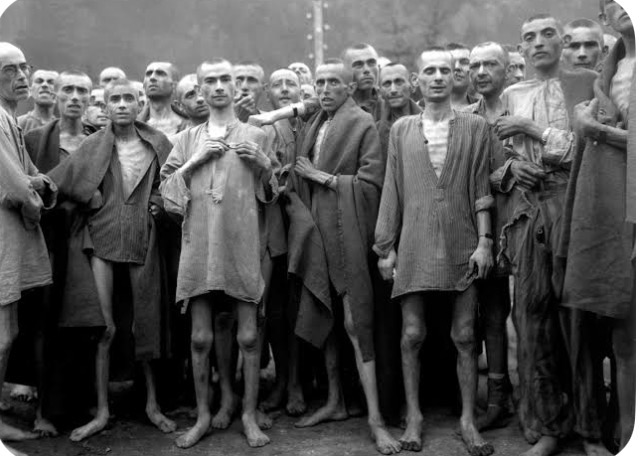
The Holocaust: Who Did It, Why It Happened, and Why It Should Not Be Misunderstood.
Introduction
The Holocaust was one of the darkest chapters in human history. It refers to the systematic persecution and mass murder of around six million Jews during World War II, carried out in Nazi-controlled Europe between 1941 and 1945.
It was orchestrated by the Nazi regime led by Adolf Hitler. However, understanding the Holocaust requires careful analysis of political ideology, propaganda, and wartime conditions—not religious blame or assumptions about entire communities.
Who carried out the Holocaust?
The Holocaust was executed by the Nazi state apparatus in Germany, including:
- The Nazi leadership
- SS (Schutzstaffel)
- Military and administrative systems
It was a state-organized genocide, not an action of any single religion or global community.
Why did it happen? (Main Causes)
1. Racial ideology
The Nazis believed in a false hierarchy of human races, claiming that “Aryans” were superior and Jews were inferior. This was not a religious belief but a pseudo-scientific racial ideology.
2. Propaganda and scapegoating
Nazi propaganda falsely blamed Jews for Germany’s economic struggles after World War I and the Great Depression. This created a scapegoat for public frustration.
3. Authoritarian control
Under Hitler’s dictatorship, opposition was eliminated, media was controlled, and society was manipulated to accept extreme policies.
4. War and expansion
As Nazi Germany expanded across Europe, millions of Jews in occupied territories were also targeted, making it a continent-wide genocide.
Were Jews controlling Germany’s economy?
No. While some Jewish individuals were successful in professions such as banking, law, and medicine, they made up less than 1% of Germany’s population. The claim that they controlled the economy was part of Nazi propaganda, not historical reality.
Why is the Holocaust widely remembered?
The Holocaust is heavily documented and studied because:
- It was an industrial-scale, systematic genocide
- It led to the creation of modern international human rights laws
- It became a global symbol of “Never Again” policies
Comparisons with other historical tragedies
History also includes other mass tragedies:
- Stalin-era purges and famine in the Soviet Union
- Mao-era policies in China causing millions of deaths
- Bosnian genocide in the 1990s
- Mongol invasions under Genghis Khan
Each of these represents human suffering on a massive scale. However, they differed in context, intent, and historical documentation.
Did Muslims, Christians, or Jews always live in conflict?
No.
History shows long periods of coexistence:
- In Al-Andalus (Muslim Spain), Muslims, Christians, and Jews lived together in relative tolerance.
- The Ottoman Empire also provided refuge to many Jews.
- Conflicts between groups were usually political or imperial, not permanent religious destiny.
Therefore, it is incorrect to say that any of these communities “cannot live together.”
Modern misunderstandings
Modern tensions in global politics (such as in the Middle East) are often:
- Political conflicts
- Territorial disputes
- Security concerns
They should not be confused with historical religious relationships.
Conclusion
The Holocaust was not the result of any one religion, but of extremist ideology, propaganda, dictatorship, and war. It was a human tragedy that must be understood carefully to prevent its repetition.
The lesson of history is not division, but caution:
When any group is dehumanized and blamed collectively, it can lead to catastrophic consequences.
Author
Syed Ali Raza Naqvi Bukhari
Unity of Peace, Economic Reform, and Global Unity
Founder & Chairman of Tehreek Istehkam Pakistan, and the author of “Law of God” and “Social Democratic System.” advocates for truth, social justice, and reform in all sectors of society.


Comments
Post a Comment