Is Pakistan Emerging as a New Security Guardian of the Gulf?
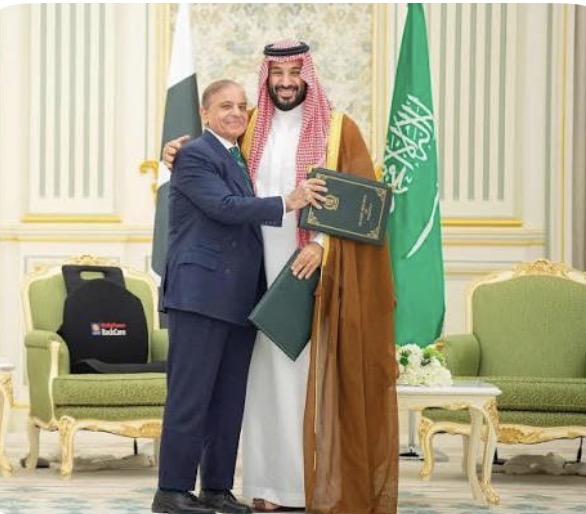
Picture just for reference
Is Pakistan Emerging as a New Security Guardian of the Gulf?
The rapidly changing geopolitical landscape of the Middle East has raised an important question in strategic circles: Is the traditional security order of the Gulf shifting, and could Pakistan emerge as a new guardian of regional stability?
For decades, the security architecture of the Gulf region has been dominated by the United States, which maintained military bases, naval fleets, and advanced defense systems across the region. Countries such as Saudi Arabia, the United Arab Emirates, Qatar, and Kuwait have relied heavily on American military protection, intelligence cooperation, and weapons systems.
However, recent developments in the region—particularly escalating tensions between Iran, Israel, and the United States—have created uncertainty about the long-term structure of Gulf security.
A Region Avoiding Direct War
Despite rising attacks and threats across the Middle East, most Gulf countries have avoided directly confronting Iran militarily. This restraint is not accidental; it reflects a strategic calculation.
Iran possesses significant missile and drone capabilities capable of targeting oil facilities, ports, and major cities throughout the Gulf. Any full-scale war could disrupt global energy supplies and devastate regional economies.
Therefore, Gulf states are increasingly pursuing strategic balancing—maintaining security cooperation with the United States while simultaneously avoiding direct confrontation with Iran.
Pakistan’s Historical Role in Gulf Security
Pakistan’s relationship with the Gulf states, particularly Saudi Arabia, has historically been rooted in defense cooperation.
For decades, Pakistani military personnel have participated in training missions, security cooperation programs, and advisory roles in the Gulf. Pakistan has also been viewed as a reliable Muslim military power with professional armed forces and nuclear deterrence capability.
These factors have long positioned Pakistan as a trusted security partner, even if it was not the primary security guarantor.
Increasing Diplomatic and Strategic Engagement
Recent visits by Pakistan’s leadership, including Prime Minister Shehbaz Sharif and Pakistan’s military leadership, to Saudi Arabia have attracted attention among analysts.
These engagements suggest that Islamabad and Riyadh are closely coordinating on regional security, economic cooperation, and crisis management in a highly volatile Middle Eastern environment.
Pakistan’s diplomatic posture in the region is particularly unique: it maintains relations with Saudi Arabia and the Gulf states while also keeping channels open with Iran.
This balanced approach gives Pakistan the potential to serve not merely as a military partner, but as a strategic bridge between rival regional powers.
A Multipolar Security Future
Rather than replacing the United States, the more realistic scenario is the emergence of a multipolar security framework in the Middle East.
In this model, several powers may contribute to regional stability:
- The United States as the primary military power
- China as a growing economic and diplomatic actor
- Turkey as a regional military player
- Pakistan as a trusted Muslim defense partner and mediator
Such a framework reflects the broader global transition from a unipolar to a multipolar world order.
Conclusion
At present, the United States remains the dominant security guarantor of the Gulf. However, the evolving strategic environment is creating space for other actors to play greater roles.
Pakistan is unlikely to replace the United States as the Gulf’s security guardian. Yet its strategic partnerships, military credibility, and balanced diplomacy position it to become an increasingly important stabilizing force in the region.
In an era of shifting alliances and rising geopolitical uncertainty, Pakistan may not be the sole guardian of Gulf security—but it could become one of its most trusted pillars.
Syed Ali Raza Naqvi Bukhari
Unity of Peace, Economic Reform, and Global Unity
Founder & Chairman of Tehreek Istehkam Pakistan, and the author of “Law of God” and “Social Democratic System.” Advocate for truth, social justice, and reform in all sectors of society.


Comments
Post a Comment