Iran’s Fall Would Be the Gulf’s Fall: A Strategic Reality the Region Must Understand.
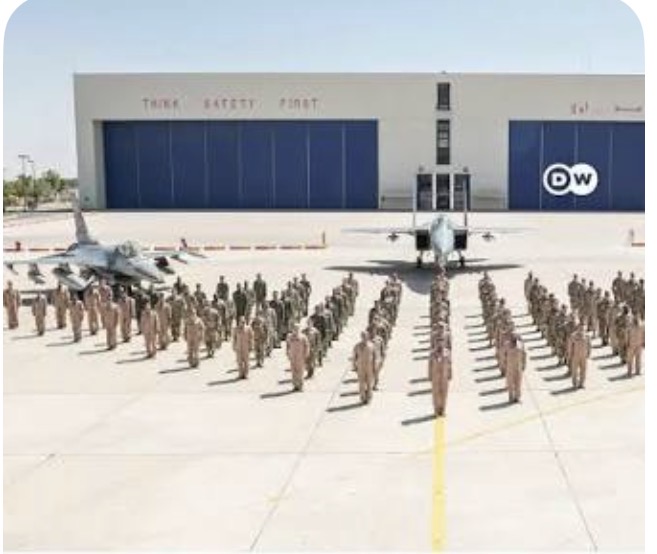
Picture just for reference
Iran’s Fall Would Be the Gulf’s Fall: A Strategic Reality the Region Must Understand
For decades, the geopolitical landscape of the Middle East has been shaped by fear, alliances, and external influence. The Gulf states have often been persuaded that their security depends on external military protection, particularly from global powers. Yet the events of recent years raise an important question: Has this system truly protected the region, or has it merely deepened dependence while weakening regional stability?
The Gulf must now carefully reflect on a critical strategic reality: the collapse or weakening of Iran would not secure the Gulf; it would ultimately destabilize it.
The Security Narrative That Shaped the Gulf
Since the late twentieth century, a dominant narrative has been repeatedly presented to Gulf countries—that Iran represents the primary threat to their stability. On this basis, extensive military alliances were formed, foreign military bases were established, and billions of dollars were spent on defense systems and weapons.
These arrangements were presented as a guarantee of protection. Gulf nations provided land, infrastructure, and strategic access in exchange for security assurances. Over time, however, the region became heavily militarized while political tensions continued to grow.
The question that many observers now ask is simple: Has this approach truly produced lasting security?
### A Region Dependent on External Protection
The Middle East hosts one of the highest concentrations of foreign military bases in the world. These bases were justified as a shield against regional threats and as a means to protect vital energy routes.
Yet repeated crises in the region have revealed a troubling pattern. When tensions escalate, the same powers that promised protection often prioritize their broader global strategies rather than the immediate stability of Gulf societies.
This reality creates a structural imbalance. Gulf states invest enormous resources in external security arrangements, yet their long-term safety remains uncertain.
### Why Iran’s Stability Matters to the Gulf
Geography alone makes Iran a central pillar of the regional balance. Iran borders the Persian Gulf and lies next to the Strait of Hormuz, through which a significant portion of the world's energy supply passes.
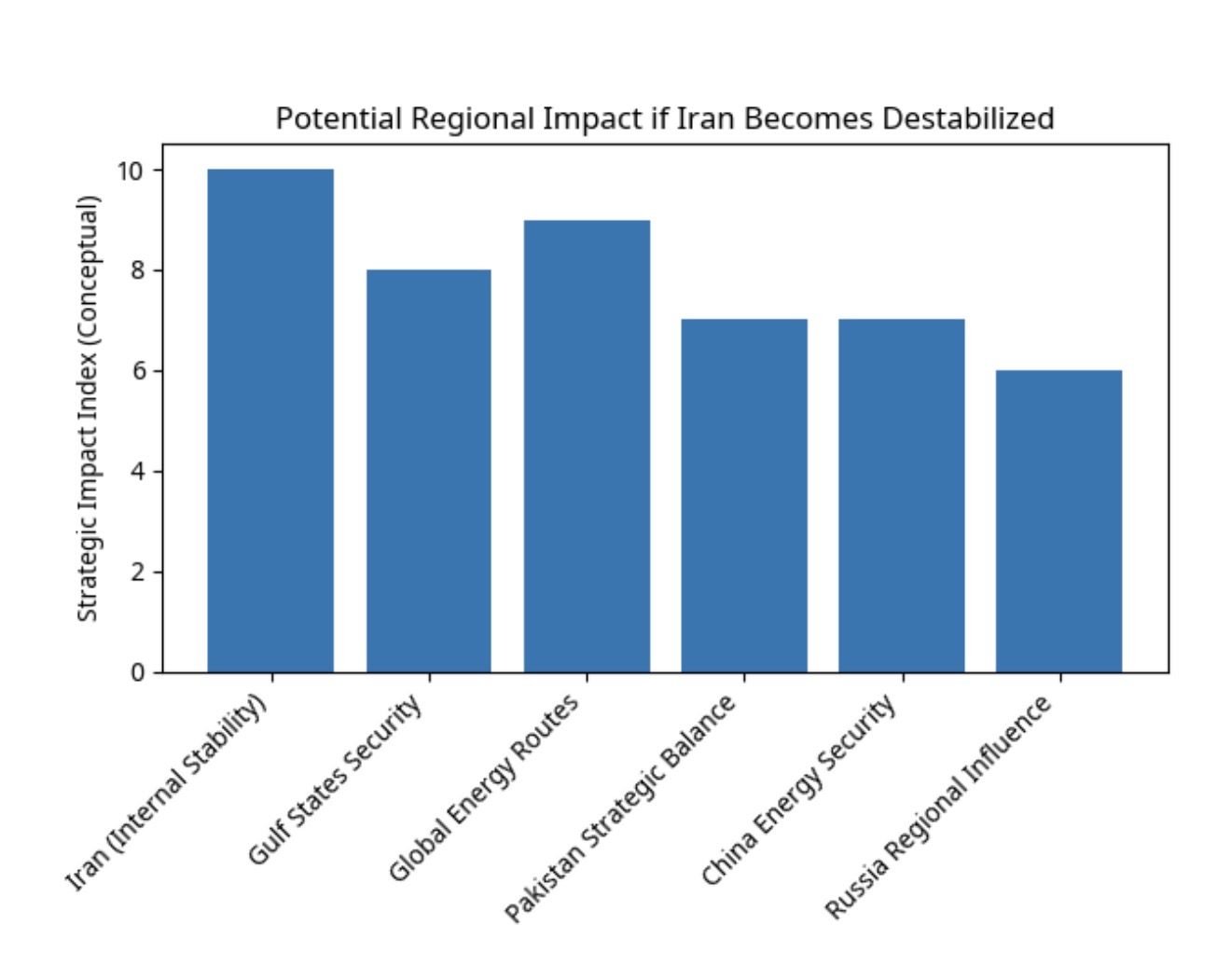
A weakened or collapsed Iran would not create stability. Instead, it would likely trigger a series of dangerous consequences:
- Strategic vacuum: The fall of a major regional power would create instability across the entire Gulf.
- Security chaos: Internal conflict or fragmentation inside Iran could spill across borders.
- Energy disruption: Global oil and gas routes could face severe disruption.
- Expanded foreign control: External powers could gain deeper strategic control over the region.
Such outcomes would not strengthen Gulf sovereignty; they could weaken it.
### Lessons From History
History repeatedly shows that the collapse of major regional states rarely produces peace. Instead, it often leads to prolonged instability, humanitarian crises, and geopolitical competition among global powers.
The Middle East has already witnessed the consequences of state collapse and external intervention. The region continues to struggle with the aftershocks of those events.
This should serve as a warning rather than a precedent to repeat.
### The Need for a Regional Security Vision
The Gulf and Iran share geography, history, culture, and economic interdependence. Regardless of political disagreements, their futures remain connected.
A more sustainable path forward would emphasize:
- Regional dialogue instead of permanent confrontation
- Collective security frameworks led by regional states
- Economic cooperation and integration
- Reduced dependence on external military powers
A stable Gulf cannot exist in isolation from a stable Iran.
### A Strategic Choice for the Future
The Gulf today stands at a crossroads. It can continue relying primarily on external security arrangements, or it can gradually build a regional framework that prioritizes cooperation and shared stability.
Recognizing that Iran’s collapse would destabilize the entire Gulf is not an endorsement of any political system. Rather, it is a strategic acknowledgement of geographic and geopolitical realities.
True regional security will not come from the weakening of neighbors, but from balanced relations, dialogue, and a shared commitment to stability.
The future of the Gulf depends not on the fall of Iran—but on the wisdom to understand that regional stability is indivisible.
---
Syed Ali Raza Naqvi Bukhari
Unity of Peace, Economic Reform, and Global Unity
Founder & Chairman of Tehreek Istehkam Pakistan, and the author of “Law of God” and “Social Democratic System.” Advocate for truth, social justice, and reform in all sectors of society.


Comments
Post a Comment