Energy Geopolitics and the Emerging U.S.–India Oil Refinery Partnership.
Picture just for reference
 Energy Geopolitics and the Emerging U.S.–India Oil Refinery Partnership.
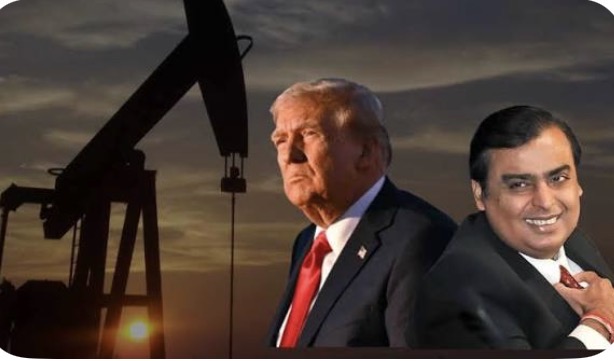
The global energy landscape is continuously evolving as nations compete for economic strength, technological advancement, and energy security. A recently discussed development involving former U.S. President Donald Trump and Indian business magnate Mukesh Ambani, chairman of Reliance Industries, has drawn attention to the strategic importance of oil refining capacity and international energy partnerships. Although details of the proposed investment and refinery project are still developing, the broader implications of such cooperation reveal important shifts in global energy geopolitics.
A New Era of Energy Partnerships
The United States has long been one of the world’s leading producers of oil and natural gas. However, refining capacity has not expanded at the same pace over the past several decades. Building a new large-scale refinery in the United States would therefore represent a significant step toward strengthening domestic energy infrastructure.
The involvement of Reliance Industries—one of the world’s largest private-sector energy companies—signals an emerging trend where multinational corporations collaborate across borders to enhance energy security and expand economic opportunities. Reliance already operates one of the largest refining complexes in the world in Jamnagar, India, making the company a major global player in petroleum refining and energy trade.
If implemented, such a project could represent one of the most ambitious refinery developments in recent decades, potentially creating thousands of jobs, strengthening supply chains, and increasing the availability of refined petroleum products.
Strategic Importance for the United States
For the United States, expanding refining capacity serves several strategic goals. First, it supports the country’s broader objective of energy independence. By processing more crude oil domestically, the United States can reduce vulnerabilities related to international supply disruptions.
Second, new refinery projects stimulate industrial growth and employment. Large-scale refining infrastructure requires extensive engineering, construction, logistics, and long-term operational support, which can benefit regional economies.
Finally, the project could strengthen America’s position in global energy exports. With rising global demand for refined products such as gasoline, diesel, and petrochemicals, increased refining capacity allows the United States to maintain influence in the international energy market.
Strengthening U.S.–India Economic Relations
From India’s perspective, participation in such a venture reflects the country’s growing economic and industrial reach. Indian corporations are increasingly investing abroad, demonstrating their capacity to compete globally.
For Reliance Industries and other Indian energy companies, international refinery investments can help diversify markets, secure long-term energy supply chains, and strengthen technological collaboration with Western partners.
At a geopolitical level, deeper economic cooperation between the United States and India also reinforces broader strategic partnerships in trade, technology, and regional security.
Potential Impact on Global Oil Markets
The construction of a new refinery of this scale could influence global energy markets in several ways. Increased refining capacity may enhance the availability of petroleum products and potentially stabilize supply in international markets.
Additionally, such infrastructure could support the processing of various crude oil grades, including American shale oil. As production of shale oil has expanded significantly in the United States, additional refining capacity would enable more efficient utilization of these resources.
However, market dynamics remain complex. Oil prices depend on numerous factors including geopolitical tensions, OPEC production decisions, renewable energy transitions, and global economic growth.
Implications for Pakistan and Regional Economies
For Pakistan and other developing economies, developments in global energy infrastructure present both challenges and opportunities.
Pakistan currently relies heavily on imported refined petroleum products, while many of its domestic refineries operate with outdated technology. This situation increases import costs and places pressure on foreign exchange reserves.
Observing large-scale refinery projects abroad highlights the importance of modernizing Pakistan’s energy infrastructure. Investments in advanced refining technology, improved exploration of domestic oil and gas resources, and the development of energy hubs such as Gwadar could significantly strengthen Pakistan’s energy security.
Furthermore, diversification into renewable energy—particularly solar and wind power—can reduce dependence on imported fuels while supporting sustainable economic development.
The Need for Long-Term Energy Vision
The evolving global energy order demonstrates that countries which invest strategically in energy infrastructure gain significant economic and geopolitical advantages. Large refinery projects are not merely industrial developments; they are instruments of national policy, economic expansion, and international influence.
For developing nations like Pakistan, the lesson is clear: long-term planning, technological modernization, and consistent energy policies are essential for achieving energy independence and economic stability.
Conclusion
The reported collaboration between American leadership and major Indian energy corporations reflects the growing intersection of business, geopolitics, and energy security. As global demand for energy continues to evolve, partnerships that combine capital, technology, and strategic vision will play a crucial role in shaping the future energy order.
For Pakistan and other emerging economies, these developments should serve as an opportunity to rethink national energy strategies, invest in modern infrastructure, and pursue policies that ensure both economic growth and long-term sustainability.
Syed Ali Raza Naqvi Bukhari
Unity of Peace, Economic Reform, and Global Unity
Founder & Chairman of Tehreek Istehkam Pakistan, and the author of “Law of God” and “Social Democratic System.” Advocate for truth, social justice, and reform in all sectors of society.


Comments
Post a Comment