From Politics of Personalities to Politics of Performance.
Picture just for Reference
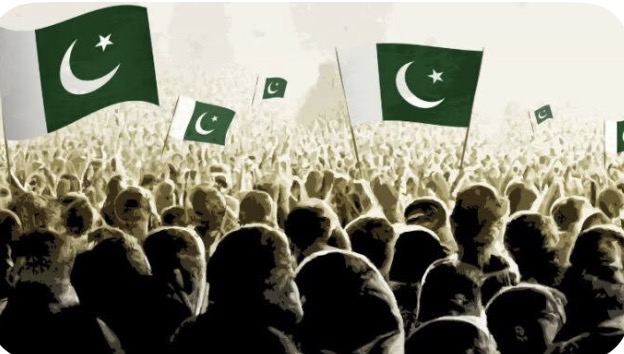
From Politics of Personalities to Politics of Performance
A New Political Reality in Pakistan
The End of Personality-Driven Politics
Pakistan is witnessing a decisive transformation in its political landscape. The era of personality-driven politics—centered on agitation, emotional slogans, hatred, and continuous unrest—is gradually fading. The public has clearly rejected politics based on protests and confrontation, opting instead for stability, governance, and tangible performance.
This shift reflects a growing political maturity within society, where leadership is now judged by outcomes rather than charisma or street power.
Public Rejection of Protest Politics
This changing mindset was clearly visible when a nationwide protest call was issued recently, coinciding with the final day of Basant celebrations in Punjab. Despite the call, public response remained negligible. Not only in Punjab, but also across Sindh, Balochistan, and Khyber Pakhtunkhwa, the people chose normalcy over disruption.
The absence of public participation sent a strong message: Pakistanis no longer want politics that disrupt daily life, economic activity, and social harmony.
Punjab as the Starting Point of Change
Punjab has emerged as the focal point of this political transition. The province has demonstrated that governance, administrative efficiency, and service delivery matter far more to the public than emotional narratives or political chaos.
This marks the beginning of a performance-based political culture—one that values institutions, continuity, and measurable results.
Stability and Economic Confidence
Political stability has begun to translate into economic confidence. Pakistan has witnessed significant growth in its software industry and defense exports—two critical sectors that rely heavily on credibility, consistency, and international trust.
Such progress is not coincidental. It is the direct outcome of reduced political instability, improved governance, and a shift away from confrontation-driven politics.
Improving Pakistan’s International Image
As stability improves at home, Pakistan’s global standing is also strengthening. International partners increasingly view Pakistan as a responsible and reliable state focused on economic growth, technological development, and strategic maturity.
The rise in exports and foreign engagement reflects renewed global confidence—something that was repeatedly undermined in the past by internal political turmoil.
A Clear National Direction
Pakistan now stands at a defining moment. The choice is no longer ambiguous: move forward with politics rooted in performance, public welfare, and institutional strength—or regress into cycles of agitation that have historically weakened the nation.
The public verdict is clear. The future of Pakistan belongs to peace, progress, and prosperity—not polarization and protest.
Conclusion: Politics of Results, Not Rhetoric
The political future of Pakistan will be shaped by ideas, governance, and results. Personality cults, street agitation, and politics of disruption are losing relevance. What lies ahead is a new political reality—one defined by responsibility, performance, and national interest.
Syed Ali Raza Naqvi Bukhari
Unity of Peace, Economic Reform, and Global Unity
Founder & Chairman of Tehreek Istehkam Pakistan, and the author of “Law of God” and “Social Democratic System.” Advocate for truth, social justice, and reform in all sectors of society.


Comments
Post a Comment