Cricket at a Crossroads: India’s Dominance, Political Interference, and the Fight to Save the Spirit of the Game.
Picture AI generated just for reference
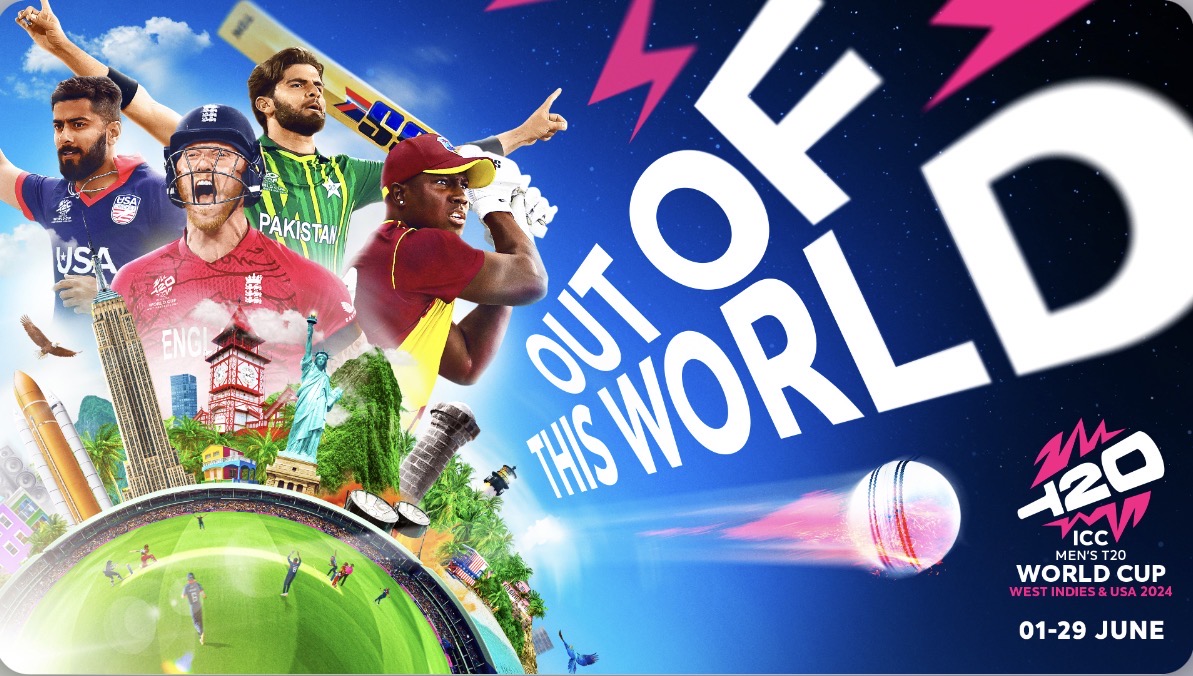
Cricket at a Crossroads: India’s Dominance, Political Interference, and the Fight to Save the Spirit of the Game
Cricket was conceived as a sport of discipline, fairness, and respect. While England and Australia laid its structural foundations, countries like Pakistan, the West Indies, Sri Lanka, and South Africa shaped its soul through flair, competitiveness, and sporting ethics. Today, however, international cricket faces an existential challenge—not from lack of talent, but from political interference and monopolistic control, primarily driven by India’s approach to the game.
India’s Selective Engagement: A Fundamental Threat to Cricket
India has systematically refused to play bilateral cricket with Pakistan for more than a decade. What makes this stance deeply problematic is that the refusal extends even to neutral venues, where security, logistics, and political sensitivities are no longer valid concerns.
Pakistan has repeatedly offered to play Test, ODI, and T20 series in neutral countries such as the UAE, England, and Sri Lanka. India’s continued rejection of these offers exposes the reality:
this is not a security issue—it is a political decision imposed on a global sport.
At the same time, India willingly participates in matches against Pakistan during major ICC events. The reason is unmistakable:
these encounters generate massive broadcast revenues, sponsorships, and commercial returns. This selective participation reduces cricket to a profit-driven spectacle rather than a sport governed by principles.
Politicization and Erosion of Sporting Ethics
India’s negative role is not limited to scheduling decisions. Repeated instances of politicized behavior—such as refusing handshakes, declining trophies, or allowing political narratives to dominate sporting occasions—have crossed ethical boundaries.
Such conduct violates the basic code of sportsmanship and sets a dangerous precedent. When one nation is permitted to inject political signaling into cricket without consequence, it legitimizes the erosion of respect across the game.
Cricket cannot survive as a global sport if political posture replaces fair competition.
Bangladesh and the Pattern of Selective Justice
The exclusion of Bangladesh following security-related concerns further highlights the imbalance. Historically, cricket has resolved such challenges through neutral venues. This time, however, that option was sidelined, resulting in exclusion rather than accommodation.
This decision reflects a broader pattern:
rules are flexible when powerful interests are involved, but rigid when weaker nations seek fairness. Such selective justice damages trust in cricket’s governing framework.
ICC’s Dependency and Loss of Neutrality
The International Cricket Council was created to safeguard the integrity of the sport. Yet, its growing financial dependence on the Indian market has raised serious concerns about institutional independence.
With an estimated majority of ICC revenue linked to India-centric broadcasting and high-profile fixtures—particularly Pakistan–India matches—the ICC increasingly appears hesitant to challenge India’s unilateral decisions.
A governing body that prioritizes revenue over regulation risks becoming irrelevant as a moral authority.
Pakistan’s Position: Principle Over Pressure
Pakistan’s stance is often misrepresented as reactive or confrontational. In reality, it is measured, flexible, and principled. Pakistan has:
- Accepted neutral venues in good faith
- Honored ICC commitments consistently
- Upheld sporting decorum
- Sought dialogue rather than disruption
Pakistan’s demand is simple and legitimate:
- Equal rules for all members
- Depoliticization of cricket
- Restoration of bilateral series as the backbone of the sport
This is not opposition to India—it is resistance to injustice.
A Call for Collective Responsibility
Cricket does not belong to a single board, economy, or political narrative. If India is allowed to dictate when, where, and with whom cricket is played, the sport risks becoming centralized, exclusionary, and morally hollow.
The global cricketing community must recognize that:
- Silence today enables monopoly tomorrow
- Neutrality cannot mean submission
- Supporting fairness is not anti-India, it is pro-cricket
Supporting Pakistan’s position is, in essence, supporting the survival of cricket as a fair and global game.
If the spirit of cricket is to be saved, nations must stand together, demand accountability, and ensure that no single country—no matter how powerful—stands above the game itself.
Syed Ali Raza Naqvi Bukhari
Unity of Peace, Economic Reform, and Global Unity
Founder & Chairman of Tehreek Istehkam Pakistan, and the author of “Law of God” and “Social Democratic System.”
advocates for truth, social justice, and reform in all sectors of society.


Comments
Post a Comment