Basant, Culture, and Resilience: Why Pakistan Must Not Surrender Its Joy to Terror.
Picture just for Reference
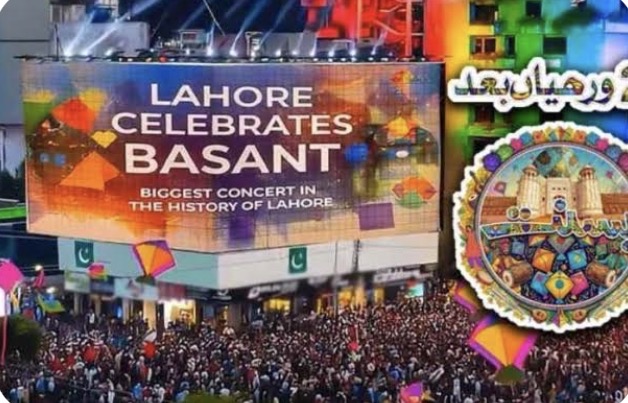
Basant, Culture, and Resilience: Why Pakistan Must Not Surrender Its Joy to Terror
Pakistan is a country blessed beyond imagination. From snow-covered mountains to lush green valleys, from ancient civilizations to living cultural traditions, Pakistan has everything that can attract global tourism. Gwadar, Skardu, Hunza, Murree, Kaghan, Naran, Swat, Kalam—often called the “Swiss landscapes of Pakistan”—offer breathtaking beauty. Balochistan’s historical heritage, including the legendary Princesses of Makran, a name once echoed internationally by Angelina Jolie, adds to Pakistan’s civilizational depth and mystique.
Alongside natural beauty, Pakistan’s cultural life is equally rich. Festivals, colors, music, and traditions form the soul of the nation. Events like Basant are not merely entertainment; they are expressions of identity, continuity, and collective happiness.
Basant After 25 Years: A Global Message of Peace
The revival of Basant in Lahore after nearly 25 years is more than a festival—it is a statement to the world. It tells the international community that Pakistan is safe, confident, and open for tourism. Lahore, the city of vibrant hearts (Zinda Dilaan-e-Lahore), has recently hosted Christmas celebrations, New Year events, and now Basant at Liberty Chowk. These events have drawn international attention and helped reshape Pakistan’s image as a country of life, color, and coexistence.
Such cultural events improve Pakistan’s soft power, boost tourism, and directly contribute to the economy. Millions are spent by citizens and businesses in preparation—kite makers, string manufacturers, vendors, transporters, hotels, and daily-wage workers. Canceling such events causes financial losses running into billions of rupees and destroys livelihoods built around seasonal cultural economies.
Condemnation of the Tragic Mosque Attack
The recent bomb blast in a mosque in Pakistan is a heartbreaking tragedy. The martyrdom of over thirty innocent people and injuries to more than two hundred is an irreparable loss. No words are enough to express the sorrow and grief felt by the nation. Such acts of terrorism are crimes against humanity, Islam, and Pakistan.
However, it is precisely at moments like these that wisdom, not fear, must guide decisions.
Do Not Give the Enemy What It Wants
Some voices are demanding that Basant and other cultural events be canceled in response to this tragedy. This is exactly what the enemies of Pakistan desire. Terrorism aims not only to kill people but to paralyze society, suppress joy, halt normal life, and project Pakistan as unsafe and unstable.
If every tragic incident leads to shutting down national life, festivals, and culture, then the terrorists win without firing another shot.
Life is a balance of grief and joy. A sorrowful event on one side should not extinguish the happiness of millions on the other. Islam itself teaches resilience, patience, and continuity of life, not collective despair.
Punjab’s Culture on the World Stage
Today, the world is watching Punjab’s culture—its colors, kites, music, and celebration of life. Basant is not vulgarity or recklessness; it is heritage. With proper regulation, safety measures, and governance, cultural events can coexist with security and respect for human life.
Pakistan must show the world that it can mourn its martyrs with dignity while continuing its journey forward with confidence.
Conclusion
Pakistan’s strength lies in its resilience. Canceling cultural events after every tragedy sends a message of fear. Continuing them responsibly sends a message of courage. Basant is not against religion, morality, or security—it is against despair.
Let Pakistan be known not only for surviving pain, but for rising above it.
Author
Syed Ali Raza Naqvi Bukhari
Unity of Peace, Economic Reform, and Global Unity
Founder & Chairman of Tehreek Istehkam Pakistan, and the author of “Law of God” and “Social Democratic System.” Advocate for truth, social justice, and reform in all sectors of society.


Comments
Post a Comment