Why Mosque Domes Vary in Color Across the Islamic World.
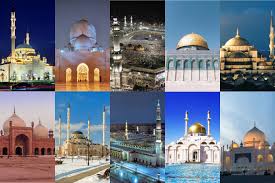
Why Mosque Domes Vary in Color Across the Islamic World.
One of the most striking features of Islamic architecture is the mosque dome, which often captures attention not just for its shape but for its color. From the iconic green dome of Medina to the blue-tiled domes of Istanbul, the color of mosque domes varies widely across regions. But why do these differences exist? And why is blue so common in Turkey while green dominates other parts of the Muslim world?
The answer lies in a combination of history, culture, artistic tradition, and symbolism, rather than strict religious rules.
Blue Domes in Turkey
In Turkey, mosque domes are often blue, as famously seen in the Sultan Ahmed Mosque (Blue Mosque) in Istanbul. The reason is mostly historical and cultural, rather than religious:
- Symbolism of the Sky: Blue represents the heavens, infinity, and spiritual calm.
- Artistic Tradition: The use of blue Iznik tiles became a hallmark of Ottoman architecture.
- Protection and Serenity: In Turkic culture, blue was considered a color that wards off evil and brings peace.
Thus, the iconic Turkish blue dome is a reflection of Ottoman aesthetics and cultural values, rather than a religious requirement.
Green Domes in the Middle East and South Asia
Green is another color deeply associated with Islamic tradition:
- Symbol of Paradise: Green has been linked to gardens, growth, and paradise in Islamic texts.
- Prophetic Tradition: It is traditionally associated with the Prophet Muhammad ﷺ.
- Cultural Adoption: Countries like Saudi Arabia, Pakistan, and India have widely adopted green domes as a visible symbol of faith.
The famous green dome of Medina has played a key role in cementing the association of green with Islamic spirituality.
Regional Variations
Iran — Turquoise and Blue
Iranian mosques often feature turquoise and deep blue domes. This is influenced by:
- Persian Aesthetics: Blue symbolizes reflection, infinity, and contemplation.
- Tile Craftsmanship: Iran has a long history of intricate tilework.
- Shi’a Architectural Identity: Blue domes convey serenity and spiritual depth.
Examples: Shah Mosque and Sheikh Lotfollah Mosque in Isfahan.
North Africa — White, Earth Tones, and Green.
In countries like Morocco, Algeria, and Tunisia, domes are often white or earthy, with green sometimes added:
- Climate Considerations: Lighter colors reflect heat in hot, arid climates.
- Simplicity and Humility: The minimalist color scheme emphasizes devotion over decoration.
Example: Hassan II Mosque, Casablanca.
Central Asia — Blue and Turquoise
Uzbekistan, Samarkand, and Bukhara feature bright blue and turquoise domes:
- Timurid Influence: Blue domes symbolized celestial power and authority.
- Cultural Fusion: Central Asia blended Persian, Turkic, and Islamic aesthetics.
Examples: Registan in Samarkand, Gur-e Amir Mausoleum.
South Asia — Green, White, and Gold
In Pakistan, India, and Bangladesh, green dominates but is often combined with white or golden domes:
- Sufi Influence: Green represents spiritual blessing and devotion.
- Mughal Legacy: Architectural grandeur introduced white marble and gilded domes.
Examples: Badshahi Mosque (red and white), Dargah of Data Ganj Bakhsh (green).
Arab World — White, Green, and Gold
In Saudi Arabia, Egypt, and Syria, domes are often:
- White: Reflecting simplicity and desert heat.
- Green: Symbolizing paradise and Islamic identity.
- Gold: Signifying prestige and beauty.
Example: The Prophet’s Mosque in Medina (green dome).
China and Southeast Asia — Green, Blue, and Red
Mosques in China and Southeast Asia adapt to local cultural traditions:
- Green: Life, nature, and faith.
- Blue: Sky and spiritual calm.
- Red: Strength and harmony.
Example: Great Mosque of Xi’an, China.
The Key Takeaways
- Islam does not dictate dome color.
- Dome colors are influenced by local culture, climate, materials, and artistic trends.
- Blue, green, white, gold, and red each carry symbolic meaning in different contexts.
- This diversity reflects the cultural richness and adaptability of Islamic civilization, while keeping the spiritual focus intact.
Ultimately, the beauty of mosque domes lies not just in their colors, but in their ability to express faith through art, across the vast tapestry of the Muslim world.
Syed Ali Raza Naqvi Bukhari
Unity of Peace, Economic Reform, and Global Unity
Founder & Chairman of Tehreek Istehkam Pakistan, and the author of “Law of God” and “Social Democratic System.” Advocate for truth, social justice, and reform in all sectors of society.


Comments
Post a Comment