Venezuela and Nigeria: Security, Resources, and the Question of Strategic Control.
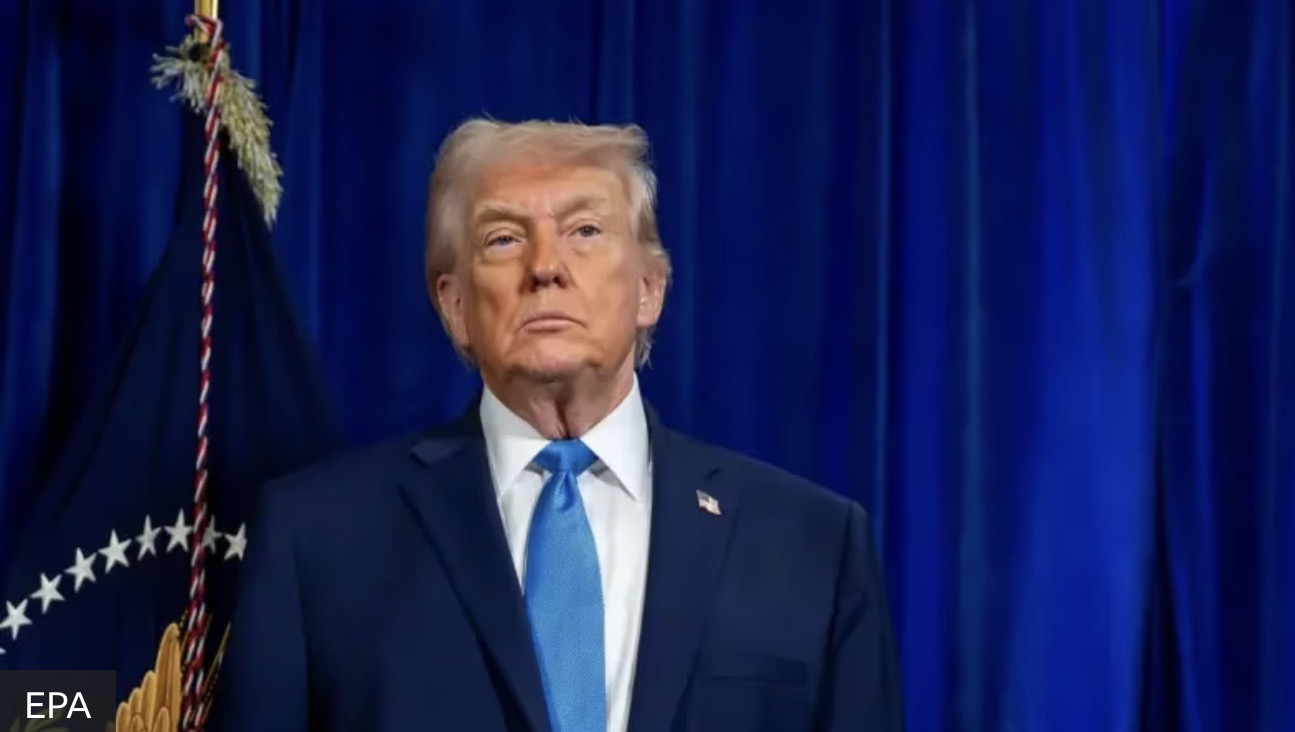
Venezuela and Nigeria: Security, Resources, and the Question of Strategic Control.
Recent U.S. airstrikes in Nigeria, combined with long-standing pressure on Venezuela, have reignited a familiar global debate: are powerful states intervening for security and humanitarian reasons, or are deeper strategic and resource-driven motives at play? While no definitive proof exists to claim outright resource plunder, the pattern of engagement raises legitimate questions that deserve sober examination rather than dismissal.
Understanding the Nigeria Case
The U.S. strikes in Nigeria were officially justified as counter-terrorism operations, aimed at Islamic State–linked militant groups operating in the country’s northwest. Importantly, these strikes were limited in scope and reportedly carried out with the consent or coordination of the Nigerian government. No ground invasion occurred, and the targets were framed as security threats destabilizing the Sahel region.
From a purely tactical perspective, this explanation is plausible. Nigeria has long struggled with insurgent groups such as Boko Haram, ISWAP, and emerging militant factions, and external assistance has been part of its counter-terrorism strategy for years.
However, questions arise not from the stated reason alone, but from the broader geopolitical context.
Why the Resource Narrative Emerges
Critics argue that such interventions cannot be separated from Nigeria’s immense strategic value. Nigeria is Africa’s most populous country, one of its largest economies, and a major producer of oil and gas. While the strikes did not occur in oil-rich regions, global powers rarely think in short geographical terms; long-term influence over a state often matters more than immediate control over a specific resource field.
This skepticism is not baseless paranoia. It is rooted in historical experience.
Venezuela: A Parallel Through a Different Method
Venezuela offers a contrasting but revealing case. There, the United States has not relied on airstrikes but on economic warfare—sanctions, financial isolation, and political pressure. The outcome has been economic collapse, political paralysis, and sustained leverage over a country holding the largest proven oil reserves in the world.
The method differs, but the strategic logic appears familiar:
- In Venezuela: pressure through economic strangulation
- In Nigeria: pressure through security intervention
Different tools, similar leverage.
Control Over Decisions, Not Direct Occupation
A crucial point often missed in popular debate is that modern power politics rarely requires direct occupation or overt resource seizure. Today, influence is exercised through:
- Security dependencies
- Military cooperation agreements
- Sanctions and aid conditionality
- Diplomatic and financial pressure
In this framework, controlling a country’s decision-making environment becomes more important than physically controlling its oil fields. Once strategic alignment is secured, economic and resource outcomes tend to follow naturally.
Is There Proof of a Resource Grab?
At present, no concrete evidence proves that U.S. actions in Nigeria were launched explicitly to seize resources. To claim so as an established fact would be intellectually dishonest.
However, it is equally dishonest to ignore patterns:
- Resource-rich states face disproportionate external pressure
- Human rights or security narratives are selectively applied
- Interventions often align with broader strategic competition, especially in regions where China and Russia are expanding influence
Thus, what emerges is not a conspiracy, but a predictable geopolitical behavior.
A Balanced Conclusion
The comparison between Venezuela and Nigeria does strengthen suspicion, but suspicion is not the same as proof. The more accurate conclusion is this:
These interventions are not purely humanitarian, nor purely resource-driven. They are about strategic control in a competitive global order.
Security threats may be real, but global powers rarely act without calculating long-term advantages.
The Broader Lesson
For developing and resource-rich countries, the lesson is clear:
internal stability, institutional strength, and economic self-reliance are the only real shields against external manipulation. Where governance is weak, foreign narratives—whether security-based or humanitarian—find easy entry.
Syed Ali Raza Naqvi Bukhari
Unity of Peace, Economic Reform, and Global Unity
Founder & Chairman of Tehreek Istehkam Pakistan, and the author of “Law of God” and “Social Democratic System.” Advocate for truth, social justice, and reform in all sectors of society.


Comments
Post a Comment