The Myth of Nehru, Quaid-e-Azam’s Grave, and the Truth About Mazar-e-Quaid.
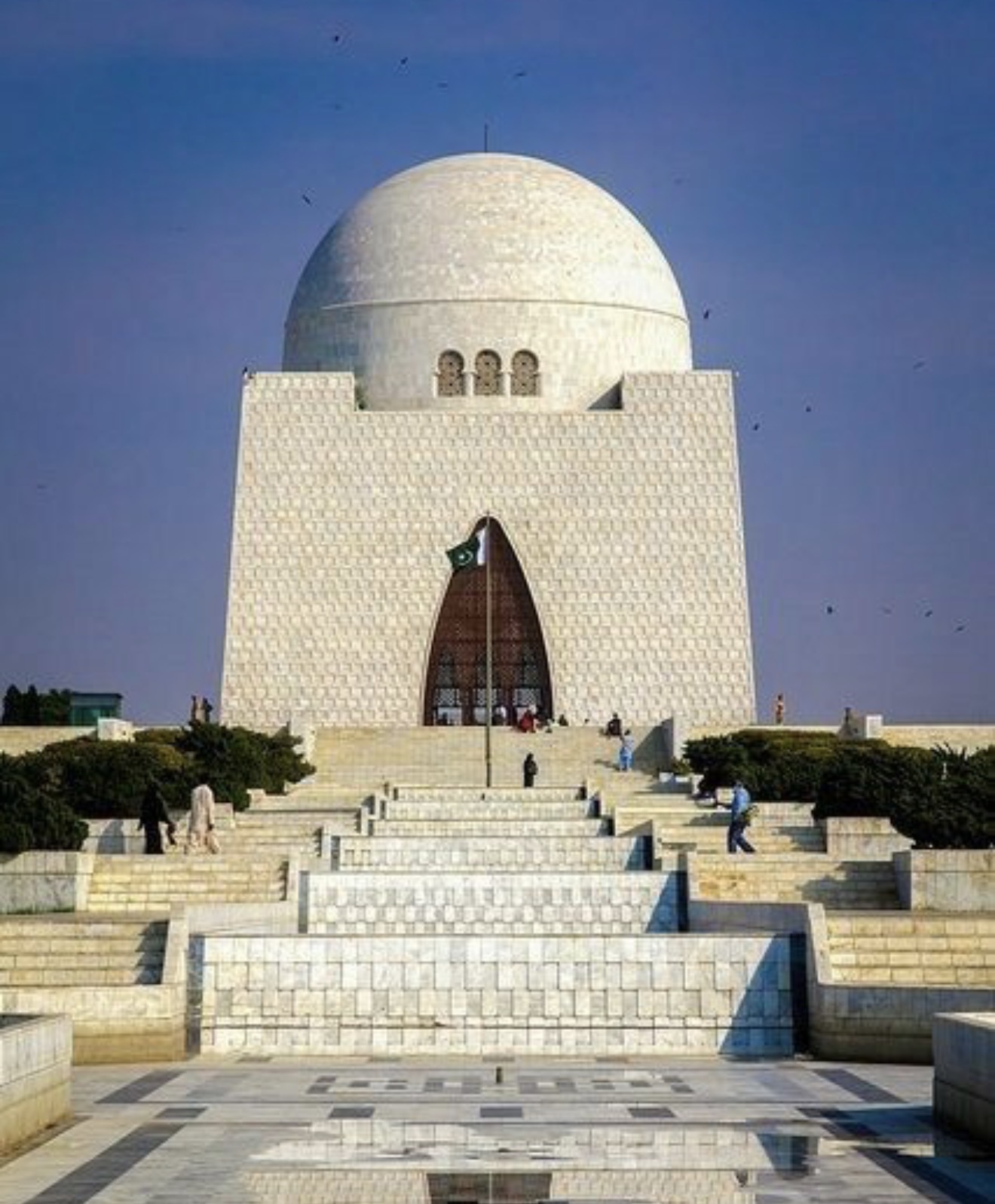
The Myth of Nehru, Quaid-e-Azam’s Grave, and the Truth About Mazar-e-Quaid.
In recent years, a story has circulated widely on social media and informal gatherings claiming that India’s first Prime Minister, Jawaharlal Nehru, visited Pakistan, saw the “unfinished” or “mud grave” of Quaid-e-Azam Muhammad Ali Jinnah, mocked Pakistan for neglecting its founder, and that only afterward—out of embarrassment—did the Pakistani leadership construct Mazar-e-Quaid during the era of President Ayub Khan.
This narrative is historically false, misleading, and unsupported by any credible evidence. A careful review of history exposes it as a fabricated tale that undermines facts and distorts Pakistan’s early statehood realities.
Did Jawaharlal Nehru Ever Visit Pakistan?
The most fundamental flaw in this story is the claim that Jawaharlal Nehru visited Pakistan.
There is no historical record, official documentation, diplomatic archive, or credible biography that confirms Nehru ever visited Pakistan after independence in 1947. The only significant engagement between Nehru and Pakistan’s leadership occurred in Delhi in 1950, when Prime Minister Liaquat Ali Khan visited India, resulting in the Liaquat–Nehru Pact aimed at protecting minority rights.
Had Nehru visited Pakistan, it would have been a major diplomatic event, extensively documented in both Indian and Pakistani records. The absence of any such evidence conclusively proves that no such visit took place.
Quaid-e-Azam’s Burial: Simplicity, Not Neglect
Quaid-e-Azam Muhammad Ali Jinnah passed away on 11 September 1948. He was buried at the very site where Mazar-e-Quaid stands today.
Initially, his grave was simple and unadorned, which was neither unusual nor disrespectful. At the time:
- Pakistan was a newly born state, facing refugee crises, financial collapse, administrative vacuum, and security threats.
- Simplicity in burial aligns with Islamic tradition, which discourages extravagance over graves.
- Many great leaders around the world were first buried modestly before permanent memorials were planned.
Labeling this simplicity as a “kachi qabar” (mud grave) in a derogatory sense is a retrospective distortion, not a reflection of contemporary intent or neglect.
When and Why Was Mazar-e-Quaid Built?
The construction of Mazar-e-Quaid was not a reaction to shame or foreign criticism.
- The design competition for the mausoleum was finalized in the 1950s.
- Construction formally began in 1958 during President Ayub Khan’s era.
- The mausoleum was completed and opened to the public in 1971.
Large national monuments require time, resources, architectural planning, and political stability—all of which Pakistan lacked in its earliest years. The delay was administrative and economic, not ideological or emotional.
Chronological Impossibility of the Claim
The story collapses further when examined chronologically:
- Nehru died in 1964.
- The decision to build the mausoleum had already been made years earlier.
- No speech, memoir, letter, or statement from Nehru references Quaid-e-Azam’s grave.
Thus, the claim that Nehru “shamed” Pakistan during Ayub Khan’s era is chronologically and factually impossible.
Why Do Such Myths Spread?
Such stories persist due to:
- Weak historical literacy
- Emotional storytelling replacing evidence
- Political point-scoring
- Social media virality without verification
Unfortunately, these myths demean Pakistan’s dignity by portraying the nation as careless toward its founder—something that history does not support.
Conclusion
The idea that Jawaharlal Nehru visited Pakistan, criticized Quaid-e-Azam’s grave, and forced Pakistan into building Mazar-e-Quaid is pure fiction. It has no basis in historical fact, official record, or logical chronology.
True patriotism lies not in repeating dramatic falsehoods but in defending historical truth with honesty and evidence. Quaid-e-Azam’s legacy does not need fabricated stories to be honored—it stands firm on facts, principles, and the nation he founded.
Syed Ali Raza Naqvi Bukhari
Unity of Peace, Economic Reform, and Global Unity
Founder & Chairman of Tehreek Istehkam Pakistan, and the author of “Law of God” and “Social Democratic System.”
Advocate for truth, social justice, and reform in all sectors of society.


Comments
Post a Comment