The Growing Trend of Begging in Public Spaces: A Call for Social and Governmental Reform.
The Growing Trend of Begging in Public Spaces: A Call for Social and Governmental Reform.
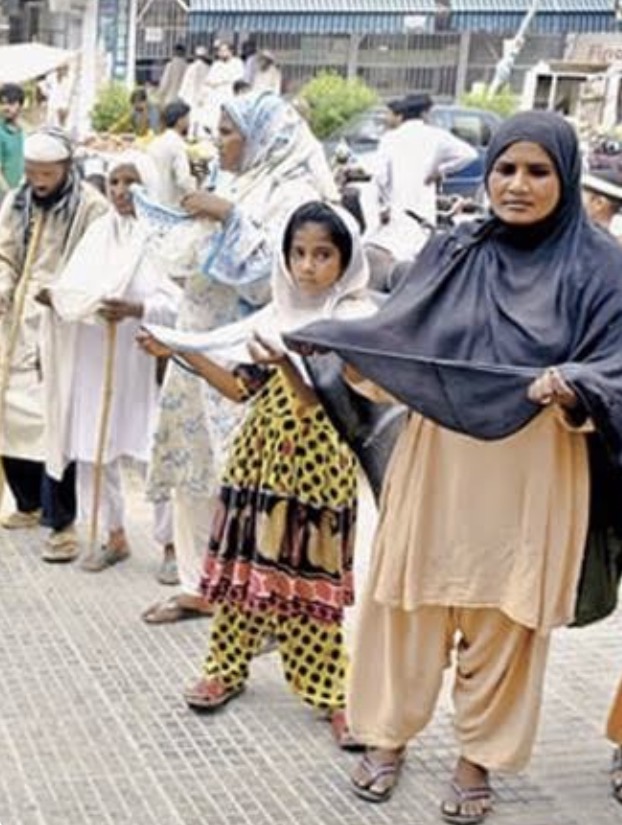
In recent years, Pakistan has witnessed a visible increase in begging across cities—not just on streets and marketplaces, but also in shopping malls, car parks, restaurants, and outside banks. What was once considered a symptom of poverty has now, unfortunately, developed into a trend, raising serious ethical, social, and economic concerns.
The Current Situation
It is no longer only the elderly or destitute who are begging. Increasingly, young men, women, and even children are approaching security guards, customers, and passersby with the hope of receiving money or food. Social media has further amplified this behavior, turning it into a public performance and a strategy for quick financial gain.
While poverty remains the primary driver, other factors contribute to this trend:
- Economic inequality and rising inflation limit access to basic needs.
- Limited social welfare programs fail to adequately support vulnerable communities.
- Cultural practices and public charity make it easy for people to rely on handouts rather than self-sufficiency.
- Trend-following behavior, where people imitate others in visible areas, further entrenches the habit.
Ethical and Moral Concerns
From a moral and societal perspective, this trend is alarming:
- For those with employment, engaging in begging undermines personal dignity and ethical values. Hard work and self-reliance are the pillars of social and religious teachings, emphasizing the importance of earning an honest living.
- For the unemployed, begging may offer temporary relief, but it can trap them in a cycle of dependency and social stigma.
- For society at large, normalizing begging erodes public order and creates a negative perception of urban spaces and institutions.
A Call for Public Responsibility
Change must occur at both individual and systemic levels:
- For the Public
- Support charity through structured and accountable programs rather than giving to every individual on the street.
- Encourage skills development, education, and local employment initiatives within the community.
- Resist normalizing begging as a social trend or “fashion,” emphasizing dignity and self-reliance.
- For the Government
- Implement comprehensive social safety nets that reach vulnerable populations effectively.
- Establish rehabilitation programs for children and adults involved in begging, offering education, vocational training, and employment opportunities.
- Regulate public spaces to ensure urban areas like malls, banks, and parking lots remain orderly, while still providing safe access to assistance for the truly needy.
- Launch awareness campaigns highlighting ethical giving and encouraging citizens to support structured welfare programs instead of spontaneous handouts.
Moving Toward Reform
Begging should remain a last-resort option for those in extreme need, not a growing trend or social strategy. By combining moral guidance, public awareness, and government action, Pakistan can ensure that every citizen lives with dignity, self-respect, and opportunity.
The solution lies in rehabilitation, education, and empowerment—not normalization of begging. Only then can society restore balance, fairness, and ethical standards while addressing the root causes of poverty.
Syed Ali Raza Naqvi Bukhari
Unity of Peace, Economic Reform, and Global Unity
Founder & Chairman of Tehreek Istehkam Pakistan, and the author of “Law of God” and “Social Democratic System.” Advocate for truth, social justice, and reform in all sectors of society.


Comments
Post a Comment